Airplane Pose (Dekasana)
What is Airplane Pose?
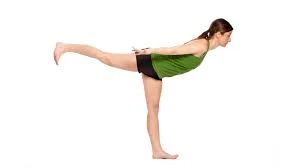
Airplane Pose (Dekasana) is a balancing yoga posture that strengthens the legs, hips, and core while improving stability and coordination. Practiced on one leg with the body leaning forward like an airplane, this pose enhances focus, posture, and body awareness, making it beneficial for both physical balance and mental concentration.
Except for the arms, Aeroplane stance is an advanced standing yoga balance stance that resembles Warrior Pose III. In the warrior III posture, arms extend forth next to the ears, whereas in this pose, arms are stretched back like an airplane’s wings.
Because it places relatively less strain on the shoulders and neck, this pose is much easier for most people.
When the arms are in the wings position behind the back, the aeroplane pose uses the muscles of the shoulders, chest, rib cage, upper abdomen, and arms to keep the shoulders and hips steady.
Muscle Work During Airplane Pose:
- Core (Abs) Muscles
- Gluteus Muscle
- Hamstrings Muscle
- Hip Muscle
- Psoas Muscle
- Quadriceps Muscle
How to Perform?
- With your back straight and your chest open to the front, assume the mountain stance.
- Keep your shoulder blades drawn back and your arms tight to your sides.
- With your left foot firmly placed on the ground, raise your right leg back while microbending your knees and taking a deep breath.
- Once you have fully extended your leg back, straighten both legs’ knees. The toes of the left foot should point forward.
- Keep your hands in your chest.
- Take a moment to balance
- Extend your arms like wings back to your sides.
- For three to five breaths, hold this stance.
Benefits:
- Tones the muscles in the legs.
- Enhances the strength of the neck, shoulders, arms, and hips.
- Expands the chest, which facilitates better breathing and increases lung capacity.
- Enhances the way the abdominal muscles work because the focus is on using the core muscles.
- Internal heat generation improves the functioning of the digestive system.
- Stretching and internal heat generation may aid in fat reduction.
- Aids in toning all of the body’s muscles.
- It can aid athletes who use a lot of leg muscles in developing strength, stability, and endurance.
- Massages the hamstrings, glutes, and lower back muscles to help avoid sciatica.
- Raises focus, alertness, and concentration.
Beginner’s Advice:
- Make sure your chest doesn’t drop to the floor once you’ve reached the last stance. Stretch your arms towards your back to open your chest and maintain a straight back.
- To balance your torso and pelvis, contract your core muscles.
- Before beginning the position, place a folded blanket under your heels for additional support.
- To attain the necessary balance, the balancing leg’s knees may be slightly micro-bent.
Preparatory Pose:
- Tree Pose (Vriksasana)
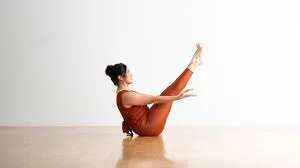
- Boat Pose (Navasana)
- Downward Facing Dog Pose (Adho Mukha Svanasana)
- Hand to Big Toe Pose (Utthita Hasta Padangusthasana)
Modifications:
If your balance is poor, you can try standing next to a wall. Stand near enough to the wall so you can hold it with one hand or your side body if needed.
To maintain your raised leg straight and parallel to the floor, use a strap. Hold the ends of the straps in both hands and loop a strap around the balls of your feet before straightening your raised leg. As you straighten your raised leg, adjust the strap’s length. Additionally, it will assist you in maintaining the position of your arms.
You can spread your arms sideways with your fingers apart rather than keeping them close to your body.
Variations:
Warrior pose 3:

Try Warrior III if you want a more difficult version of the Aeroplane Pose. In this pose, you extend your arms and legs in opposite directions such that your fingertips and toes form a straight line. Start in the Aeroplane Pose with your arms out in front of you to transition into Warrior III. Keeping your hips level, slowly raise your rear leg off the ground. Stretch your arms back behind you as you raise your leg. To keep your balance, keep your eyes forward and use your core. Repeat on the opposite side after holding the pose for a few breaths.
Warrior III is an excellent method to strengthen your back, legs, and core while also enhancing your balance.
Half Airplane Pose or Crescent Lunge:
Try Half Aeroplane Pose if you’re seeking a tweak or aren’t quite ready for the complete Aeroplane Pose. This version makes it simpler to balance and maintain the pose by bending your raised leg at a 90-degree angle. Start in the Aeroplane Pose with your arms out in front of you to transition into Half Aeroplane Pose. Bend your knee to point your foot towards the ceiling as you slowly raise your back leg off the ground. Keep your eyes forward and maintain a level stance with your hips. Repeat on the opposite side after holding the pose for a few breaths.
You may strengthen your legs and core and enhance your balance by performing the Half Aeroplane Pose. It’s also an excellent choice if you have hip or knee problems that make the entire Aeroplane Pose difficult or painful.
For a fun and difficult take on this traditional yoga stance, consider including one or both of these variants the next time you perform the Aeroplane stance.
Precautions:
- This position should be performed cautiously or under professional supervision by individuals with back issues.
- It is best to avoid doing this pose if you have high blood pressure.
- This pose should not be performed by patients with vertigo, spondylitis, or other neurological conditions since gazing down could make them feel lightheaded or queasy.
- If you recently had surgery or an injury to your knees, hips, or ankles, stay out of this pose.
- This position should be avoided by pregnant women since it could strain their abdomen and lower back and cause them to lose their balance.
Contraindications:
High blood pressure: Any position that requires holding your breath or straining should be avoided if you have high blood pressure. If you have high blood pressure, it is advised to avoid doing the aeroplane pose.
Vertigo or dizziness: Because the Aeroplane Pose demands a lot of balance, some people may experience vertigo or dizziness. This pose should be avoided if you have a history of these conditions.
Recent or long-term back or leg injuries: Aeroplane Pose can be very taxing on the back and legs. It is advisable to avoid this pose until you have fully recovered if you have a recent or ongoing injury to these areas.
Conclusion:
Like any other pose, approach dekasana slowly and progressively. Dekasana improves balance, stretches the main muscular groups, and strengthens the legs, lower back, and tummy. Practise this relatively easy stance before moving on to more difficult balancing poses.
FAQs
What are the benefits of the airplane pose?
Aeroplane Pose, or Dekasana, improves body awareness, balance, and concentration. It engages the core for stability while strengthening the back, glutes, and legs. By opening the shoulders and chest, the position enhances breathing and posture.
Is airplane pose the same as Warrior 3?
With the forward bend action, the students should feel light, relaxed, and as though they are flying while balancing on one foot that is securely grounded. Except for the arms being stretched behind, Dekasana (Aeroplane Pose) is quite similar to Virabhadrasana III (Warrior Pose III).
How to do an airplane pose?
Put your hands on your hips. Transfer your weight to your right leg while maintaining awareness of your feet. Lift your straight left knee behind you so that your torso bends forward over your right leg. Stretch your arms out to the sides at a 45-degree angle to your torso or straight out from your shoulders.
What is the airplane pose in yoga called?
Dekasana, also known as Aeroplane Pose, is a potent balancing pose that tests your strength, stability, and concentration. As you stretch your arms like wings and lean forward, this pose works your entire body, including your legs, core, and upper body.
What are the Contraindications of the airplane pose?
Excessive blood flow to the brain may result from high blood pressure.
Injuries: Avoid injuries to the knee, hip, back, ankle, shoulder, or neck.
In certain cases, looking down might worsen migraines.
Unstable Balance: If you have trouble balancing, start with easier positions.
References:
- Namaste University. (2023, June 20). Airplane Yoga Pose – Everything you need to know about. Namaste University. https://namasteuniversity.net/airplane-yoga-pose/
- Airplane Pose Yoga Pose (Dekasana). Tummee. https://www.tummee.com/yoga-poses/Dekasana.
- Airplane Pose (Dekasana): Steps, Benefits, and Precautions – Fitsri Yoga. https://www.fitsri.com/poses/airplane-pose