
Best Exercises for Cervical Spondylosis
What is Cervical spondylosis?
Age-related degeneration of the neck’s spinal disks is referred to as cervical spondylosis. Osteoarthritis symptoms, such as bone spurs—bony protrusions along the borders of bones—develop when the disks shrink and dry.
Cervical spondylosis is a common disorder that worsens with age. Over 85% of persons over 60 have cervical spondylosis.
The majority of persons with cervical spondylosis have no symptoms. Nonsurgical treatments are frequently successful when symptoms do occur.
Symptoms
The majority of patients with cervical spondylosis don’t have any symptoms. When symptoms do occur, they usually involve neck pain and stiffness.
Cervical spondylosis can occasionally narrow the spinal canal within the spine’s bones. We refer to these bones as vertebrae. The area inside the vertebrae through which the spinal cord and nerve roots travel to reach the rest of the body is called the spinal canal. You may get the following symptoms if the spinal cord or nerve roots are pinched:
- Weakness, numbness, and tingling in the hands, feet, legs, or arms.
- Poor coordination and trouble moving.
- Loss of control over the bowels or bladder.
When to see a doctor?
If you experience sudden weakness or numbness, or lose control over your bowels or bladder, get medical help.
Causes
Changes to the structures that comprise the neck and backbone result in cervical spondylosis. The neck and backbone get weaker with age. These modifications may consist of:
- Dehydrated disks: Between the spine’s vertebrae, disks function as cushions. Most people’s spinal disks start to dry out and shrink by the time they are forty years old. As the disks get smaller, there is more bone-on-bone contact between the vertebrae.
- Herniated disks: The outside of the spinal disks also develops cracks. These fissures can accommodate a disk’s soft interior. The spinal cord and nerve roots may occasionally be compressed.
- Bone spurs: In an incorrect attempt to strengthen the spine, the body may create more bone as the disks degrade. These bone spurs may occasionally pinch the nerve roots and spinal cord.
- Stiff ligaments: The tissue strands that connect two bones are called ligaments. Neck flexibility may be diminished by age-related stiffness of the spinal ligaments.
Risk factors
- Age: As people age, cervical spondylosis frequently develops.
- Occupation: Jobs that require a lot of overhead labor, uncomfortable postures, or repetitive neck motions impose additional strain on the neck.
- Neck injuries: Cervical spondylosis seems to be more likely in people with a history of neck trauma.
- Genetic factors: Over time, some members of particular families will go through more of these changes.
- Smoking: Increased neck pain has been associated with smoking.
Complications
Your spinal cord or nerve roots may sustain irreversible damage if cervical spondylosis severely compresses them.
Exercises for Cervical Spondylosis
Stretching exercises
Neck Flexion (Chin to Chest)

- Keep your back straight while you sit or stand.
- Lower your chin slowly toward your chest until the back of your neck begins to gently expand.
- For ten seconds, maintain this position.
- Return to the beginning position slowly.
- 5–10 times over.
Benefit: reduces stiffness and relieves stress by stretching the muscles at the back of the neck.
Neck Extension (Look Up)

- Maintain a straight posture while sitting or standing.
- Look up at the ceiling while you slowly tilt your head back.
- For ten seconds, maintain this posture.
- Slowly return to the beginning position.
- Do this five to ten times.
Benefit: increases mobility by strengthening the supporting muscles and stretching the front of the neck.
Neck Side Tilt (Ear to Shoulder)

- Maintain a neutral head position, whether sitting or standing.
- Bring your ear closer to your shoulder as you slowly tilt your head to one side.
- Maintain a relaxed shoulder on the other side.
- After ten seconds of holding, switch sides.
- On each side, repeat five times.
Benefit: increases side-to-side flexibility and releases tense neck muscles.
Neck Rotation

- Turn your head as far to one side as is comfortable while sitting up straight.
- For ten seconds, maintain this posture.
- Rotate to the other side after returning to the middle.
- Each side should be repeated five times.
Benefit: decreases stiffness and increases range of motion and flexibility.
Upper Trapezius Stretch
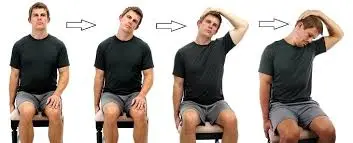
- Take a seat and use one hand to grip the seat.
- Bring your ear closer to your shoulder and tilt your head in the opposite direction.
- Feel your neck and upper shoulder stretch as you hold for ten seconds.
- Repeat, switching sides.
Benefit: reduces shoulder and neck pain by releasing tension in the upper trapezius muscles.
Strengthening Exercises
Chin Tucks
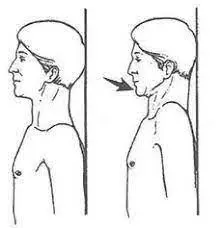
- Take a seat or stand erect.
- Keeping your head level, pull your chin straight back, creating a double chin.
- After five seconds of holding, let go.
- Ten times over, repeat.
Benefit: reduces neck tension, enhances posture, and strengthens deep neck muscles.
Isometric Cervical flexion
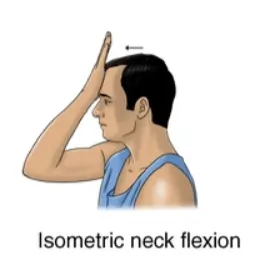
- Put your hand over your forehead.
- Press your head forward gently while using your neck muscles to oppose the motion.
- After 5–10 seconds of holding, let go.
- 3–5 times, repeat.
Benefit: helps stabilize the cervical spine by strengthening the front neck muscles without causing excessive movement.
Isometric Cervical Extension

- Your hands should be behind your head.
- Gently press your head back into your hands, using them as resistance.
- Hold for 5 to 10 seconds, then repeat five times.
Isometric cervical side flexion

- Put your hand up to the side of your head.
- Use your neck muscles to oppose the motion as you press your head into your hand.
- After 5 to 10 seconds of holding, switch sides.
- 3–5 times per side, repeat.
Benefit: enhances head stability and support by strengthening the side neck muscles.
Wall Angels
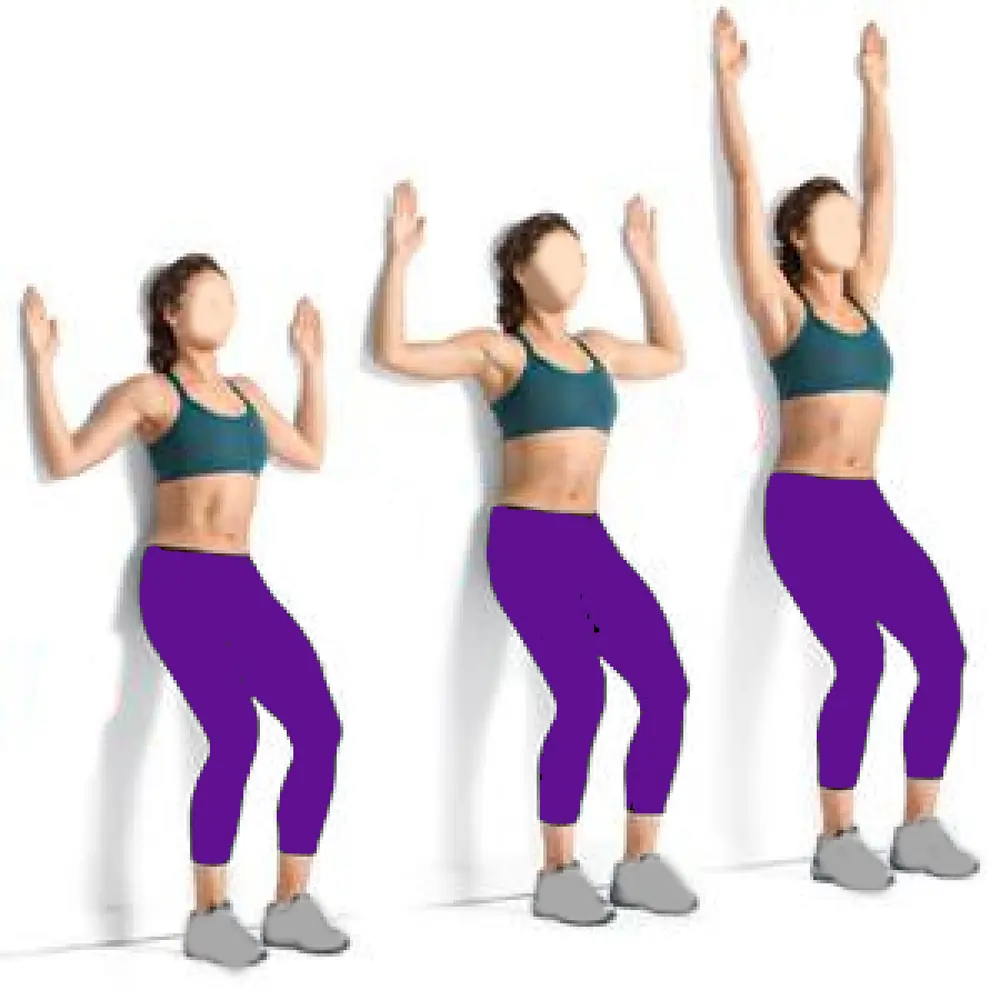
- Place your feet slightly away from the wall and lean your back against it.
- Maintain contact between your head, upper back, and lower back and the wall.
- Make a snow angel by raising your arms to a 90-degree angle and then slowly moving them up and down.
- Do 10 repetitions.
Benefit: minimizes neck strain, strengthens the upper back, and improves posture.
Mobility & Postural Exercises
Shoulder Rolls

- Take a seat or stand erect.
- Ten times, roll your shoulders forward in a circle.
- After that, roll them ten times backward.
Benefit: relieves tension, enhances blood flow, and lessens neck and shoulder stiffness.
Scapular Squeeze
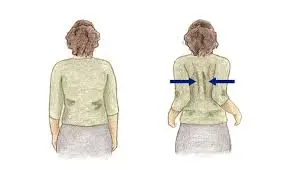
- Take a seat or stand erect.
- Hold a pencil between your shoulder blades by squeezing them together.
- After five seconds of holding, let go.
- Ten times over, repeat.
Benefit: enhances posture and fortifies the muscles in the upper back.
Thoracic Extension
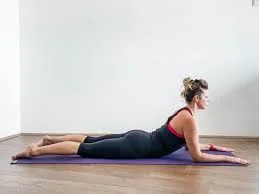
- Put both hands behind your head while sitting up straight.
- Maintain a stable lower back while slightly arching your upper back.
- After ten seconds of holding, go back to neutral.
- Do this five to ten times.
Benefit: prevents hunching and improves flexibility in the upper back.
Seated Cat-Cow Stretch

- Place your hands on your knees and sit up straight.
- Take a breath, raise your chest, and arch your back (Cow Pose).
- Breathe out, bury your chin into your chest, and round your back (Cat Pose).
- Do five repetitions.
Benefit: reduces neck and upper back tension and increases spinal mobility.
Precautions to Take While Exercising for Cervical Spondylosis
Take these actions to prevent worsening symptoms and guarantee a safe recovery:
Start Slowly and Gently:
- Before beginning any strengthening workouts, always start with some light stretching.
- Stay clear of quick, jerky motions that might cause neck discomfort.
Maintain Proper Posture
- When performing exercises, maintain a straight back and relaxed shoulders.
- Steer clear of slouching, as this could worsen neck pain.
Do Not Overstretch
- Never stretch to the point of discomfort; only stretch to the point of a slight strain.
- Reduce your range of motion and ease back if you’re uncomfortable.
Avoid High-Impact Movements
- No hyperextensions or rapid, forceful neck rotations.
- Steer clear of exercises that involve using your neck to raise big weights.
Take Breaks and Rest as Needed
- Stop and take a break if you experience exhaustion or worsening pain.
- Increased stiffness may result from overusing the neck muscles.
Use Proper Support
- When performing seated activities, use a chair that provides adequate lumbar support.
- Use a small pillow behind your neck for additional support if necessary.
Warm Up and Cool Down
- Before stretching, always do some light warm-up activities.
- Use relaxation and deep breathing techniques to wrap up your routine.
Avoid Forward Head Posture
- Whether you’re sitting or standing, keep your chin gently tucked in.
- Don’t spend a lot of time staring at screens or books.
Stay Hydrated
- To maintain the flexibility of your joints and muscles, drink enough water.
- Stiffness and discomfort may worsen due to dehydration.
Listen to Your Body
- Stop exercising right away if you get intense pain, dizziness, or numbness.
- Before beginning any new regimen, see a physician or physical therapist.
You can properly manage cervical spondylosis and increase the strength and flexibility of your neck by taking these precautions.
Conclusion
Despite being a prevalent condition, cervical spondylosis doesn’t have to rule your life. You can effectively reduce pain, increase flexibility, and strengthen your neck muscles by following a systematic exercise program that includes mobility, strengthening, and stretching. Frequent practice helps you stay active and pain-free by improving posture and preventing further injury.
Consistency and appropriate technique are required for long-term relief. Even while these exercises can make a big difference, it’s important to pay attention to your body, avoid overdoing it, and take the required safety measures to avoid strain. It’s advisable to adjust any action or consult a healthcare provider if it produces discomfort that goes beyond simple stretching.
You’re taking a proactive step toward greater neck health, increased mobility, and a higher quality of life by including these exercises in your routine. Continue to move, pay attention to your posture, and enjoy the process of developing a stronger, healthier neck!
FAQs:
What is Cervical spondylosis?
Age-related degeneration of the neck’s spinal disks is referred to as cervical spondylosis. Osteoarthritis symptoms, such as bone spurs—bony protrusions along the borders of bones—develop when the disks shrink and dry.
Cervical spondylosis is a common disorder that worsens with age. Over 85% of persons over 60 have cervical spondylosis.
The majority of persons with cervical spondylosis have no symptoms. Nonsurgical treatments are frequently successful when symptoms do occur.
What are the causes of cervical spondylosis?
Changes to the structures that comprise the neck and backbone result in cervical spondylosis. The neck and backbone get weaker with age. These modifications may consist of:
Dehydrated disks: Between the spine’s vertebrae, disks function as cushions. Most people’s spinal disks start to dry out and shrink by the time they are forty years old. As the disks get smaller, there is more bone-on-bone contact between the vertebrae.
Herniated disks: The outside of the spinal disks also develops cracks. These fissures can accommodate a disk’s soft interior. The spinal cord and nerve roots may occasionally be compressed.
Bone spurs: In an incorrect attempt to strengthen the spine, the body may create more bone as the disks degrade. These bone spurs may occasionally pinch the nerve roots and spinal cord.
Stiff ligaments: The tissue strands that connect two bones are called ligaments. Neck flexibility may be diminished by age-related stiffness of the spinal ligaments.
How to perform the neck flexion exercise?
Keep your back straight while you sit or stand.
Lower your chin slowly toward your chest until the back of your neck begins to gently expand.
For ten seconds, maintain this position.
Return to the beginning position slowly.
5–10 times over.
How to perform the neck extension exercise?
Maintain a straight posture while sitting or standing.
Look up at the ceiling while you slowly tilt your head back.
For ten seconds, maintain this posture.
Slowly return to the beginning position.
Do this five to ten times.
What are the symptoms of cervical spondylosis?
The majority of patients with cervical spondylosis don’t have any symptoms. When symptoms do occur, they usually involve neck pain and stiffness.
Cervical spondylosis can occasionally narrow the spinal canal within the spine’s bones. We refer to these bones as vertebrae. The area inside the vertebrae through which the spinal cord and nerve roots travel to reach the rest of the body is called the spinal canal. You may get the following symptoms if the spinal cord or nerve roots are pinched:
Weakness, numbness, and tingling in the hands, feet, legs, or arms.
Poor coordination and trouble moving.
Loss of control over the bowels or bladder.
References:
- We Are Spine. (2025, July 16). 15 Cervical spondylosis exercises to relieve neck pain. https://wearespine.in/cervical-spondylosis-exercises/
- Physio, S. (n.d.). Best 5 Exercises for Cervical Spondylosis – Surrey Physio. Surrey Physio. https://www.surreyphysio.co.uk/top-5/best-5-exercises-for-cervical-spondylosis/
- https://homephysiotherapyexercises.com/wp-admin/post.php?post=16580&action=edit