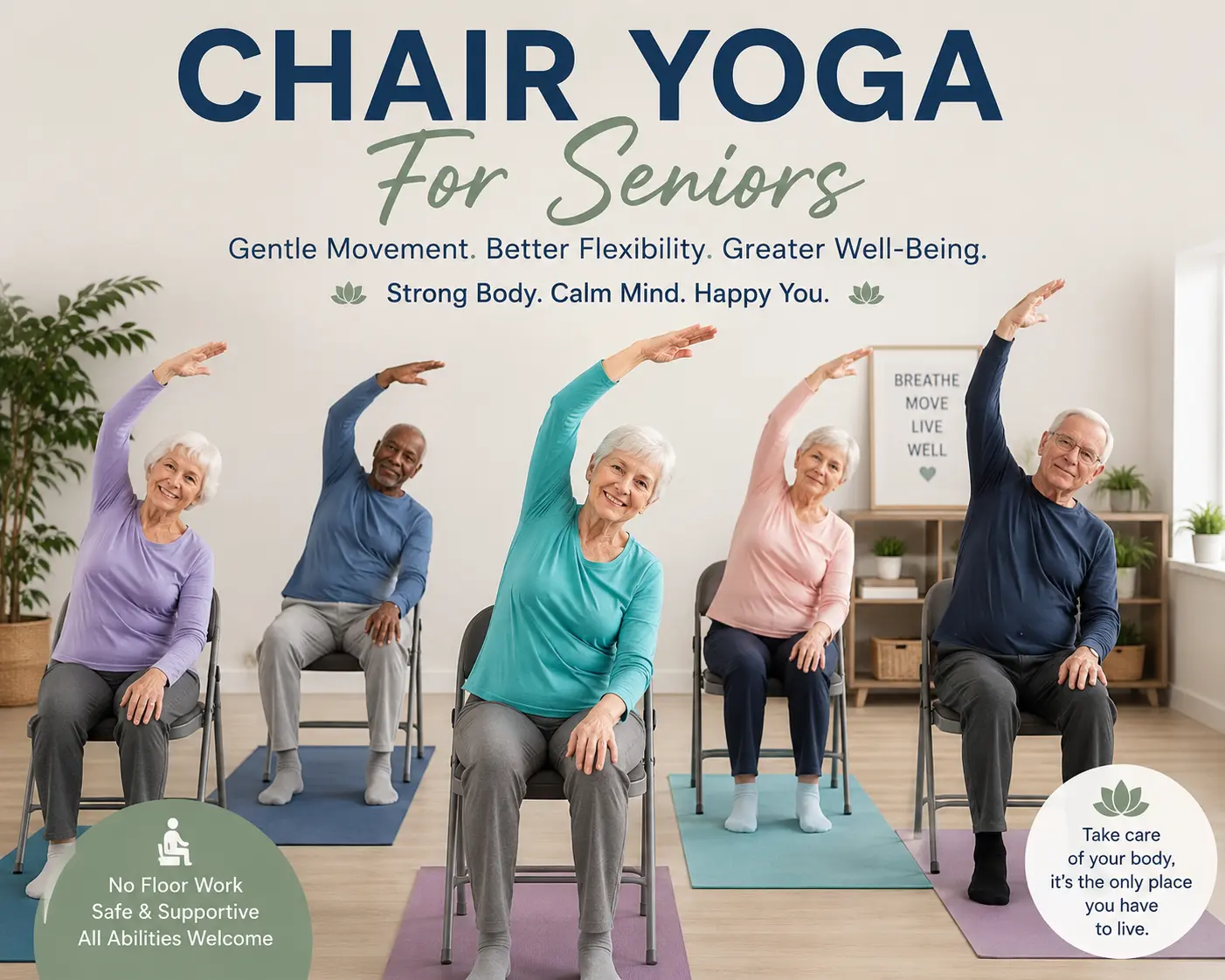
Chair Yoga For Seniors
Introduction
Chair yoga is a gentle and accessible form of exercise that allows seniors to enjoy the many benefits of yoga while remaining safely seated or using a chair for support. It is an excellent option for older adults, beginners, or anyone with limited mobility, joint pain, balance challenges, or recovering from an injury. Unlike traditional yoga, chair yoga reduces the risk of falls while still improving strength, flexibility, posture, and overall body movement.
Regular chair yoga practice helps increase joint mobility, reduce muscle stiffness, and enhance circulation throughout the body. Simple seated stretches and controlled breathing exercises can ease tension in the neck, shoulders, back, hips, and legs, making everyday activities such as walking, standing, and reaching more comfortable. It also strengthens the core and lower body muscles, which play an important role in maintaining balance and preventing falls.
In addition to its physical benefits, chair yoga supports mental and emotional well-being. Slow, mindful movements combined with deep breathing promote relaxation, reduce stress, improve focus, and encourage better sleep. Many seniors find that a short daily chair yoga routine helps them feel more energized, confident, and independent.
One of the greatest advantages of chair yoga is its versatility. It can be performed at home, in community centers, senior living facilities, or rehabilitation clinics with minimal equipment. Whether your goal is to stay active, improve flexibility, manage arthritis symptoms, or simply maintain a healthier lifestyle, chair yoga offers a safe and effective solution.
This guide introduces simple chair yoga exercises that are easy to follow and suitable for most fitness levels. Practice them regularly, move at your own pace, and remember to listen to your body. With consistency, chair yoga can help you enjoy greater mobility, better balance, and an improved quality of life while staying active and healthy.
What is chair yoga?
Chair yoga is simply that—yoga done while seated in a chair. Every breathing technique, position, and meditation is performed while seated.
Yoga poses performed while standing, or while clinging to a chair for additional support, can also be referred to by this phrase. The phrase will be used in this article to refer to seated yoga poses.
History of yoga
Yoga has a 2,500–5,000-year history. The Rigveda, one of the world’s oldest literary compilations, contains the first reference to “yoga.”
One of Hinduism’s four holy books, or Vedas, is the Rigveda. Among other topics, these writings address how to have a moral and peaceful life.
Yoga’s tenets eventually made their way to other nations, cultures, and even some other religions, like Buddhism.
Following their colonization of India, Europeans and certain well-known Indian intellectuals developed a greater interest in yoga as a kind of exercise or physical activity.
This led to the development of a style of yoga that prioritized physical fitness above spirituality over a period of 100 to 150 years.
Philosophy of yoga
There isn’t a single, overarching theory that unites all of the various kinds of yoga.
Nonetheless, the idea that humans represent two realities—prakriti, or materiality, and purusha, or pure consciousness—is among the oldest philosophical ideas in yoga.
According to this viewpoint, the purpose of yoga is to help individuals achieve a state of pure consciousness. The Sanskrit word “yuj,” which means “union” or “to join,” is where the word “yoga” originates.
Later, the eight “limbs” of yoga were taught by the sage Patanjali, frequently referred to as the “father of yoga”:
Physical postures (asana), breathing exercises (pranayama), withdrawal of the senses (pratyahara), such as from distractions, concentration (dharana), meditation (dhyana), enlightenment (samadhi), and outward conduct (yama), which includes values like nonviolence, moderation, and honesty, personal conduct (niyama), which includes values like cleanliness, discipline, and self-study
Types of yoga
Modern yoga comes in a variety of forms. Depending on their goals and degree of experience, people can select a style.
Among the various forms and styles of yoga are:
Hatha yoga
Emphasizes physical poses are referred to by this general phrase. Hatha sessions often function as a gentle introduction to the fundamental yoga poses.
Ashtanga yoga
Ashtanga yoga is a demanding style of yoga that entails breathing in unison while adhering to posture sequences. Compared to certain other forms of yoga, it is more physically taxing.
Bikram yoga
An extreme kind of yoga developed in the 1970s is called Bikram yoga, or hot yoga. It entails performing a precise series of 26 poses and two breathing exercises for ninety minutes at a temperature of over 105°F (40.5°C) with 40% humidity.
Using props like blocks, blankets, belts, chairs, and bolsters, this style of yoga focuses on achieving the proper posture in each position.
Kripalu yoga
This kind of training trains practitioners to understand, embrace, and gain knowledge from their bodies. Through introspection, a Kripalu yoga student discovers their own level of practice.
Typically, the lessons start with mild stretches and breathing exercises, then move on to a series of specific positions and a final relaxation.
Kundalini yoga
The goal of the Kundalini yoga meditation practice is to release stored energy at the base of the spine.
Typically, a Kundalini yoga class starts with chanting and concludes with singing. In between, it includes meditation, pranayama, and asana that are intended to produce a particular result.
Sivananda
The foundation of this method is a five-point philosophy.
According to this theory, a healthy yogic lifestyle can be achieved by combining appropriate breathing, relaxation, food, exercise, and positive thought.
Yin yoga
Long-term stretching movements are the main focus of yin yoga. Deep tissues, ligaments, joints, bones, and fascia are all targeted by this type of yoga.
Restorative yoga
This type of yoga is calming. During a restorative yoga class, students practice a few basic poses with props like blankets and bolsters to help them relax deeply without exerting any effort.
Could chair yoga be right for you?
Chair yoga is available to all. However, it’s particularly beneficial for people who struggle with standing for extended periods of time, balancing, or getting up from or down on the floor, where yoga is typically practiced.
If you’ll be sitting for an extended period of time, as on a lengthy car or airline ride or at your desk during a hectic workday, chair yoga is also a terrific alternative for a brief stretch.
Chair Yoga For Seniors
Seated crescent

- Place your feet flat on the floor and sit upright in a chair. Let your arms drop to your sides. To stabilize your back, tighten your abdominal muscles.
- Draw your fingertips and the top of your head toward the ceiling as you raise your right arm above while taking a breath. Bend to the left as you release the breath. Hold for three to five breaths.
- Straighten your body as you inhale.
- As you release your breath, lower your arm.
- Bend to the right and raise your left arm as you repeat. That is a single repeat.
- For a total of three to five repetitions, keep switching sides.
Seated Back Bend

- With your feet flat on the ground, sit upright on the edge of a chair. With your fingertips facing in your direction, place your hands on the chair’s seat.
- Roll your shoulders back as you take a breath. Throughout the entire exercise, keep your shoulders down and relaxed, away from your ears.
- Arch your back and gently raise your chest toward the ceiling. Avoid hyperextending your neck or arching your back too much. You ought to be looking up at the ceiling in front of you. Hold for three to five breaths.
- Let go when you exhale.
- Perform three to five repetitions.
Seated Spinal Twist
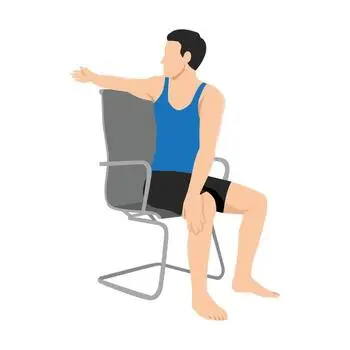
- Take a chair without arms and sit sideways. Keep your feet flat on the ground and sit up straight. Put one hand on each side of the chair’s back. Take a breath.
- Gently turn your torso to the right, toward the back of the chair, and glance over your right shoulder as you release your breath. Your neck and torso should feel stretched, but don’t push or hurt yourself. Hold for three to five breaths.
- Return to center as you breathe in.
- Perform three to five repetitions to the right, then sit in the opposite position and repeat, twisting to the left.
Seated Pigeon
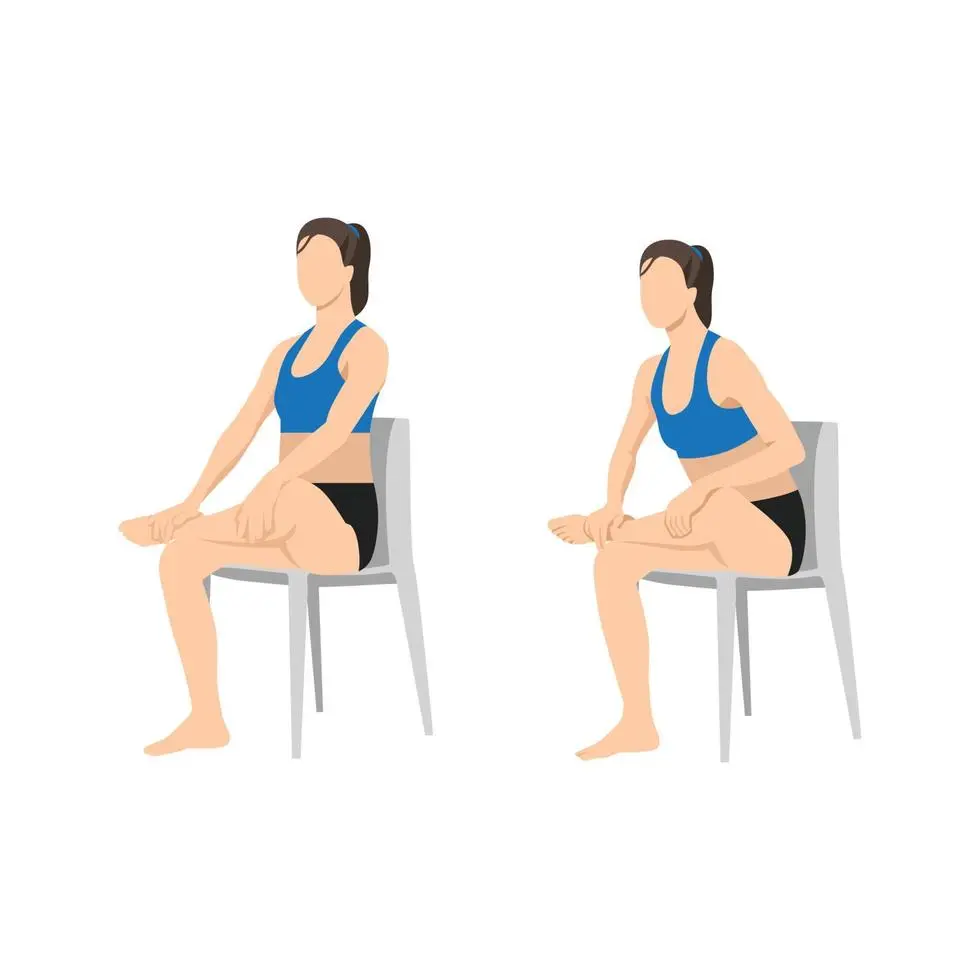
- With your feet flat on the ground, sit up straight toward the edge of a chair. Cross your right thigh with your left ankle.
- Sit up straight when you take a breath. Maintain an extended spine rather than rounding your back.
- Hold here if your left hip feels stretched. If not, use your left hand to gently press down on your left knee. Then, as you exhale, bend forward a little till you feel a stretch. Lean forward while keeping your chest raised. Hold for three to five breaths.
- When you exhale, release.
- Repeat with your right ankle across your left thigh after completing three to five repetitions on that side.
Seated Shoulder stretch
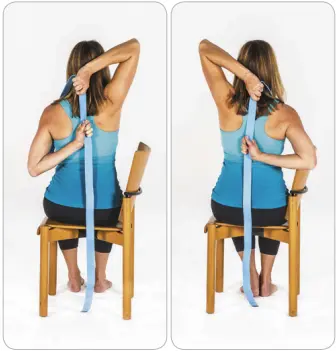
- Place your feet flat on the floor and sit upright in a chair. To stabilize your back, tighten your abdominal muscles. In your right hand, grasp a towel or a strap.
- Raise your right arm above your head and take a breath.
- With the strap or towel hanging down your back and your right hand behind your head, bend your right elbow.
- Bend your left elbow so that your left hand is behind your back after extending your left arm at your side during an inhalation. Use your left hand to hold onto the towel or strap.
- Hold here if your arms and shoulders start to feel stretched. If not, move your hands in the direction of one another until you experience a stretch. Hold for three to five breaths.
- When you exhale, release.
- Holding the towel or strap in your left hand, repeat in the opposite direction. One representative, that is.
- Keep switching sides until you’ve finished three to five repetitions in total.
Seated Mountain (Tadasana)
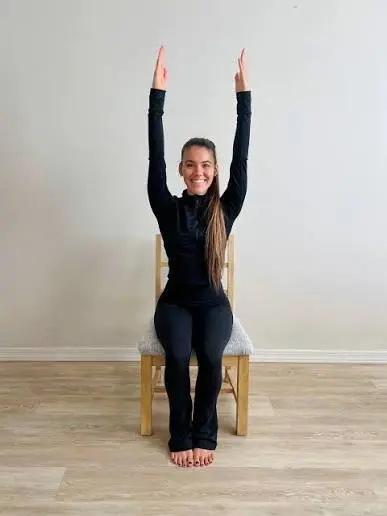
- With your feet flat on the ground, take a seat.
- Align your knees and ankles.
- Extend your vertebrae and lengthen your spine from top to bottom.
- Draw your shoulders up and forward while taking a breath.
- Roll your shoulders back and down as you release the breath.
- Repeat as often as you’d like.
Seated Warrior I (Virabhadrasana I)

- Take a seat close to the front of your chair.
- To provide your right thigh extra support, turn your torso to the right and approach the chair’s left edge.
- Straighten your left leg as much as you can by extending it back.
- Verify the alignment of your hips. To face forward, make sure both hips are squared.
- Tuck your back toes under in a lunge position if it feels comfortable. If not, your foot can remain flat on the ground.
- You can raise your arms straight over your head while maintaining your shoulders away from your ears if you feel stable enough. For better balance, you can also place your hands on your hips or the chair’s seat.
Seated Forward Bend (Paschimottanasana)

- With your knees bent and your feet flat on the floor, take a seat close to the chair’s edge.
- With your toes pointed upward and your heels on the ground, extend your legs straight out in front of you.
- Take a breath and extend your back.
- Breathe out and slowly start to fold your hips forward.
- Depending on how flexible you are, let your torso approach your legs and reach for your shins, ankles, or feet.
- Hold the position for a few breaths, intensifying the stretch with each breath while keeping your spine straight.
- Take a breath and slowly sit back up.
Seated Eagle Arms (Garudasana Arms)

- Cross your right thigh over your left, if you can. If you can, round your calf with your right foot.
- Bring your palms together while bending your elbows.
- As you lower your shoulders away from your ears, raise your elbows.
- Breathe deeply while holding the stance for five seconds.
- On the opposite side, repeat.
- You can adjust this position by leaving your feet level on the floor and only performing the arms if you are unable to cross your legs or find that it strains your lower back.
Seated Reverse Arm Hold
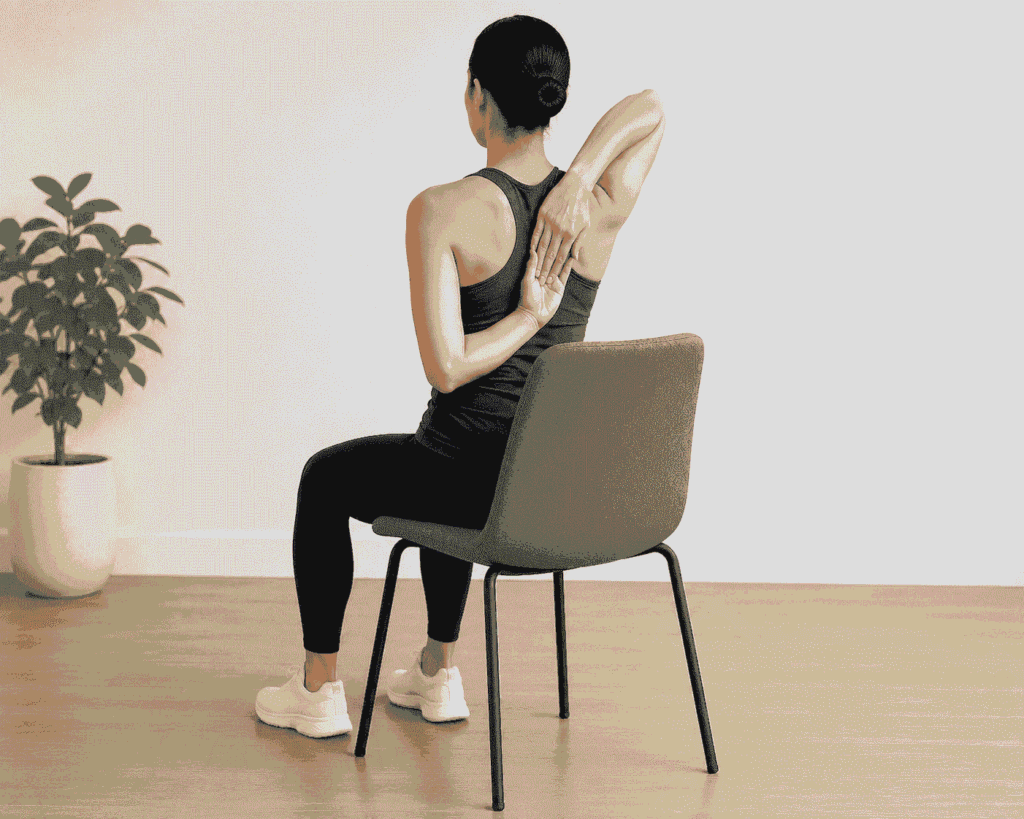
- With your feet flat on the floor and your back straight, take a seat close to the chair’s edge.
- Take a breath and extend your arms to your sides.
- Breathe out slowly and extend your arms behind your back while slightly bending your elbows.
- To increase the depth of the stretch, slightly arch your back.
- For a few breaths, maintain the position.
- Go back to the beginning position slowly.
Seated Single-Leg Stretch (Janu Sirsasana)

- With your left foot flat on the floor, take a seat at the front edge of the chair.
- Take a breath and extend your back.
- Breathe out and fold your outstretched leg slightly forward.
- For a few breaths, hold the stretch.
- Take a breath and slowly go back to where you were.
- After a few moments of relaxation, switch to the opposite side.
Does chair yoga really work for seniors?
Yes, chair yoga definitely works for seniors. It is a safe, low-impact way to improve flexibility, muscle strength, and joint mobility with no risk of falling. Clinical research demonstrates that consistent practice helps relieve the pain from problems such as osteoarthritis and greatly improves physical and mental health.
Principal Physical Merits
- Improved Mobility & Balance: Exercises boost functional fitness, making daily activities easier and helping to alleviate fall-related worries.
- Joint Relief: Gentle stretching helps loosen stiff knees, hips, and shoulders and keeps joints lubricated.
- Pain Reduction: Research indicates that older adults with lower-body osteoarthritis report significantly less pain and fatigue after just a few weeks of chair yoga.
Mental and Lifestyle Benefits
- Stress reduction: Deep breathing and seated meditation reduce cortisol levels, which helps ease anxiety and depression.
- Better Sleep: People in communities say that doing chair yoga consistently helps them sleep better.
- Social Connection: Participating in live community classes helps to combat isolation and foster a supportive environment.
How to Get Started
- Now, these benefits are readily available right away through a range of programs:
- Class: Free. Get started with guided routines on Silver Sneakers, including live-streamed and on-demand classes.
- Mobile Apps: Download wellness apps such as Lasta to monitor your progress and receive daily personalized 10-20 minute routines.
- Expert Guides: For at-home practice, look for beginner-friendly, accessible instructional books such as Chair Yoga for Seniors.
Can you lose belly fat with chair yoga?
Chair yoga will not specifically target or melt away belly fat. Combined with a balanced diet, though, it can be a very effective low-impact tool for weight management. It builds core strength, improves digestion, and reduces the stress hormone cortisol, which is linked to storing belly fat.
Chair yoga helps by contributing to overall calorie expenditure and improved muscle tone because you can’t “spot reduce” fat from one specific area of the body.
How Chair Yoga Can Help You Lose Weight
- Strengthens the Abdomen: Poses like the Chair Boat Pose and seated twists work your core muscles, tightening and defining the abdominal wall over time.
- Improves Digestion: Light stretches and forward bends activate the digestive system, preventing bloating and enabling the body to eliminate waste more efficiently.
- Reduces Cortisol Levels: Mindful breathing and stretching help lower stress, which helps reduce stress-induced cravings and overeating.
Chair Yoga Poses for Core Attention
- Add these seated positions to your daily routine to increase core activation:
- Seated Boat Pose Sit near the edge of the chair, lean back slightly, and lift your feet off the floor until your knees are at a 45-degree angle. Tighten your abdominal muscles and hold for 20-30 seconds.
- Seated Leg Lifts: Take a seat, hold on to the sides of your chair for support,t and slowly extend and raise one leg at a time until it’s parallel with the floor.
- Spinal Twist: Using the chair’s back as leverage, twist your upper body to the right while sitting tall and keeping your hips looking front. Repeat on the left after holding for a few breaths.
Does the 28-day chair yoga really work?
Sure, if you want to build consistency, increase mobility, reduce stress, or manage joint stiffness, a 28-day chair yoga program works. But how good it is depends very much on what you expect from the program.
What it CAN do (Proven Benefits):
- Increase Flexibility & Mobility: Consistent stretching can enhance your joint range of motion, making daily movements (like bending or reaching) much easier.
- Ease Joint Pain: Research shows that regular practice can help reduce joint stiffness and pain, particularly beneficial for issues like arthritis or knee osteoarthritis.
- Reduce Stress: Mindfulness and deep breathing techniques greatly reduce stress hormones (such as cortisol).
- Build Consistency: A 28-day challenge is a very effective, low-pressure way to create a sustainable daily habit.
What it can not do (Unrealistic Expectations)
Major Weight Loss: Chair yoga is a gentle form of exercise, and it typically burns only 50 to 200 calories an hour, so it’s an inefficient tool for major weight loss by itself.
Build Heavy Muscle: Excellent for toning and alignment support, but lacks the resistance necessary for building serious muscle mass.
Tips to Succeed:
A 28-day commitment gives your body the time needed to adapt and show gradual improvements. For maximum benefit, try adding the following to your routine:
Diet and Nutrition: If you want to lose weight, combine chair yoga with a healthy diet to be in a caloric deficit.
Benefits of yoga
Numerous health advantages have been associated with yoga, and larger, longer-term research is underway. According to what we’ve discovered so far, frequent yoga practice may have the following benefits:
Yoga improves strength, balance, and flexibility.
While maintaining a pose can develop strength, slow motions and deep breathing improve blood flow and warm up muscles.
Yoga helps with back pain relief.
For those with lower back discomfort, yoga is just as effective in reducing pain and increasing mobility as simple stretching.
Yoga can ease arthritis symptoms.
For those with arthritis, gentle yoga has been demonstrated to reduce some of the pain associated with sensitive, swollen joints.
Yoga benefits heart health.
Frequent yoga practice may improve heart health by lowering stress and inflammation throughout the body. Yoga can also help with several heart disease risk factors, such as high blood pressure and obesity.
Yoga relaxes you to help you sleep better.
A regular yoga practice before bed can help you get into the appropriate frame of mind and make your body ready to go to sleep and remain asleep, according to research.
Yoga can mean more energy and brighter moods.
After establishing a yoga practice habit, you might experience more mental and physical energy, an increase in attention and enthusiasm, and less negative emotions.
Yoga helps you manage stress.
Yoga connects you with a supportive community.
Attending yoga lessons can reduce feelings of loneliness and offer a supportive and healing environment for the group. Even in one-on-one sessions, loneliness is lessened since each person is respected as an individual, heard, and included in the development of a customized yoga regimen.
- Yoga promotes better self-care
- Lower stress
- Reduced risk of heart disease
- More stable blood sugar
- Less back and arthritis pain
- Sharper memory
- Less anxiety and depression
- Better sleep
- Greater happiness
- Weight loss.
Benefits of chair yoga
In addition to offering a more stable, seated platform from which to exercise, chair yoga can provide the aforementioned advantages.
Compared with participation in a health education program, chair yoga movements for 45 minutes twice a week for 8 weeks reduced pain and fatigue in a small trial of older persons with lower-body osteoarthritis (such as the knees and hips). A 12-week chair yoga program improved the ability of persons with osteoarthritis in their knees to do daily tasks, according to another small study.
In a third trial, older persons who engaged in a six-week chair yoga program reported feeling less stressed than those who engaged in chair aerobics, walking, or social activities.
Increased strength: A small 2019 study of 31 older women living in the community discovered that 12 weeks of chair yoga increased hand, arm, and leg strength. But more investigation is required.
Better balance: After 12 weeks of chair yoga, the participants in the same study reported better balance, agility, stride, and flexibility.
Help with osteoarthritis: After 12 weeks of chair yoga, participants in a small 2023 study of 85 older Taiwanese females with osteoarthritis (OA) of the knee reported better functional fitness, suggesting chair yoga may be beneficial for anyone with joint problems.
Better quality of life: According to a 2019 study, chair yoga can help older persons’ mental and physical health as well as their strength and flexibility.
Tips for getting started with chair yoga
Increase the number of chair yoga sessions you perform each week gradually at first.
Pay attention to your body. Any position that hurts too much should be stopped, and you should consult your healthcare provider.
If at all feasible, discuss the ideal poses for your situation with a physical therapist.
Before starting a new fitness regimen, see a healthcare provider.
Safety tips for chair yoga
Make sure your chair is stable and safe before working out on it. There should be no tipping, wobbling, rolling, or easy movement in your chair. To give yourself greater space to move in different directions, use a chair without arms.
Start slowly, just like you would with any new workout, so you have time to adjust to the movements and see how your body responds. In no chair yoga posture should you push yourself to the point of pain or strain.
FAQs
How long should you do chair yoga for seniors?
To begin, set aside five minutes each day. Doing chair yoga for five minutes every day is preferable to doing it for an hour once a week. You wish to form a habit. People frequently want to accomplish more after five minutes because they feel better.
Does the 7-minute chair workout really work?
The 7-minute chair workout is great for improving cardiovascular health, mobility, and endurance as long as you’re consistent. But experts agree that doing a single 7-minute circuit won’t be enough if your main goals are serious weight loss or muscle hypertrophy.
How It Works
More Movement Each Day: It helps break up sedentary behavior that can boost joint range of motion, increase flexibility, and ease stiffness.
Cardiovascular Health: When done with high intensity, these short bursts will get your heart rate up and provide you with conditioning benefits without taxing your joints.
Core & Upper Body Activation: Sitting exercises (knee lifts, oblique leans) are great for working abdominal muscles and improving posture.
The Limitations
Intensity and Duration: The original 7-minute workout is based on High-Intensity Circuit Training (HICT). You have to push your body to the limit to get the most out of it.
Weight loss calorie deficit: If you want to lose weight, one 7-minute workout is not going to burn enough calories by itself. Personal trainers and fitness reviewers say that a truly effective routine generally involves repeating the circuit 2-3 times (roughly 14-21 minutes of total activity).
What are common mistakes in chair yoga?
Avoid These Chair Pose Mistakes, bending your shoulders. Maintain your shoulders locked in place and back.
arching your back. Give your glutes a small tuck if you feel any pressure in your lower back (squeezing your butt can assist).
Either too deep or insufficiently deep.
not using your inner thighs.
How many times a week should a senior do chair yoga?
Twice or three times every week
Chair yoga exercises, two to three times a week, can significantly enhance flexibility, strength, and balance in the majority of older persons. Paying attention to your body is essential. Stretching gently is okay, but if it hurts or is too intense, stop or adjust the exercise.
Can yoga reduce creatinine?
Yes, yoga can help lower or control high creatinine levels indirectly by improving kidney function, lowering blood pressure, and reducing stress. But it should be used as an adjunctive supportive practice in conjunction with conventional medical treatments and not substituted for them.
How Yoga Helps Kidney Health
Enhances Circulation: Gentle abdominal stretches in certain asanas boost the blood supply to the renal system.
Lowers Blood Pressure. Regular yoga relaxes the stress on the kidneys and reduces the systolic and diastolic pressure.
Reduces Stress: Stress increases cortisol,l which can be detrimental to kidney function. Yogic breathing and meditation help to calm the nervous system.
What is the most unhealthy sitting position?
Sitting Posture Advice. The slouched or slumped posture, which involves sliding your hips forward, rounding your back, and craning your neck toward a screen, is the most unhealthy sitting position. This position strains your muscles, compresses your spinal discs, flattens the natural curves of your spine, and limits your respiration.
References
- Chair yoga exercises for beginners and seniors. (2023, November 20). PureGym. https://www.puregym.com/blog/chair-yoga-exercises-for-beginners-and-seniors/
- Checking your browser – reCAPTCHA. (n.d.). https://pmc.ncbi.nlm.nih.gov/articles/PMC12591597/
- Nichols, H. (2025, July 22). Everything you need to know about yoga. https://www.medicalnewstoday.com/articles/286745#summary
- Souza, R. (2026, June 24). Need to slow down? 20-Minute chair yoga can help you put yourself first. Yoga Journal. https://www.yogajournal.com/practice/chair-yoga-stretches/
- Stelter, G. (2025, September 25). 7 chair yoga poses for older adults. Healthline. https://www.healthline.com/health/fitness-exercise/chair-yoga-for-seniors