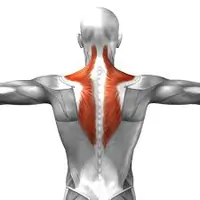

10 Best Home Exercises for De Quervain’s Tenosynovitis
Introduction:
Home exercises for De Quervain’s Tenosynovitis focus on reducing wrist/thumb pain and improving tendon mobility. Gentle stretching and strengthening help calm inflammation, restore smooth tendon gliding, and support daily activities without discomfort.
De Quervain’s tenosynovitis is an inflammatory disease. It hurts where the base of your thumb and your forearm meet on the thumb side of your wrist.
Strengthening exercises have been demonstrated to speed up the healing process and lessen symptoms if you have de Quervain’s.
For example, specific exercises can be beneficial:
- Decrease inflammation
- Improve function
- Prevent recurrences
Additionally, you will learn how to move your wrist in a stress-relieving manner. After starting your fitness regimen, you should start to see results in four to six weeks.
For additional information on how to begin and a detailed introduction to various exercises, continue reading.
10 Best Exercises for De Quervain’s Tenosynovitis
Thumb lifts
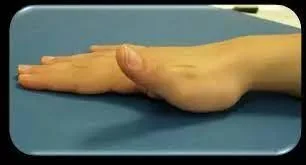
- The palm of your hand should be facing up on a level surface.
- Place the base of your fourth finger at the tip of your thumb.
- Raise your thumb from your palm until it is almost perpendicular to your hand’s forefinger side. A stretch will be felt across your palm and at the back of your thumb.
- After extending your thumb for roughly six seconds, let go.
- Do this eight or twelve times.
Opposition stretch

- Put the palm of your hand up on a table.
- Raise your pinky and thumb.
- Press your thumb and pinky tips together gently. The base of your thumb will feel stretched.
- For six seconds, maintain this posture.
- Repeat ten times after releasing.
Thumb flexion
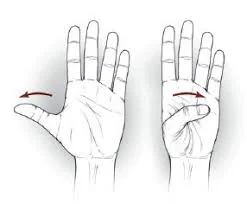
- Hold your hand in front of you as if you were ready to give someone a handshake. It can be supported by resting it on a table.
- Bend your thumb down at the base where it joins the palm with your other hand.
- The inside of your wrist and the base of your thumb will feel stretched.
- Hold for a minimum of 15 to 30 seconds.
- Do this five to ten times.
Finkelstein stretch

- Put your arm out in front of you as if you were going to give someone a handshake.
- Bend your thumb over your palm.
- Gently extend your thumb and wrist down with the other hand. The thumb side of your wrist will feel stretched.
- Hold for a minimum of 15 to 30 seconds.
- Do these two to four times.
Wrist flexion

- Extend your arm with the palm facing upward.
- Raise your wrist while holding a tiny weight in your hand. The back of your hand will feel stretched.
- Return the weight to its initial position by slowly lowering your wrist.
- Perform two sets of fifteen.
Wrist extension

- Extend your arm with the palm facing downward.
- Bend your wrist slowly up and back while holding a tiny weight. The back of your hand and wrist will feel stretched.
- Return your wrist to its initial position gradually.
- Perform two sets of fifteen.
Wrist radial deviation strengthening

- Holding a weight, extend your arm in front of you with the palm facing inward. On top should be your thumb. If you require additional support, place your wrist over the side of the table and balance your forearm on it.
- Gently bend your wrist up while keeping your forearm still, bringing your thumb closer to the ceiling. The base of your thumb, where it connects to your wrist, will feel stretched.
- Return your arm to its starting position slowly.
- Perform two sets of fifteen.
Eccentric radial deviation strengthening
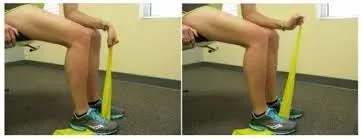
- Place yourself in a chair with your legs slightly apart.
- Using your right hand, grasp one end of an elastic band.
- Place your right elbow on your right thigh, bend forward, and lower your forearm between your knees.
- Step on the other end of the elastic band with your left foot.
- Bend your right wrist slowly to the side away from your left knee while keeping your palm facing down. Both the inside and back of your hand will feel stretched.
- Do this eight or twelve times.
- Do the same with your left hand.
Grip strengthening
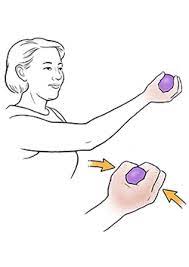
- A putty ball should be squeezed for five seconds.
- Perform two sets of fifteen.
Finger spring

- Put a hair tie or rubber band over your fingers and thumb. Verify that the band is sufficiently tight to provide some resistance.
- Stretch the rubber band as far as you can by opening your thumb. Your thumb will feel stretched.
- Perform two sets of fifteen.
Precaution:
Speak with a Healthcare Professional: Before beginning any new workout regimen for De Quervain’s, always speak with your physician or physical therapist. You will receive exercises that are specific to your stage of rehabilitation.
Avoid Pushing Through Pain: Pain is your body’s way of telling you that your tendons are being irritated. If an activity makes your symptoms worse, stop right away, cut back on your repetitions, or take a few days off.
Start Slowly: As your symptoms permit, start with fewer repetitions and then increase them. Don’t go overboard.
Rest: Avoid the repetitive gripping, pinching, or twisting motions that first triggered the problem (particularly with side-to-side wrist motion).
Wear a Splint (If Recommended): To immobilise the affected area and encourage rest, particularly during activities or sleep, wear a thumb spica splint as directed by your healthcare physician.
When to visit your physician
It’s crucial that you do these exercises regularly in order to lessen your symptoms and avoid flare-ups. For pain relief, you can either apply heat and cold therapy to your wrist or take nonsteroidal anti-inflammatory medications like ibuprofen (Advil).
You should consult a physician if you’ve tried to reduce your wrist pain and it’s not getting better. You can decide on the best course of action for recovery together.
For additional care, they could recommend that you see a specialist. You must take care of de Quervain’s. Your range of motion may be permanently harmed, or the tendon sheath may burst if treatment is not received.
Conclusion
A highly customised, impairment-driven approach will be necessary for the successful treatment of DeQuervain’s tenosynovitis. Early splinting during the acute phase will keep the tissues from getting worse and enable the patient to carry out tasks necessary for work and self-care.
The patient must be informed about tissue repair schedules and the significance of avoiding activities that exacerbate their symptoms. Exercise therapy progresses from isometric to eccentric to concentric inner range. Before moving on to the next degree of strengthening, patients should be pain-free.
FAQs
How quickly may de Quervain’s tenosynovitis be cured?
Using a brace or splint: This will relieve pressure on your thumb tendons by immobilising your wrist and thumb.
Applying icing on your wrist: Icing can ease discomfort and minimise swelling.
Rest: Try to avoid using your affected wrist as much as you can.
Which workout works best for tenosynovitis?
Raise your thumb from your palm until it is almost perpendicular to your hand’s forefinger side. There will be a stretch across your palm and at the back of your thumb. After extending your thumb for roughly six seconds, let go. Do this eight or twelve times.
Does de Quervain benefit from massage?
If your symptoms are less severe, you can just rest your thumb, keep an eye on your pain, and avoid doing any actions or positions that could cause pain, such as gripping, pinching, twisting, or raising. By relaxing the muscle that tugs on the tendon, massage therapy can lessen discomfort and inflammation.
Do you want to heat or ice the de Quervain?
Prior to and following any activity: To warm the region, use a heating pad on your wrist. To relax the muscles, massage the region surrounding your thumb and wrist. If your wrist hurts after an exercise, apply ice and take pain medication.
What may be confused for De Quervain’s?
A relatively rare illness, intersection syndrome is sometimes misdiagnosed as “De Quervain’s tenosynovitis.”
Can de Quervain’s tenosynovitis be treated by a chiropractor?
Chiropractors may employ a variety of conservative rehabilitation techniques to treat De Quervain’s stenosing tenosynovitis and enable a patient to promptly resume pain-free ADLs.
Referances
- Cronkleton, E. (2018, November 2). 10 exercises for De Quervain’s tenosynovitis. Healthline. https://www.healthline.com/health/de-quervains-tenosynovitis-exercises#thumb-lifts
- De Quervain’s tendinosis. (2025, June 2). Cleveland Clinic. https://my.clevelandclinic.org/health/diseases/10915-de-quervains-tendinosis
- Physio, S. (n.d.-a). Best 5 exercises for de Quervain tenosynovitis – Surrey Physio. Surrey Physio. https://www.surreyphysio.co.uk/top-5/best-5-exercises-for-de-quervain-tenosynovitis/