
Triceps Kickbacks
What are Triceps Kickbacks?
Tricep kickbacks are an isolation exercise that targets the triceps’ long head muscle. This exercise begins with your elbow bent in a hinged posture, and it ends with your arm extended straight out to work your triceps. Usually, a dumbbell is used for it.
One strength training exercise that targets the triceps muscle is the triceps kickback. Three things you may do to take charge of your own outcomes are:
- Vigour. You may adjust the intensity by changing the weight if you’re using them. You can select looser or stronger bands if you’re utilising them.
- Regularity. The finest effects will come from exercising regularly, but also giving yourself occasional days off.
- Repetitions and sets. By varying the number of repetitions and sets you complete, you may regulate the intensity of your workout.
Muscle Work During Triceps Kickbacks:
There are three heads, or sites of attachment, on the triceps muscle. Both when the muscle is pronated and when it is supinated, all three heads aid in arm extensions.
These three heads are:
- Lateral Head: The rear of the humerus, the upper arm bone, is where the lateral head of the triceps muscle is attached. The triceps muscle’s strongest area is the lateral head. The lateral head of the triceps is primarily activated by triceps kickbacks.
- Middle Head: Below the lateral head, this head also connects to the rear of the humerus.
- Long head: The triceps muscle’s long head is attached to the shoulder blade or scapula. It stabilises the humerus and supports the shoulder joint in addition to aiding with arm extensions.
Video of Triceps Kickbacks
How to Perform?
- Using your left hand, lift a dumbbell.
- Put your right leg out in a split stance.
- Lean forward while maintaining a straight back and a head that is in alignment with your spine by contracting your core.
- On the right thigh, place the right hand.
- Maintaining the upper arm in line with the upper body, bend the left arm that is holding the dumbbell to a 90-degree angle.
- Slowly straighten the lower arm while maintaining a firm wrist without moving the upper arm or upper torso.
- Return the lower arm slowly and at a 90-degree angle to the beginning position.
- Perform the desired number of repetitions.
- Continue on the opposite side.
Benefits:
- Healthier bones. Strength exercise increases bone density by beneficially stressing the bones.
- Control of weight. Strength training increases metabolism in addition to burning calories, so even when you’re not exercising, you’re burning more calories.
- Quality of Life. Being able to accomplish the things you wish to do will increase your enjoyment of life. Strength training might help you maintain your independence as you become older. This can help maintain the health of your joints, increase your balance, and lower your chance of falling.
- Control of long-term illnesses. Numerous ailments, including diabetes, arthritis, and heart disease, can be effectively managed with strength training.
- Mental well-being. Aerobic exercise and strength training may both enhance brain function, particularly in older persons.
Modifications:
- At the start and finish of every practice, spend five to ten minutes warming up and cooling down your body.
- Make sure you increase your physical activity gradually and under the supervision of a fitness expert if you’re relatively new to it.
- Use the lightest weight you can find as you practise correct form and technique.
- Instead of using abrupt, aggressive movements, use ones that are calm, controlled, and fluid.
- Throughout your regimen, make sure you can breathe naturally and smoothly.
- If you have any back, shoulder, or neck issues, proceed with caution when performing these exercises.
- Stop right away if you experience any pain during or after these activities.
- Never undertake anything more than light, moderate activity until your body has completely healed from any injury, no matter how slight.
- To give your muscles time to rest and heal, it’s a good idea to take at least one full day off each week.
Variations:
Triceps Kickbacks with Cables:
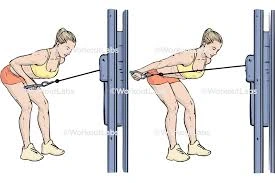
- Face a machine with a low pulley cable.
- Your torso should be almost parallel to the floor while you bend forward slightly at the waist.
- Maintain a straight head, neck, and spine by using your core.
- For support, place one hand on your thigh.
- Using your triceps, slowly stretch your arm back as far as you can while maintaining a taut arm at your side as you exhale.
- Here, pause, then take a breath as you raise your arm back to the beginning position.
- Perform 10–15 repetitions in two or three sets.
Incline Bench Triceps Kickback

Compared to the flat bench or standing version, the inclination also modifies the exercise’s angle, which may influence how the triceps are worked. This workout involves lying face down at a 45-degree angle on an incline bench.
Common Mistakes:
Use the following basic guidelines for efficient weight training while targeting your triceps:
- Make sure the weight you choose will enable you to complete 12 to 15 repetitions.
- Keep your weight in check. Use a deliberate, fluid motion instead.
- As you shift the weight back, exhale, and then take another breath to go back to the beginning position.
- If at all feasible, examine your triceps kickback form in a mirror.
- Stop exercising right away if you feel any pain.
Conclusion:
A quick and efficient technique to increase arm and upper body strength is to perform triceps kickbacks. You can benefit from them in other physical activities if you incorporate them into your regimen. Keep up a well-rounded fitness regimen that includes strength training, cardio, flexibility, stretching, and balancing training.
To avoid injury, gradually build up your strength without going over your limit. Above all, love your routine and turn it into a joyful aspect of your life.
FAQs
What is a mistake for a tricep kickback?
Not holding your elbows firm during repetitions is one of the most frequent errors made when performing tricep kickbacks. In the direction of the weight, many trainees move their elbows back and forth. This is not a good idea since it releases tension from your muscles, which reduces the effectiveness of each repeat.
Are kickbacks actually effective?
As part of your gym routine, cable kickbacks are an excellent method to isolate and develop your glutes. Donkey kicks, which are perfect for strengthening the glutes at home or as part of a warm-up, may be done with or without tension bands.
Are tricep kickbacks safe for beginners?
Because of how far you hold the weights from your body, the triceps kickback may seem harder than other arm workouts. For this reason, novices are advised to focus on the triceps squeeze while going light or doing the kickback action without weights.
How many times should I do kickbacks?
Generally speaking, two to four sets of up to 15 repetitions can be used for glute kickback exercises. Although this might vary from person to person, it can be done two or three times a week.
What are the benefits of tricep kickbacks?
The tricep kickback can improve your arms’ and shoulders’ stability and flexibility if done correctly. The tricep kickback helps you get ready for daily activities like lifting, pushing, and swimming by increasing your upper body strength and range of motion.
References:
- Adcox, S. (2024, September 20). How to do triceps kickbacks. WebMD. https://www.webmd.com/fitness-exercise/how-to-do-triceps-kickbacks
- Bunch, E. (1970, January 1). How to do triceps kickbacks so you’re hitting all the right muscles. https://www.onepeloton.com/blog/triceps-kickbacks
- Cronkleton, E. (2019, May 28). How to do tricep kickbacks. Healthline. https://www.healthline.com/health/tricep-kickbacks
- Fit, C. (2022b, August 4). How to Do Tricep Kickbacks Perfectly – Benefits & Variations. blog.cult.fit. https://blog.cult.fit/articles/tricep-kickbacks-how-to-do-it-perfectly