
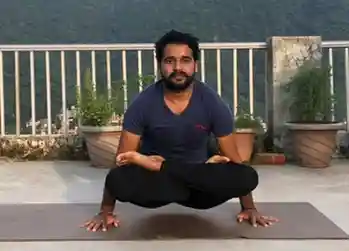
Lolasana (Pendant Pose)
What is Lolasana?
In contemporary yoga, lolasana is an arm-balancing pose. It strengthens the upper back, tones of core muscles, shoulders, forearms, and wrists.
It takes tremendous hand strength and intense concentration to maintain this straightforward posture. Although lolasana and crane pose are similar in appearance, they are not the same in practice.
You must regularly practise the preliminary stances for the final lolasana pose. This asana’s back-to-back technique can make a practitioner’s body stronger and more muscular.
Muscle Work During Lolasana:
- Shoulder Muscles
- Biceps and Triceps Muscles
- Wrist and Forearm Muscles
- Core Muscles
- Upper Back Muscles
How to Perform?
- Kneel on the floor to start. Your head and torso have to be perpendicular to the ground. Similar to Vajrasana.
- To align your body, take a breath. Now place your hands wide apart on either side of your knees. As you enter the position, provide room between your shoulder blades.
- After that, take a deep breath and use your core strength to push it toward your upper back. Now, release the breath and lift your upper body upward.
- Keep your hand steady on the ground. Lift your body off the ground by combining the strength of your upper back, wrists, and core with a tight grasp with your fingers.
- Push your lower ankle up while keeping your ankles crossed. To provide the steady strength, contract your abdominal muscles.
- Maintain this position.
- Release: Nonetheless, practitioners who have strengthened their shoulders, wrists, and core can maximise their time. Once the allotted time has passed, lower your body by letting go of your core and allowing it to come into contact with the ground. Ankles uncrossed, followed by a leg. Roll your wrist slowly and shake your hands.
Benefits:
- In Lolasana, lifting off the body places a lot of pressure on the upper back, shoulder, and wrist. They get stronger as a result of the increased bone density.
- This asana helps in body lifting by strengthening the core. It does this by utilising the strength of the abdominal muscles. However, consistent practice of this asana eliminates respiratory conditions, including bronchitis and abdominal disorders.
- One study found that regular Lolasana practice combined with other yoga poses can help patients with schizophrenia improve their subjective well-being, everyday basic living skills, personal cleanliness, self-care, social-interpersonal activities and communication, and self-discipline.
- This pose necessitates core strength, which can only be developed via consistent practice. The practitioners with bellies burn a lot of calories doing this. reduces belly fat as a result.
- Lolasana’s abdominal contraction helps to improve digestion. Digestive juices and enzymes are secreted at their best when the digestive organs are rejuvenated. helps in digestion as a result.
- It takes willpower and focus to maintain posture for a while. Asana practitioners can gain self-control and sharpen their focus by doing this.
Beginner’s Advice:
- To truly reach the pose, beginners should take their time. Don’t overwork yourself at first; instead, let your body figure out how to win.
- When raising anything off the body, one can attempt to do it while maintaining their feet on the ground or according to their strength. This could prevent you from getting hurt and lessen the strain on your wrist.
Preparatory Pose:
Phalakasana (Plank Pose):
Because it strengthens the arms, wrists, and core muscles, the plank position is a great way to prepare for lolasana. Place your wrists slightly below your shoulders and begin on all fours.
Straighten your knees, hold onto your mat with wide fingers, look in the middle of your hands, and attempt to make your body look like a wooden plank. From your heels to the top of your head, maintain a straight posture. Hold the stance for five to ten deep breaths while using your core muscles.
Adho Mukha Svanasana (Downward-Facing Dog Pose):
Another excellent pose to prepare for Lolasana is Downward-Facing Dog, which strengthens and extends the arms, shoulders, and core.
Start on all fours, raise your hips towards the ceiling, and straighten both your arms and legs. Lengthen your upper body by bringing your chest near the floor while pressing your hands into the mat. Hold the posture for ten to twenty deep, soothing breaths.
Tolasana (Scale Pose):
Because it strengthens the arms, wrists, and core muscles, Scale Pose is an ideal warm-up pose for Lolasana. With your legs extended in front of you, take a seat on the floor.
With your fingers pointing forward, place your hands on the floor behind your hips. Using your hands to balance, raise your hips off the ground, and lift your feet off the ground. Release your grip and return to the floor after holding the pose for a few deep breaths.
Props and Modifications:
- At first, your weak core would make it challenging to suck in your lower body. Use blocks in lolasana to get around this. Blocks should be placed on either side of the knees. It will guarantee that you are tall enough to lean forward and raise yourself.
- By strengthening them, wrist wobbling can be decreased. Practitioners of chaturanga dandasana might learn certain techniques to address this shakiness after devoting some time to the practice.
Variations:
Bhramacharyasana (Celibate Pose):
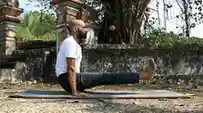
It’s time to test your core with this variation once you’ve mastered the necklace pose.
The celibacy pose involves lifting your body above the ground with straight legs and stable glutes hovering over the mat after straightening your legs in the staff posture. It takes a great deal of shoulder strength and core stability to do this pose.
Utthita Padmasana (Elevated Lotus Pose):
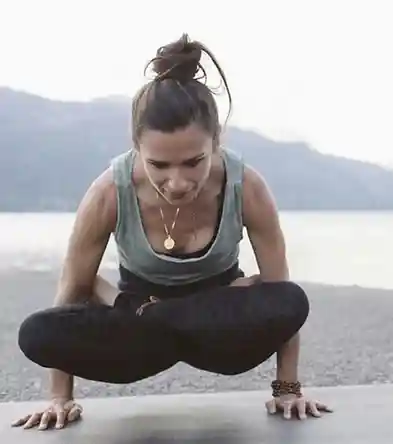
Now that you have mastered both Lolasana and Bhramacharyasana, it’s time to put your leg flexibility and core stability to the test.
This variation involves starting in the lotus position and gradually pushing into the mat with your entire core. When you’re ready, raise your hips off the mat and balance Padmasana in the air by pushing into your shoulders and then arms.
This is a more difficult yoga pose that calls for a lot of strength and stability in the core. Additionally, it stretches the thighs, ankles, and hips, which can be quite helpful for those who have tight hip flexors or spend a lot of time sitting.
Precautions and Contraindications:
- Lolasana should not be performed by practitioners with wrist conditions such as dislocation, sprain, or DeQuervain’s Syndrome (inflammation of tendons).
- Individuals who suffer from cervical vertebrae, neck sprains, or shoulder injuries should also avoid using this pose until they recover. Otherwise, the situation can get worse.
- Women who are menstrual or pregnant should avoid doing this asana. because it could put strain on the abdomen.
FAQs
Can beginners perform Lolasana?
Lolasana requires a lot of arm strength and awareness; therefore, beginners should avoid doing it as their first arm balance.
However, by progressively increasing their strength and consistently engaging in a series of basic shoulder, wrist, and core strengthening exercises, beginners may always achieve this pose.
What is Lolasana good for?
Lolasana is an excellent upper-body exercise that strengthens and engages your arms, shoulders, wrists, and core. For toned arms and shoulders, it’s an excellent exercise option.
What are the benefits of Lolasana?
Strengthening of the arms, wrists, and shoulders, conditioning of the abdomen, opening of the chest, better control and balance, and increased focus are just a few of the physical and mental advantages of lolasana.
What are the different preparatory poses in Lolasana?
Strengthening the arms, shoulders, and core with Forearm Plank Pose, Scale Pose, Crow Pose, and Full Boat Pose is a great way to get ready for Lolasana. Your practice will be seamless and secure as a result of all these preliminary postures, which will improve balance and awareness for the main position.
What are the different variations in Lolasana?
Typical versions of lolasana include lolasana with yoga blocks, lolasana with foot taps, and lolasana with feet-clasp; these enhance your mind-muscle connection, deepen your practice, and add complexity.
Who should avoid performing Lolasana?
Lolasana should not be performed by anyone with back, shoulder, or wrist ailments until they have healed. These poses should also be completely avoided by persons who have recently had stomach surgery, are pregnant, or have high blood pressure.
Before beginning any new physical activity, see your physician and yoga instructor, particularly if you have any major health issues.
References:
- Lolasana (Pendant Pose): Meaning, Steps, Benefits, & Precautions – Fitsri Yoga. https://www.fitsri.com/poses/lolasana
- Allen, W. (2025a, August 25). Lolasana. https://myyogateacher.com/yoga-asana/lolasana
- Pendant Pose Yoga Pose (Lolasana). Tummee. https://www.tummee.com/yoga-poses/Lolasana.