
Scapular Retraction Exercises
Scapular Retraction: What Is It?
Scapular retraction exercises are workouts that involve pulling the shoulder blades together towards the spine. However, the shoulders do not raise in the direction of the ears during these exercises. The strength and integrity of the muscles surrounding the shoulder blades are the main goals of these exercises.
Additionally, it helps improve your posture, which can address issues such as shoulder and back pain. The rhomboids, latissimus dorsi, middle and lower trapezius, and upper trapezius are the muscles involved in scapular retraction.
9 Best Exercises for Scapular Retraction
Standing Wall Angels

- Stand with your back against a wall, ensuring that your head, upper back, and glutes are in contact with the wall.
- Stretch your arms out to form a “W” shape.
- Maintain constant contact as you slowly move your arms up the wall.
- As you raise your arms, retract your shoulder blades, then do the opposite.
- Perform 10-15 times.
Seated Row

- Start by sitting at a machine table.
- Hold the handles with your back straight and chest up.
- Retract your shoulder blades and draw the handles towards your upper body.
- Squeeze your shoulder blades together, then release them gradually.
- Perform 10-15 times.
Prone Y Raises

- Lie face down on a mat or exercise bench.
- After that, place your hands in a Y shape.
- Raise your arms off the floor.
- Return your arms to a starting position.
- Hold for 5 seconds.
- Perform 10-15 times.
Face Pulls

- Start in a standing position.
- Grip the ends of a rope that is fastened to a high pulley.
- Take a step back and put your arms out in front of you.
- Retract your shoulder blades as you pull the rope in the direction of your face.
- Release the rope gradually and return it to its initial position.
- Perform 10-15 times.
Shoulder Blade Squeeze
- Start in a standing or sitting position.
- Bend your elbows and extend your hands forward while raising your arms to shoulder height.
- Squeeze your shoulder blades together as you extend your arms backward.
- Hold for ten seconds. Go back to where you were.
- Repeat five times.
Inverted Rows

- Place a bar at waist height or use TRX straps.
- Lie beneath the bar and grab it with an overhand grasp.
- Pull your chest in the direction of the bar while maintaining a straight body.
- Control yourself as you descend.
- Perform 10-15 times.
Prone Scapular Squeezes

- Start in a prone lying position.
- Lie facedown with your arms outstretched.
- Briefly squeeze your shoulder blades together.
- Hold for 5 seconds.
- Let go and do it again.
- Perform 10-15 times.
Reverse Flys

- Start by placing your feet shoulder-width apart. Keep your preferred weight of dumbbells by your side.
- Push your hips back in a hinge motion, bringing your chest forward and almost parallel to the floor.
- Keep your knees slightly bent, your back straight, and your core firm as you let the weights drop.
- Keep your elbows slightly bent as you extend your arms to your sides.
- Pull your shoulder blades in the direction of your spine by squeezing them together.
- Then return to the starting position.
- Perform 10-15 times.
- As you finish your repetitions, keep your spine neutral.
Push-Ups
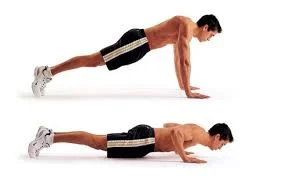
- Put all four of your limbs on the ground, with your hands slightly wider than your shoulders.
- It is not appropriate to lock out the elbows. Keep them slightly bent.
- Stretch your legs back until your feet are hip-width apart and your hands and toes are straight.
- Raise your belly button towards your spine to tighten and develop your abdominal muscles.
- Bend your elbows progressively until they form a 90-degree angle as you slowly drop your body to the floor.
- Return to the starting posture by carefully pushing back up through your hands. The appropriate number of times should be repeated.
Benefits of Scapular Retractions:
These exercises are important because they improve posture, strengthen the upper body, and lower the risk of shoulder problems. Improving your upper back muscles might help you become more flexible and reduce pain associated with poor posture.
One of the main benefits of doing scapular retractions is that they help the chest area expand, which improves the person’s ability to breathe. This is particularly beneficial for athletes who require a high level of cardiovascular endurance. Additionally, the goal of scapular retractions is to strengthen the trapezius and rhomboid muscles, which are typically overlooked in upper-body exercise regimens.
By increasing shoulder blade stability, scapular retractions exercises can also help avoid shoulder injuries. By using scapular retractions to strengthen the muscles that maintain precise alignment during such activities, scapular stability can be attained.
Precaution:
Although these scapular retraction activities are beneficial, it’s crucial to avoid typical mistakes that might block advancement. Among these errors are:
- Putting on too much weight and losing form.
- When performing workouts, round your shoulders.
- Overarching the lower back causes poor posture.
- Recall that to fully benefit from these workouts, good form must be prioritised.
Conclusion
Exercises that target the scapular retraction muscles are crucial. This group of muscles includes the mid-trapezius, lower-trapezius, and rhomboids. These exercises are designed to strengthen and strengthen the muscles that cover the shoulders and upper back. By using this technique, you can improve your posture, reduce shoulder pain, and prevent injury.
FAQs
Why would someone perform a scapular retraction exercise?
Strengthening and activating the muscles that draw the shoulder blades (scapulae) together is the main goal of a scapular retraction exercise. These exercises strengthen the upper back and stabilise the shoulders by using muscles like the rhomboids and mid-trapezius. Consequently, this improves posture, lowers the chance of shoulder injuries, and promotes general upper body health.
Is retracting your scapula necessary for proper posture?
Yes, keeping proper posture requires retracting the scapulae. Scapular retraction exercises can assist in building the muscles required for correct shoulder alignment, even though it’s not necessary to maintain retraction continuously.
Are scapular retraction exercises appropriate for all fitness levels?
It is possible to modify any scapular retraction exercise to accommodate different levels of fitness. If you’re a newbie, it’s crucial to begin with correct form and less resistance. You can progressively increase resistance and intensity as you advance to test your muscles.
Can my posture-related discomfort be alleviated with scapular retraction exercises?
Of course. The muscles involved in maintaining proper posture are the focus of scapular retraction exercises. Frequent practice can improve general alignment and ease the discomfort brought on by bad posture.
Can I perform better athletically with scapular retraction exercises?
Indeed, a strong scapular retraction exercise can help increase upper body strength, shoulder stability, and mobility—all of which are critical for many sports. You can improve your overall performance by including them in your workout regimen.
Can I do these exercises without specific equipment at home?
Yes, you can perform a lot of scapular retraction exercises with just your own body weight or very little equipment. However, adding equipment like dumbbells or resistance bands can make your practice more challenging and varied.
Referances
- Aeromats. (n.d.). Scapular retraction exercises: Strengthen your upper back and improve shoulder mobility. https://www.aeromats.com/blogs/resources/scapular-retraction-exercises
- Scapular Retraction | Sport Orthopedics. (n.d.). https://sportsmedtexas.com/blog/scapular-retraction-and-scapular-protraction-exercises
- Physio, S., & Sgpadmin. (2023, July 17). What are Scapular Retractions and Why are They Important? southgatephysio. https://www.southgatephysio.co.uk/what-are-scapular-retractions-and-why-are-they-important/