VMO (Vastus Medialis Oblique) Exercise
What is VMO Exercise?
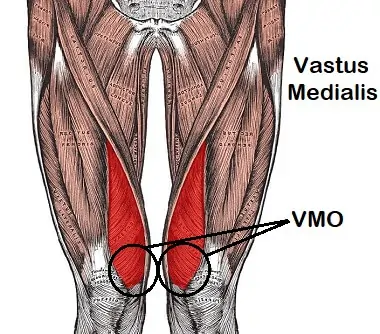
One of the most important muscles in the quadriceps group is the Vastus Medialis Obliquus (VMO), which is found on the inside of the leg. It helps in stabilising the patella, or kneecap, when squatting, running, and walking.
Exercises that target the VMO are essential for strengthening and improving the functionality of this muscle. In order to encourage the VMO’s activation and growth, these workouts concentrate on isolating and testing it.
Regular VMO exercise enhances muscle recruitment patterns by stimulating muscular hypertrophy and neurological adaptations. This lowers the risk of injury and improves knee stability.
Additionally, strengthening the VMO aids in resolving quadriceps muscle imbalances, which are frequently connected to knee issues such as patellofemoral pain syndrome and patellar tracking disorders.
In the end, focusing on the VMO with certain exercises improves knee function and health while lowering the risk of knee-related issues. To maintain patellar stability, prevent injuries, and ensure optimal knee function, these exercises are essential.
Origin of the VMO Muscle?
There are several origins for the VMO. The Adductor Magnus tendon’s pubic points are where the majority of the muscle fibres begin. Other possible areas of origin include the medial supracondylar ridge and the medial edge of the Linea Aspera.
Insertion of the VMO Muscle?
The VMO is connected to both the knee joint capsule and the medial margin of the patella. Additionally, there is a small area where it joins the patella tendon directly.
Nerve supply of the VMO Muscle?
The femoral nerve supplies the VMO muscle.
Clinical relevance
Its clinical relevance is for knee function and stability:
- Patellar stability: Any change in the activity of the VMO muscles, such as weakening, can lead to maltracking of the patella, which can cause instability, damage to surrounding tissues, and pain in the area.
- Patellofemoral Pain Syndrome (PFPS): Strengthening exercises are frequently beneficial for those with PFPS who are being assessed since they have a reduced volume of VMO.
How to work your VMO or VMO Exercise?
Isometric VMO Exercise
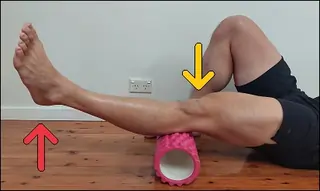
- Isometric Contraction: Sit on the floor or in bed, legs straight, and a towel under each knee. Maintaining a modest external rotation of your legs and hips will help you flex your quadriceps muscles.
- Seated Isometric VMO and Adduction: Take a seat on a chair or platform with your feet hanging loosely.To use your VMO, place a ball between your thighs and squeeze. Hold your contraction for ten seconds. Feel your VMO once more to make sure it is activated, and as you get stronger, extend the contraction.
- Externally Rotated ½ Squats: Stand with your legs shoulder-width apart, with your knees and feet turned outward, or externally rotated.
As you slowly sit down and then slowly stand back up, concentrate on using the VMO to pull yourself back up to a standing posture.
Perform three sets of ten as your strength improves.
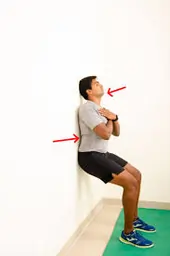
- Wall/Ball Squats: Place a Swiss ball with your back to the wall.
Bend gradually until your thighs are parallel to the floor and you are almost seated.
Return slowly, don’t lock your knees, and do three sets of ten, increasing as you get stronger.

- Split Squats/Static Lunges: Take a big step forward while keeping your feet shoulder-width apart.
To make it harder, you can place your hands on your hips or hold dumbbells by your side.
Jump up and down while standing straight, making sure your front knee does not move in front of your big toe.
Instead of letting your knee give way, focus on using your front heel to move the majority of your weight.
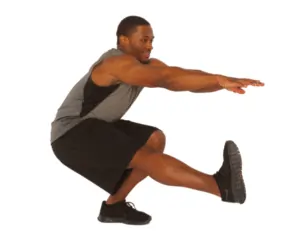
- Single Leg Squats:Only after you are pain-free and find bilateral exercises easy should you attempt single-leg stability, which is a bit more difficult.

- Step-Ups: Using your gluteal muscle instead of your toes, drive up onto a platform while standing in front of a chair or bench.
Instead of buckling inward, make sure your knee is pressed or pushed out.
Maintain a tense VMO muscle and an upright, neutral knee stance as you progressively lower yourself.

- Straight Leg Raises: Tighten your thigh and raise the straight leg about 12 inches off the ground while lying on your back with the other leg bent and the first leg straight. Hold for 3 seconds and repeat 20 sets.
What Makes the VMO Weak?
When the VMO doesn’t activate as much, it becomes weaker. This commonly happens when the knee hurts or swells.
The brain may stop the quadriceps from using their natural muscles if the knee joint capsule is inflamed. This may have an impact on the order or sequence in which the quadriceps’ four muscles contract or fire. The VMO weakens and atrophies as a result.
Will VMO Strength Exercises Fix Knee Pain?
In many cases, knee pain can be relieved by increasing the VMO’s activity. The VMO can aid in normalising knee movement and mechanics as well as balancing the knee cap’s posture.
However, there are other causes of lateral patellofemoral discomfort besides the VMO. Other causes include:
- Excessive Knock-kneed position (Genu Valgum)
- Weakness in the Gluteus Medius
- IT Band Syndrome/Tightness
Both of these problems can lead to knee discomfort and dysfunction by changing the patellofemoral joint’s natural mechanics.
Conclusion
The Vastus Medialis Oblique (or VMO) is a crucial muscle of the knee that contributes to stability, strength, and control.
Do this exercise daily and strengthen your VMO muscle.
FAQs
What is the VMO weakness?
Weakness in the vastus medialis oblique (VMO) muscle, which is part of the quadriceps muscle group, can result from a variety of causes, limiting function and potentially contributing to knee instability and pain.
Is cycling good for VMO?
During the down period of the pedal stroke, the quadriceps perform best. For pressing the huge gear, the vastus medialis oblique, or VMO, is especially important. We expend the most force when pushing down; therefore, the quadriceps are the primary muscles that work during riding.
What are the benefits of VMO?
The VMO serves to stabilise the patella, ensuring that it tracks appropriately during activities like walking, squatting, and ascending stairs. Joint Protection: By ensuring sufficient patellar alignment, the VMO reduces stress on the knee joint, thereby decreasing wear and tear.
How to treat VMO pain?
Other treatments include ice, compression, elevation, anti-inflammatory medication, trigger point therapy, range of motion exercises, and strengthening exercises.
Is the leg press good for VMO?
An increased VMO ratio may be developed with targeted training using the leg push exercise at the last 45° of knee extension/flexion and strong hip adduction.
What is the main function of the VMO?
The VMO’s major role is to stretch the knee while also stabilising the patella (kneecap) during knee movements.
References:
- Mend, B. +., & Mend, B. +. (2021, September 13). The seven best exercises for VMO activation: Early knee rehab | Bend + mend: Physiotherapy and pilates in Sydney’s CBD. Bend + Mend: Sydney Physiotherapy and Pilates. https://bendandmend.com.au/news/physiotherapy/the-seven-best-exercises-for-vmo-activation-early-knee-rehab/
- Stiffler, J. (2024, November 20). VMO strength exercises. JOI Jacksonville Orthopaedic Institute. https://www.joionline.net/library/vmo-strength-exercises/