
11 Best Stretches to Relieve Low Back Pain
Introduction
One of the most prevalent musculoskeletal disorders in the world, low back pain (LBP) may affect people of all ages and backgrounds. From a mild ache to a strong, chronic pain, it describes irritation or pain that is located between the buttocks and the bottom border of the ribcage.
In over 90% of instances, there is no obvious anatomical explanation for lower back pain, which can be categorised as acute (less than six weeks), sub-acute (6–12 weeks), or chronic (greater than 12 weeks).
With approximately 619 million impacted as of 2020, this condition is the biggest cause of disability worldwide, and estimates indicate that as populations age, this figure will increase dramatically. Reasons for lower back pain: People suffer in both their personal and professional lives. Your regular activities are impacted by back pain.
Some examples may go away on their own, while others can recur or continue, involving lifestyle changes and physical therapy. Exercise regimens customised to each patient’s demands, ergonomic modifications, and physical therapy are frequently components of effective care.
Exercises For Low Back Pain
Child Pose
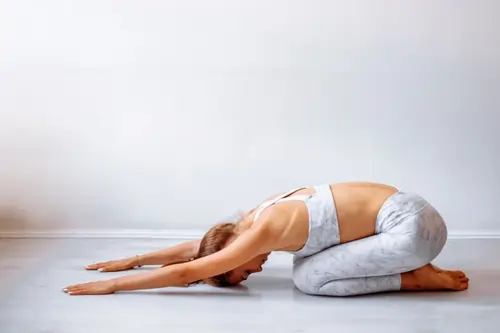
- Position: sitting position.
- Join the big toes together while on your knees.
- Now settle into a comfortable position by sitting on your heels.
- Ensure that your body is positioned between your legs.
- Now, relax your arms.
- Hold duration is five to ten seconds.
- Repetition should be three per session.
Knee-to-chest
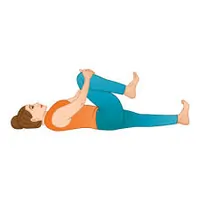
- Position: Supine lying position.
- Raise one bent knee just far enough to allow you to use both hands to grab your lower leg. Just under the knee, interlace your fingers.
- As you stretch, hold the shin area.
- Hold duration is five to ten seconds.
- Repetition should be three per session.
Cat-cow stretch

- Position: Quadruped position.
- Place a blanket below your knees for support if they hurt. To begin, maintain your spine long and mildly engage your core.
- Exhale after flexing your head and using all of your abdominal muscles. Do a head flexion now. As you raise your sternum forward, gently bring your shoulder blades together.
- Keep switching between these two postures, coordinating your breath with each movement.
- Hold duration is five to ten seconds.
- Repetition should be three per session.
Bird-dog

- Position: The Tabletop posture.
- Your shoulder blades should be drawn together.
- This workout helps you maintain both your lower and upper extremities while also improving your balance. Go back to where you were before. There is only one round.
- Hold duration is five to ten seconds.
- Repetition should be three per session.
Variations of the bird dog exercise
Push-up
Bird dog with weight
Seated forward bending
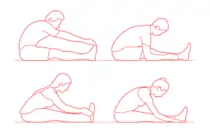
- Position: Long sitting position.
- To begin, sit upright and contract your core muscles. You can keep your alignment correct throughout the posture by doing this.
- Take a deep breath now and then repeat the stretching pattern while breathing out slowly.
- Reach for your feet: Use your hands to reach for your feet as you fold forward.
- After you’ve stretched as far as you can, let your upper body relax.
- Hold duration is five to ten seconds.
- Repetition should be three per session.
Piriformis stretch
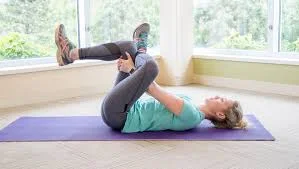
- Position: Supine lying position
- Bend your knees upward while lying down.
- Place your ankle on the other side of your thigh, then use your hand to pull while maintaining your thigh on the posterior portion of your thigh.
- Pull the bowed leg across your torso.
- Hold duration is five to ten seconds.
- Repetition should be three per session.
Side bends
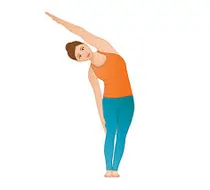
- Position: Standing position.
- In one hand, hold a dumbbell.
- Your free hand should rest on your hip. Let the hand that is carrying the dumbbell hang loosely on the other side of your lower body. This is where you start.
- The dumbbell will drop straight down as a result.
- To reverse the motion, raise the dumbbell straight up while bending your upper body in the other direction. Continue the movement until the other side starts to feel tense.
- Hold duration is five to ten seconds.
- Repetition should be three per session.
Bridge pose

- Position: Prone position.
- Make sure your knees and heels line up.
- On the mat, maintain a comfortable posture for your head, neck, and shoulders.
- This aids in strengthening your core and getting ready for the lift.
- Take a deep breath.
- Hold duration is five to ten seconds.
- Repetition should be three per session.
Cobra pose
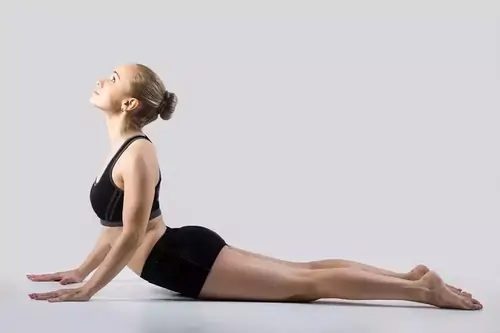
Cobra Pose Steps:
- Position: Prone lying position.
- Press your elbows into your ribs.
- Use your core as you release the breath. Keep applying pressure via your feet and legs.
- Don’t look up. Raise yourself via the centre of your heart.
- For optimal balance, you should first straighten your shoulders and elbows before completely extending your head.
- Hold duration is five to ten seconds.
- Repetition should be three per session.
Seated spinal twist

- Position: Sitting position.
- Take a deep breath through your nose, twist with your naval region, grasp your knee with your hand, and maintain a straight posture throughout. After holding for a few breaths, switch sides.
- This activity improves awareness of posture and breath, increases circulation, and massages internal organs.
- All skill levels may benefit from it, and it can be practised in a variety of places, such as office chairs or even seats on public transportation.
- Hold duration is five to ten seconds.
- Repetition should be three per session.
Hip flexors stretch

- Position: Kneeling position.
- Stretch your right hip flexor (psoas) by bending slightly forward.
- When you do this, avoid arching your back. Hold your pelvis tight.
- Hold duration is five to ten seconds.
- Repetition should be three per session.
Benefits of stretching exercises
- Reduces Tension in the Muscles: Releases tense muscles in the hamstrings, hips, and lower back that frequently cause pain.
- Increases Adaptability: Frequent mobility exercises and stretching help lower the probability of numerous physiotherapy issues, including neck disorders, lower back pain, and muscle tightness. Encourages Blood Circulation • Boosts the flow of nutrients and oxygen to injured areas, promoting healing and lowering inflammation.
- Promotes Spinal Alignment: By extending shortened muscles and lowering unequal loads, it aids in the correction of postural abnormalities.
- Lowers Risk of Injury: By preparing muscles and joints for action, everyday exercises can reduce the likelihood of strains or spasms.
- Improves Activation of the Core, which promotes the use of stabilising muscles that support the lumbar spine, such as the glutes and abdominals. According to this article, everyone should focus on strengthening their core. Lower back pain can be prevented when your abdominal muscles are strong.
- Enhances Functional Mobility: increases the comfort and efficiency of routine motions, including walking, lifting, and bending.
- Reduces Compression in Nerves: Stretches that are gentle help ease pain that radiates down the leg by relieving pressure on nerves such as the sciatic nerve.
- Encourages Mental Calm: Stress and muscular guarding, which frequently exacerbate pain perception, are reduced by stretching while practising mindful breathing.
- Complements Rehabilitation: An essential part of physiotherapy regimens for postural or chronic low back pain.
Home Remedies
- Therapy with Heat and Cold: Heat treatment eases muscular tension and increases blood flow; cold packs lessen inflammation and dull acute pain. For optimal effects, switch between the two, 20 minutes at a time.
- Mild Stretching: Try yoga positions like Pelvic Tilts, Cat-Cow, or Child’s Pose. Stretching eases spinal stress and increases flexibility.
- Vital Oils: Lavender oil (Calming and anti-inflammatory), Peppermint oil (Reduces spasms in the muscles).
- Gentle massage: Apply some oil and give gentle pressure proximal to distal aspect of muscles.
- Change your sleeping posture: Sleep in a lying position and keep a pillow between both Knees. Avoid certain sleeping positions and make use of comfortable mattresses. You should use a pillow or a supported surface if you want to sit for extended periods of time. If necessary, use a lumbar cushion, especially if you spend a lot of time at a desk.
- Change Your Footwear: If possible, at all, use supportive footwear, such as wedges. To lessen spinal strain, choose footwear that supports the arch and is padded.
Orthosis
- Flexible braces (Lumbar belt)
- Thoracic lumbo-sacral belt
- Semi-Rigid braces
- Sacroiliac belt
FAQ
How can back pain be resolved?
Use at-home treatments for back pain, such as stretching, mild exercise, and hot and cold therapy. Maintaining excellent posture, utilising supportive footwear, and considering over-the-counter pain medicines can all assist. For persistent pain, consult a healthcare expert for personalised treatment options that may include physical therapy, exercise, and potentially stronger drugs or other therapies.
What causes the soreness in the back?
There are many different causes of back pain, but the most frequent ones are muscle strains and ligament sprains, which are frequently brought on by trauma or overuse. In addition to inflammatory diseases, infections, or even pain that is referred from another organ, other possible reasons include structural issues such as herniated discs, arthritis, scoliosis, or fractures. Obesity is a key contributing factor to back pain, which also results from sedentary lifestyles and physical inactivity.
What causes ladies to have lower back pain?
Numerous illnesses, such as musculoskeletal disorders, reproductive disorders, and pregnancy-related changes, can cause lower back pain in women. Common musculoskeletal reasons include osteoarthritis, degenerative disc disease, and muscle sprains and strains. Women’s lower back pain is not limited to menstruation; it can also be a symptom of gynaecological disorders such as endometriosis, fibroids, and ovarian cysts, which can occur in both ovarian tubes. Women may also experience lower back pain as a result of fibromyalgia, menstrual cramps, or pregnancy.
Does early pregnancy cause back pain?
Indeed, early pregnancy symptoms may include backache. Women have several symptoms during pregnancy, but one of the most prevalent ones is lower back pain, which can be caused by structural issues. The body’s physical and hormonal changes as it gets ready for pregnancy are frequently to blame for this.
Are backaches a major problem?
Although it depends on its origins, back pain is not a particularly significant problem. You don’t require appropriate treatment if your spinal muscles are spasming, but if there are mechanical problems like a disc bulge or ligamentum flavum thickening, you definitely require appropriate physiotherapy care. You should incorporate stretching and strengthening exercises into your lifestyle if you suffer from back pain that results from weak core muscles or after giving birth.
Is back pain a sign of menstruation?
During their menstrual cycle, many women experience cramps, particularly in the lower back. Along with other period-related symptoms, including bloating and abdominal pain, this pain can vary in intensity from minor pain to severe cramping.
Can lower back pain be caused by gas?
Yes, back pain can be caused by gas. The back may feel pressured and uncomfortable due to too much gas in the digestive tract. This occurs because the pressure from trapped gas can irritate the back’s muscles and nerves, which are close to the digestive tract.
Which conditions are responsible for back pain?
Lower back pain primarily affects adults who lift large weights or carry big bags on a regular basis rather than occasionally. Chronic back pain, stress, paraspinal muscular spasms, bad posture, and a sense of physical inadequacy can all develop.
References
- Ashish, Y. (2023, April 22). Child Pose (Balasana): How to Do, Benefits and Precautions – Fitsri Yoga. knee to chest. https://www.fitsri.com/poses/child-pose
- Cpt, A. A. (2024b, August 6). Knees to chest stretch for low back muscles. Verywell Health. https://www.verywellhealth.com/knees-to-chest-exercise-296870
- Weingus, L. (1970, January 1). 5 reasons to try cat Cow—And how to do it Correctly. https://www.onepeloton.com/blog/cat-cow?msockid=0ef25711c06562dd25aa42e1c1fe632c
- Cronkleton, E. (2023, October 27). How to perform the bird dog exercise and its core benefits. Healthline. https://www.healthline.com/health/bird-dog-exercise#alternative-exercises
- Bayracny, S. (2023, November 17). Seated Forward Bend Yoga Pose – Exercise Guide & Tips. WorkoutGuru. https://workoutguru.fit/exercises/seated-forward-bend-yoga-pose-video-exercise-guide-tips-521912/#google_vignette
- Inception. (2024, February 8). Stretches to get rid of sciatica pain. Rocket City Chiropractic. https://www.rocketcitychiropractic.com/10-piriformis-stretches-to-get-rid-of-sciatica-hip-and-lower-back-pain/
- Side bends. (2023, April 17). Training.fit. https://training.fit/exercise/side-bends/
- Turetsky, L. (2023, July 4). 8 easy hip flexor stretches that your can do anywhere. Back Intelligence. https://backintelligence.com/hip-flexor-stretches/