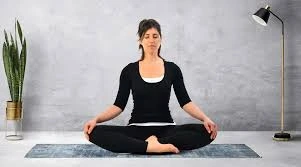
Siddhasana (Accomplished Pose)
What is Siddhasana?
After Padmasana, Siddhasana is the second most popular asana for meditation. Although siddhasana is simpler to practice and maintain, it offers advantages comparable to those of padmasana.
Siddhasana, along with padmasana, simhasana, and bhadrasana, is referred to as the “four important asanas” in Hatha Yoga Pradipika because it enhances the body’s alignment for comfortable sitting during meditation.
Meaning:
The word “Siddha” in Siddhasana means “Adept.” Siddhas are skilled yogis who have attained superhuman abilities and spiritual enlightenment via yoga meditation. The powers of a Siddha are said to be present in our bodies, but we are unable to fully explore them because of our ignorance.
In the concept of reaching the point of perfection where you become a Siddha, an Adept yogi, Siddhasana is referred to as the achieved pose.
Muscle Work During Siddhasana:
- Back Muscles
- Hip Muscles
- Knee and Ankle Muscles
How to Perform?
- Assume an upright, sitting position on the ground.
- In front of you, spread your legs a foot apart.
- To place the sole of your left foot against the inner of your right thigh, bend your left leg from the knee.
- Bend the right leg at the knee and place the foot between the calf and thigh of the left leg.
- Place the wrists of both hands on the matching knees while maintaining an upright posture. Here, inhale deeply many times.
- For as long as it is comfortable for you, remain in this deep meditation position.
Breath Awareness: Maintain a steady pace and constant breathing throughout the exercise. Make sure you take a deep breath and release it twice as much as you took it.
Beginner’s Performance Duration: Spend five to ten minutes sitting in Siddhasana stance.
Advanced Performance Duration: You can meditate in the Accomplished Pose for as long as you choose.
Benefits:
- It encourages hip joint flexibility and, when combined with directed breathing, draws attention to your hips’ tighter spots.
- Siddhasana meditation and pranayama practice relax the nervous system, which has a calming influence on every single cell in our body. Additionally, it increases your awareness and focus, which lessens the signs of stress and worry.
- In Siddhasana, the reproductive hormones are stimulated by heels pressing into the perineum. In this sense, Siddhasana may aid in the relief of prostate-related issues (bladder control and urination).
- Regular practice of Siddhasana reduces excessive sexual desire because it stimulates the release of reproductive hormones. It hence aids in Bhramcharya.
- Siddhasana strengthens your ankle joints, knees, and pelvis. It is advised to loosen up the muscles in the thighs, groin, and hips. Additionally, it enhances blood flow to the legs, groin, and abdomen.
Preparatory Pose:
Ankle Rotations: Rotate your feet and ankles in both clockwise and anticlockwise circles while sitting or standing. This will improve your foot’s blood flow and help your ankles get ready for the sitting position.
Sukhasana (Easy Pose): Unlike other meditation postures, this pose involves crossing the legs in the simplest possible way. This yoga pose serves as a warm-up to prepare the lower body for more demanding poses and flows. Additionally, it promotes the growth of lower back and hip stability and endurance.
Baddha Konasana (Bound Angle Pose): This hip-opening pose stretches the groin, abductors (inner thighs), and knees while strengthening the pelvic floor, psoas, and hip flexors. Additionally, as the hip flexor muscles relax in this posture, the spine can be stretched and decompressed.
Props:
- Put a folded blanket under your sitting bones if your hips are too stiff to sit comfortably. Make sure your hips are elevated over your knees.
- When sitting in this position, make sure your knees touch the floor; if not, place a blanket or pillow underneath them.
- Sit with your back against a wall if you have a curved back. Another approach is to simply put a block between your scapula and the wall.
- Even if your hips are not sufficiently flexible, you can still sit comfortably or in sukhasana.
Modifications:
By bringing your chin towards the middle of your collarbone and looking at the middle of your eyebrows or Bhrumadhya Drishti, you can do Jalandhar Bandha, also known as chin lock.
Kshemasana is a seated position where you raise your hands to chest level, palms facing each other.
Other variations of Siddhasana that change the placement of the legs and feet are Muktasana (liberated pose) and Guptasana (secret stance).
Siddha Yoni Asana: This version of Siddhasana is suggested for female yogis by Hatha Yoga Pradipika. This involves placing the upper heel against the clitoris and pressing the left heel into the vaginal entrance.
Variations:
Ardha Siddhasana:
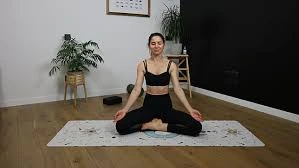
Maintaining Siddhasana correctly becomes challenging when the hip joint is not completely open. Ardha Siddhasana, or half perfect stance, can be performed for those who have this issue.
For Ardha Siddhasana, position the right foot on the floor directly in front of the left foot, rather than above it, and arrange the left foot as previously mentioned.
Similar to the lotus posture, where both ankles are cross-legged, one leg takes over another in Siddhasana. Siddhasana is also known as Ardha padmasana (half lotus position) for this reason.
Precautions and Contraindications:
- If you have injuries to your knees, ankles, hips, spine, or any other part of your body, avoid sitting in this position.
- It is best to avoid this seated position if you have arthritis because it may compress your joints and promote inflammation.
- This pose impedes blood flow to the sciatic nerve and may exacerbate sacral infection and sciatica pain; therefore, avoid doing it.
FAQs
What is the difference between Ardha Siddhasana and Siddhasana?
Ardha Siddhasana has one active heel near the perineum and the other foot under the opposing thigh, whereas complete Siddhasana requires both heels to rest on the perineum.
What is the main benefit of Siddhasana?
This pose provides a small amount of pelvic flexibility and expands the hips. It improves posture and lengthens the spine to such an extent that it increases alertness and equips you to prevent injuries for your own safety. From the abdomen to the spine, siddhasana controls blood flow throughout the body.
How long to sit in Siddhasana?
Beginner’s Performance Duration: Spend five to ten minutes sitting in Siddhasana stance. Advanced Performance Duration: You can meditate in the Accomplished Pose for as long as you choose.
What is Ardha Siddhasana?
Ardha Siddhasana is the half-seated attitude for Siddhasana, and Ardha is the Sanskrit term for half. If you’re a newbie or have trouble stretching and clasping your legs together in full Siddhasana, this position can help. Accomplished Pose can be modified into Ardha Siddhasana.
How do I practice Siddhasana?
Sit on the floor with your legs crossed to execute Siddhasana. Put your left foot over your lower abdomen. Put the right foot on top of the left. Make sure your spine is tall and your knees are on the floor.
What is the use of Siddhasana?
Siddhasana is used for meditation since it may be done for extended periods of time. Additionally, it’s an excellent yoga pose for strengthening the hip, groin, and inner thigh muscles.
What is the difference between Siddhasana and Sukhasana?
Sukhasana differs from Siddhasana in that the legs are clasped together. In the Siddhasana posture, however, the feet are much closer to the groin. The knees are wider, and the feet are locked inside the calf and thigh area. Wider hips and more flexible ankles are necessary.
References:
- Siddhasana (Accomplished Pose): Meaning, Steps, Benefits, and Precautions – Fitsri Yoga. https://www.fitsri.com/poses/siddhasana
- Allen, W. (2025l, August 26). Siddhasana. https://myyogateacher.com/yoga-asana/siddhasana