Snatch
What is Snatch?
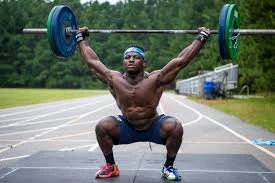
A snatch, often known as a squat snatch, is a sophisticated, technical weightlifting exercise. It’s a maneuver popular with CrossFit and Olympic athletes.
Snatches use momentum to lift a barbell overhead in a smooth motion. It’s a dynamic dance that calls for regulated balance and a strong core.
Muscle Work During Snatch:
Snatches are unusual because they use muscles throughout the body. The quadriceps, deltoids, trapezius, and glutes are the muscles that exert the greatest effort during a snatch.
Quadriceps: Quad muscles play a role in posture, balance, and gait, in addition to supporting knee stability and hip flexion. Quads keep the body stabilised and produce the strength needed to hoist the barbell.
Deltoids: The muscles that cover the tops of your shoulders are called deltoids. These muscles help move your arms and provide stability and protection to the shoulder joint. To control the barbell, your deltoids are essential.
Trapezius: Your back has a big, diamond-shaped muscle called the trapezius. It begins from the base of the skull, travels across the shoulder blades, and ends in the middle of your back. These muscles assist you in shrugging your shoulders, moving your arms, head, and neck, and stabilising your spine.
Glutes: The three muscles in your buttocks are called the gluteus muscles. The primary purpose of these muscles is to rotate and extend the hip and thigh. The glutes are used nearly all the time when doing a snatch.
Other muscles that help stabilise the body during this lift are the rectus abdominis, hamstrings, and calves.
How to Perform?
- Stand upright with your feet set hip-width apart, positioning the barbell on the floor in front of you.
- Use a hook grip, with your fingers over your thumbs and your thumbs wrapped around the bar.
- Squat down with your shoulders slightly in front of the bar, maintaining a strong core and a straight back.
- As you draw up on the bar and start to get up, drive your legs into the ground.
- When you are standing, the barbell should be at your hip. At this stage, keep lifting until your lower body is completely extended.
- Keep your arms relaxed as the force of the full extension drives the barbell higher.
- With your arms holding the barbell straight over your head, quickly lift your feet off the ground, plant them shoulder-width apart, and descend into an overhead squat. To make your thighs parallel to the floor, bend your knees.
- Stabilise the barbell by locking your arms overhead.
- Rise back to standing.
- While learning the technique, strive for eight to ten sets of two to four reps with an unloaded bar. Try four to six sets of five repetitions with light weight on the bar once you’ve mastered the technique. Reduce the number of sets and repetitions while increasing weight to build power.
Benefits:
Increasing your power: Your body must use tremendous force to perform a snatch correctly. The more you exercise these muscles, the greater force they will be able to exert.
Control training: You must have complete control over your body to execute a snatch with good form. Snatches improve balance and coordination.
Gaining muscle: Snatches build muscle all over your body. This not only makes you stronger, but additional muscle enhances your metabolism, supports your joints, and helps you regulate blood sugar.
Advice for Beginners:
- Until your lower body is fully extended, keep your heels planted.
- The hips and shoulders should lift together.
- Power originates from the legs and hips, while the back and shoulders maintain the barbell hanging.
Variations:
Block snatch: The barbell should be raised on blocks to begin. This adaptation allows you to focus on technique and is a useful option if you’re injured or can’t use a full range of motion.
Hang snatch: Before squatting and executing the lift, begin by gripping the barbell while standing. If you have an injury that prevents you from safely lifting the barbell from the floor, this is an additional option that focuses emphasis on the lower body muscles.
Deficit snatch: Stand on bumper plates, which are the weight plates used with barbells. Your range of motion is increased, and your quadriceps muscles are worked by the additional height.
Tall snatch: The first squat is eliminated with a tall snatch. Rather, start the exercise by gripping the barbell while standing. Using your back and shoulders, thrust the weight high and then sit into an overhead squat.
Power snatch: Although the squat before the lift is shallower, this adaptation is comparable to a regular snatch. It works the shoulders and back while putting minimal strain on the knees.
Muscle snatch: Because a muscle snatch just involves the overhead lift rather than the final squat, it is slower and takes less explosive energy than a regular snatch.
Dumbbell snatch: Dumbbells are used in place of barbells in this snatch. It’s helpful for beginners because it is less complex, and if one arm is injured or needs more work, you may alter your reps accordingly.
Common Mistakes:
Snatches are an advanced move. The grab is a power manoeuvre; it’s simple to trip and hurt yourself. Be sure to utilise the correct amount of weight for your fitness level to avoid falling and being hurt.
Injuries such as muscle strain and joint hyperextension can result from performing a snatch incorrectly. A grip or foot stance that is too broad or too narrow, the incorrect grasp, an early body extension, or failing to extend the knees and hips together are examples of improper form.
FAQs
What is a snatch in weightlifting?
The weightlifter picks up the barbell and raises it above his head in a single move during the snatch. The first step in the clean and jerk is for the weightlifter to cleanly lift the barbell and raise it to his chest.
What muscles do snatches work?
Because they employ all of the body’s muscles, snatches are special. The quadriceps, deltoids, trapezius, and glutes are the muscles that exert the most effort during a snatch. the quadriceps.
How do I improve my snatch technique?
Record yourself: Examining the footage can help you find areas where your bar path needs improvement.
Make Use of a Hook Grip To hold the bar in place. Wrap your fingers around your thumbs.
Practice Variations: To increase competence, use snatch-grip push presses, power snatches, and hang snatches.
What are common mistakes to avoid?
Bar going away: Brush the bar against your torso while keeping it close.
Pulling with arms: Treat your arms like ropes and use your legs and hips for strength.
Rushing the catch: Before standing, stabilize in the lower position.
Is the snatch safe for beginners?
Yes, as long as you practice with a coach to avoid injury, start with a PVC pipe or empty bar, and put technique before load.
References:
- Vallie, S. (2024, September 15). How to do a snatch. WebMD. https://www.webmd.com/fitness-exercise/how-to-do-a-snatch
- Cherry, R. (1970, January 1). How to master the dumbbell snatch. The Output by Peloton. https://www.onepeloton.com/blog/dumbbell-snatch