Happy Baby Pose (Ananda Balasana)
What is Happy Baby Pose (Ananda Balasana)?
The easy and gentle yoga pose known as “Happy Baby Pose” may help you become more flexible and relaxed. As the name implies, the posture include holding onto your feet while resting on your back with your knees bent towards your chest.
This position is known in Sanskrit as Ananda Balasana. Here, “asana” means “pose,” “bala” means “child,” and “ananda” means “happiness.” Combining the meaning of the basic words, it is rendered as “happy baby pose” in English.
A popular yoga and pilates stretch is Happy Baby Pose, or Ananda Balasana in Sanskrit. Because of its soft, relaxing action, the Happy Baby Pose is frequently included in yoga and pilates routines. Additionally, it could aid in increasing mobility and flexibility.
The goal of the happy baby position is to discover a yoga technique that highlights the hip joints. This pose is an excellent hip-opener for beginners and a remedy for any low back problems.
Bend your knees and lie down in the supine position to assume the posture. Raise your feet off the ground and spread your knees slightly wider than your body. Draw the knees towards the armpits while holding the outside edge of the flexed foot with the appropriate hand.
Muscle Work During Happy Baby Pose:
Flexors of the hips. Your hip flexors are a set of muscles that are situated directly next to your hip bones, and this yoga position helps to strengthen and stretch them.
Adductors of the Hip. A mild yet efficient stretch is given to these inner thigh muscles.
Core Muscles. Happy Baby strengthens your back and abdominal muscles while allowing your spine to unwind and release tension, which helps lessen lower back discomfort.
Hamstring Muscles. Sitting a lot, as so many of us do, can cause this muscle group on the back of your legs to become tight and painful. A fantastic remedy for hamstring strains is Happy Baby.
Shoulder and arm Muscles. It takes power in the upper body to hold your feet in this position. It provides you with a fantastic stretch as well as strengthening your arms and shoulders.
How to Perform?
- Place your feet on the floor and bend your knees while lying on your back.
- Take a breath, raise your legs, and bring your knees up to your armpits, making your legs wider than your body.
- To support the outside edge of your feet, place your arms between your knees.
- Place your head on the floor, bury your chin into your chest, and keep your legs bent.
- You might try moving the body back and forth or rolling on the backside to the side.
- For 30 to 60 seconds, maintain the position by flexing the feet and pushing the tailbone to the floor.
- Exhale and drop your arms and legs to the ground.
- In savasana, let your body unwind.
Benefits:
Helps to strengthen and stretch the hip flexors.
The main goal of the Happy Baby Pose is to relax the hip flexors and relieve any tension that has built up in this area. Hip muscles are strengthened and their blood flow is improved by extending them.
Stretches the inner thighs, hamstrings, and groin.
The thighs are stretched throughout due to the lower body’s posture. It stimulates the groin and stretches the hamstring muscles. By increasing flexibility, it primes the body to guard against any damage to these muscles.
Massages the organs of the abdomen.
It is a mild form of internal organ massage. Maintaining the stance stimulates the digestive organs on the inside while also contracting the core muscles. It makes digestion easier.
Stimulates the kidneys.
The Happy Baby stance is a useful stance for enhancing kidney function. In the end, it eliminates pollutants and enhances the blood filtering process.
Preparatory Poses
- Child’s Pose (Balasna)
- Hero Pose (Virasana)
Modifications:
- Yoga strap: Wrap a yoga strap over the feet if you can’t reach them while maintaining a straight spine on the ground. To keep in the stretched and relaxed stance, hold onto the ends of the straps.
- Against a wall: Press the heels against the wall in the last stance while maintaining the contracted feet. It will provide you with more support so you can maintain the posture for longer.
- Bolster: As you raise your knees closer to your body, keep a bolster between them. It will fully expand the hips and maintain the legs wider than the body.
- Cushion: During the position, keep a cushion beneath your neck. For people who have any neck discomfort, this stance is helpful. It would be simpler to maintain the stance if you use the cushion beneath your neck.
Variations:
Happy Baby Pose Holding the toes
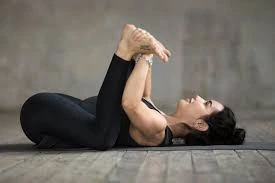
Instead of gripping the feet in this stance, wrap the thumb, index, and middle fingers around the big toes. Beginners like this version the best. It is more accessible to grip the toes rather than the outside of the foot.
Happy Baby Pose: One leg at a time
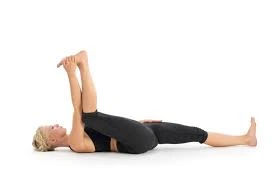
One leg is flat on the floor in this simpler variant. The other knee, though, is pulled in the direction of the shoulder. Using the matching hand from the inside of the knee, grasp the outside of the feet. Raise the lower leg towards the ceiling while maintaining the feet contracted.
Happy Baby Pose Crossing the Elbows
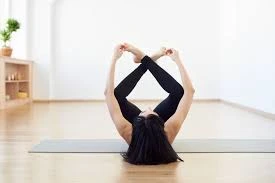
Here, the steps don’t change until the knees are broader than the body. Raising the arms and crossing the elbows comes next. Use your right hand to reach the outside of your left foot, and vice versa.
Therapeutic Applications:
- Lower back stiffness can be released with the Happy Baby Pose. In order to alleviate lower back pain, it is remedial.
- It is beneficial to promote mental tranquilly. Therefore, do it to let go of any mental problems, such as tension, worry, etc.
Precautions:
- Consciously pushing the tailbone to the floor will prevent it from arching.
- Make sure the ankles and knees are in line.
- It is not required to rock back and forth; if you have any neck discomfort, skip this stage.
Contraindications:
- Happy Baby Pose should not be done when pregnant or menstruating.
- If you have any ankle or knee injuries, stay out of this stance.
- Additionally, if you have shoulder or neck injuries, do not attempt this posture.
Common Mistakes:
- Extending or harming your back.
- Straining your neck: Keep your neck relaxed and in a neutral position to prevent needless strain.
- Overly tight grip: Keep your hands on the outside of your feet, but not too tight. In this manner, you may stretch effectively without pushing yourself too much.
Conclusion:
A yoga practice called “happy baby pose” helps you to halt life and re-energise. Living a happy and stress-free existence is particularly necessary in the modern world.
Thus, activate the joyful state by exploring the delight and embracing the divine child that is inside us.
FAQs
What is a happy baby yoga pose good for?
Releases tension from your sacroiliac (SI) joints, which are located between your lower back and pelvis.
Makes your hips open.
Eases the strain on your sacrum, the triangle bone that joins your spine and pelvis, and your spine.
Stretches your inner groin, hamstrings, and pelvic floor.
Is happy baby yoga good for digestion?
In addition to bringing humour into your practice, happy baby (also known as ananda balasana in Sanskrit) also helps ease intestinal pain. This stance is great for alleviating a bloated stomach and expelling gas. Rest on your back. Your knees should be brought into your chest.
What props can assist with the Happy Baby Pose?
Pose Happy Baby with a Wall Support or Yoga Strap
For additional support, you can also place the soles of your feet on a wall while in Happy Baby Pose. Both versions make the position more accessible and help you maintain good alignment, especially if the typical stance makes it difficult for you to reach your feet.
When should you avoid the happy baby pose?
Others: Seniors and pregnant women should use caution when performing this position and refrain from bringing their legs too close to their shoulders. Additionally, it is not advised for pregnant women.
What is the point of the happy baby pose?
Happy Baby Pose is a mild yet powerful yoga pose that helps you relax, strengthen, and stretch different parts of your body. It’s a hip opener, floor posture, and the Supine Forward Fold.
What are some modifications for the happy baby pose?
Three Ways to Change the Happy Baby Pose
Grab your ankles or shins. If your feet are too far away, grab your ankles or shins.
Make use of a folded blanket. Beginners frequently make the mistake of raising their head and neck off the mat, which strains their upper back.
Make use of a yoga strap.
Does the happy baby pose help with constipation?
This exercise promotes good bladder and bowel function by relaxing the muscles at the rear of the pelvic floor.
References:
- Higuera, V. (2024, September 11). Health benefits of the happy baby pose (Ananda Balasana). Healthline. https://www.healthline.com/health/happy-baby-pose
- Happy Baby Pose (Ananda Balasana): Meaning, Steps, Contraindications & Benefits – Fitsri Yoga. https://www.fitsri.com/poses/happy-baby-pose
- Happy Baby video block. (n.d.). [Video]. Hingehealth. https://www.hingehealth.com/resources/articles/happy-baby/
- Yang, I. (1970, January 1). How to do the happy baby pose, according to a Peloton instructor. https://www.onepeloton.com/blog/happy-baby-pose