
Savasana (Corpse Pose)
What is Savasana?
Shavasana is a healing yoga pose that is appropriate for beginners. It is performed while lying in the supine position at the conclusion of a yoga session. Although this stance is quite simple to do, it takes concentration to do well.
With arms slightly apart from the body and legs extended, it is executed while lying still on the ground. Deep, regular breathing is followed by maintaining body relaxation.
It soothes the neurological system and revitalizes all of the body’s muscles. It is an excellent posture for increasing vitality and achieving mental calm.
Meaning:
The Sanskrit term “Shavasana” is derived from two basic words. The word “Asana” means “pose,” while “Shava” means “corpse.” The name is derived from the fact that, like a corpse, the body is kept motionless while maintaining the stance.
The Sanskrit term for this pose, which mimics a corpse, is Mrtasana.
Being in the present moment is the key to calming the mind in this pose. It is also done as a post-yogic practice to help the muscles unwind after a strenuous workout.
It is often referred to as mritasana or corpse position.
Muscle Work During Savasana:
- Lower Back Muscles
How to Perform?
- In a supine position, lie down.
- Place your arms 15 cm from your body to relax your shoulders.
- With the palms facing up and the fingertips curled, straighten the arms.
- Find a comfortable position by spreading your feet slightly apart.
- Gently close your eyes and let your entire body relax.
- Continue to breathe deeply while maintaining a still body.
- Be mindful and focus on your body, starting with your right foot, then your right knee, and finally your entire right leg.
- Next, do the same with your left leg. going similarly towards your head.
- Breathe in deeply to energize the body and out slowly to calm the body as a whole.
- Hold the posture for ten to twenty minutes while being fully present and letting your body fall to the floor.
- Pay attention to your body and your environment.
- Roll to your left while keeping your eyes closed, and stay there for a minute.
- Sit up slowly in an easy stance with your right palm pressed to the floor.
- Keep your eyes closed and your breathing deep as you remain seated.
- Gently open your eyes once you’re satisfied.
Benefits:
Calms the body:
All of the muscles in the body are relaxed during Shavasana. The goal of this pose is to practice mindfulness and breath awareness. By providing enough oxygen to the muscles and releasing any stress that has been stored, it revitalizes your body.
Calms the neurological system:
The entire spine is kept relaxed and straight from the crown in this position. Deep breathing and spinal relaxation cause the neurological system to relax as well as the mind to settle. Insomnia, anxiety, moderate depression, and stress can all benefit from it.
Lowers blood pressure:
Blood pressure is also improved, in addition to mental and physical relaxation. Keep the body free from stress and exhaustion; this lowers blood pressure and relaxes the heart.
Increases focus:
because Shavasana induces a profound state of meditation in the body. It allows the practitioner to concentrate on each part of the body. In the end, it improves memory and focus by enriching the mind.
Increases vitality:
If you’re feeling stressed or exhausted, you can do this stance to rapidly recoup your energy. By revitalizing the body, everyone is more at ease and productive.
Preparatory Pose:
- Surya Namaskar (Sun Salutation)
- Pranayama
- Easy Pose
Modifications:
- Pillow or blanket: Place a folded blanket or pillow beneath your head. By doing this, the head and body will be in alignment. Any discomfort while maintaining the posture will be reduced as a result.
- Use a bolster behind your knees while keeping your head above the folded blanket. In Shavasana, this will further relax the back and support the knee.
- Chair: Place your foot on the floor and bend your knees while lying on your back. A chair should be positioned in front of your feet. Lift your legs off the floor. Place their heels and calves on the chair. When the legs are inverted, this allows them to relax more.
- Cushions for sleeping on one side: Place a pillow beneath your head and lie on your side on the floor. A pillow should be positioned between your forearms and between your legs. Beyond the arm cushion, the hands are connected.
Variations:
Pentacle Pose:
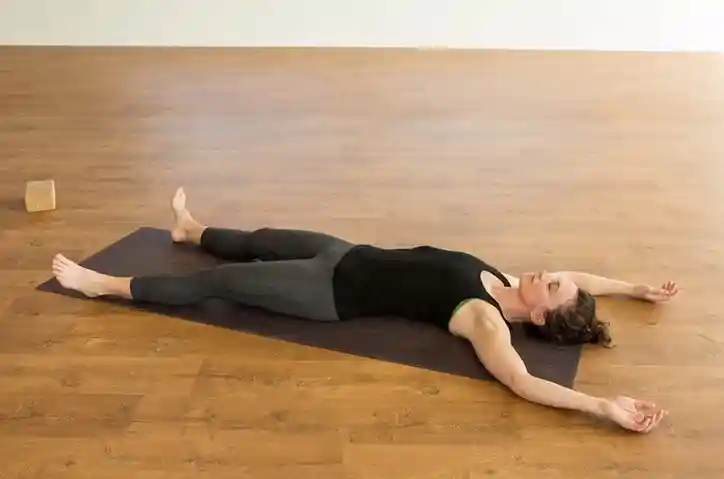
Stretch your arms and legs out to the sides in a star pattern on the yoga mat to perform the basic Shavasana pose.
Be sure to breathe deeply and continuously. Your muscles will feel more relaxed the more you flex in this position. To alleviate the tension in your arms and legs, hold this stance for five to ten minutes.
Savasana Variation with Bent Legs:

This version of corpse position, sometimes referred to as the Constructive Rest position, is ideal for practitioners who experience space problems between the lower back and the ground when doing full Shavasana.
Compressing the lower back deeper into the ground is made easier by the corpse formation’s bent knees. Tension in the lower back muscles and spine can be released by using this pose as a gravitational pull. Additionally, it encourages proper vertebrate alignment and the full release of tension and strain.
Savasana Variation Elevated Legs:

In standard corpse pose, raise both legs straight up towards the sky and position your legs at a 90-degree angle by adding any necessary supports, such as a chair in front of your hips, a gym ball, folded blankets, or stacked cushions.
On the mat, let your upper body muscles relax and maintain a regular breathing pattern. As long as it seems comfortable, hold this stance. For those who get cramps during their periods or for those who have knee discomfort, this is a great variant.
Precautions and Contraindications:
- Make sure the body doesn’t move in the least bit.
- Do not tilt your head in the direction of any shoulder.
- Avoid doing it when you’re preoccupied or upset because it could lead to headaches or frustration.
- Shavasana should not be performed later in pregnancy.
- If you have a back issue, do this pose with your feet on the floor and your knees bent.
FAQs
What is Savasana and its benefits?
An essential restorative pose for relieving fatigue and giving the body and mind a break is Savasana, often known as corpse pose. Its advantages include stress relief, tissue and cell restoration, and a deepening of your yoga practice in Savasana. Lower blood pressure, anxiety, sleeplessness, and vata dosha
Is Savasana the hardest pose?
Savasana (Corpse Pose, Final Relaxation Pose) is one of the hardest yoga poses, despite its seemingly simple appearance. In actuality, many yoga practitioners who are adept at balancing, twisting, and bending during a class may find it difficult to remain motionless and silent while lying on the mat. This is because it’s more difficult than it seems to relax.
Is Savasana good for body strength?
It facilitates greater sleep and the release of stress from the muscles, which helps the body heal fully. By fostering inner tranquilly, Shavasana also enhances mental clarity. It promotes comprehensive harmony of mind, body, and spirit by bridging the gap between meditation and physical practice.
Who should avoid doing Shavasana?
It should be avoided by students who have severe respiratory disorders (such as asthma or chronic obstructive pulmonary disease), colds, or allergies, as they may have trouble breathing when lying on their backs. They might benefit from a more erect or semi-reclined posture.
Does Savasana reduce stress?
Stress reduction, blood pressure decrease, parasympathetic nervous system activation, and access to deeper realms of awareness are some of the wellness advantages of savasana.
How many minutes to do Savasana?
Although it can be done for 20 to 30 minutes, Shavasana is usually done for 5 to 10 minutes at the conclusion of an asana practice.
Can I fall asleep during Savasana?
Sleeping is a regular occurrence for students. While it’s acceptable to fall asleep, most teachers would rather you be awake and conscious while your body is at ease. To assist you in waking up at the end of Shavasana, set a timer.
References:
- Rakshak, & Rakshak. (2025a, February 26). Shavasana (Corpse Pose) | How to do | Benefits – The Art Of Living. The Art of Living – Making Life A Celebration. https://www.artofliving.org/in-en/yoga/yoga-poses/savasana-corpse-pose
- Shavasana (Corpse Pose): Meaning, Steps & Benefits – Fitsri Yoga. https://www.fitsri.com/poses/shavasana
- Allen, W. (2025j, August 26). Shavasana. https://myyogateacher.com/yoga-asana/shavasana
- Savasana Pose Yoga Pose (Corpse Pose). Tummee. https://www.tummee.com/yoga-poses/Corpse Pose