
12 Best Exercise for Essential Tremor
Introduction
Enhancing muscular control, coordination, and general body stability are the main goals of essential tremor exercises. A neurological disorder called essential tremor results in uncontrollable trembling hands; however, it can also affect the brain, voice, or other body parts. Frequent exercise helps improve neuromuscular control, strengthen muscles, improve balance, and lessen the intensity of tremors.
Particularly helpful activities include hand coordination drills, stretching, balance training, and relaxing methods like yoga or tai chi. These exercises support improved confidence and independence in day-to-day tasks in addition to aiding in the management of physical problems.
Symptoms
- Uncontrollably shaking hands, head, voice, or other bodily parts in a rhythmic manner is known as involuntary shaking.
- Moving about makes the tremor worse; it is more obvious when writing, eating, or drinking.
- Impacts one or both sides of the body; it often begins on one side and may eventually progress to the other.
- Head nodding is a rhythmic “yes-yes” or “no-no” head motion.
- A trembling or wobbly voice when speaking is known as voice tremor.
- Hand tremor is the inability to handle tools, glasses, or utensils steadily.
- Worsening tremors might be caused by emotional stress, worry, or exhaustion.
- Rest or alcohol can help – tremors may momentarily go away when you’re sleeping or after a tiny amount of alcohol.
- No further neurological symptoms: essential tremor often does not result in stiffness, slowness, or issues with balance, in contrast to Parkinson’s disease.
- Gradual progression: Over many years, symptoms usually get worse gradually.
Causes
- Genetic factors: Between 50 and 70 percent of instances with essential tremor are hereditary, sometimes referred to as familial tremor.
- Abnormal brain activity: The development of tremors may be influenced by alterations in the cerebellum’s connection with other brain regions that regulate movement.
- Degenrative changes: Degeneration caused by aging. Because the brain connections and nerve cells that regulate movement normally deteriorate with age, the risk rises.
- Environmental factors: Toxin or hazardous material exposure can impair nerve function and cause tremors.
- Physical tiredness and fatigue: Being physically exhausted might momentarily make tremors more intense.
- Caffeine and stimulants: Excessive caffeine intake or use of some drugs might worsen tremors.
- Neurochemical imbalance: Modifications to neurotransmitters, including gamma-aminobutyric acid (GABA), may contribute to tremor behaviours.
- Alcohol sensitivity: Small doses of alcohol may cause tremors to momentarily subside, indicating that certain brain circuits are involved.
- Idiopathic causes: In certain situations, the tremor happens without any underlying illness, and no obvious reason may be found.
Types of Tremor
- Resting tremor: Resting tremor is a typical symptom of Parkinson’s disease that happens while the muscles are relaxed, such as when the hands are resting on the lap.
- Action tremor: Shows up when a muscle is moved voluntarily, such as when writing or reaching.
- Postural tremor: When you hold a stance against gravity, like putting your arms out in front of you, you have postural tremor.
- Kinetic tremor: Any kind of movement, such as bringing the hands toward a target, might cause kinetic tremor. Often associated with cerebellar diseases, intention tremor is a form of kinetic tremor that intensifies as the hand gets closer to a goal.
- Task-Specific Tremor: This type of tremor only manifests during particular tasks, including speaking or writing (writer’s tremor).
- Isometric tremor: Isometric tremor is the result of contracting a muscle against a motionless object, such as when you clutch something firmly.
- Physiologic tremor: Everyone has physiologic tremor, which is a small, natural tremor that can be worsened by stress, exhaustion, or coffee.
- Essential tremor: Essential tremor is a common movement illness that typically runs in families and involves rhythmic shaking in the hands, head, or voice.
- Psychogenic (Functional) Tremor: This type of tremor can fluctuate in intensity and is caused by psychological variables, including stress, worry, or depression.
- Cerebellar tremor: A sluggish, high-amplitude tremor that occurs after deliberating movements is known as cerebellar tremor. It is caused by damage to the cerebellum from stroke, tumours, injuries, hereditary illnesses, or long-term alcohol abuse.
- Parkinsonian Tremor: Parkinsonian tremor is a hallmark of Parkinson’s disease that usually begins in one limb and manifests at rest. It can spread to the chin, lips, face, or legs and may mimic “pill-rolling” between the thumb and fingers. It is frequently made worse by stress and intense emotions.
- Orthostatic Tremor: An uncommon disorder known as orthostatic tremor causes the muscles to spasm quickly when standing. It can make you unsteady, but it normally stops when you sit or walk. Although the tremor is frequently too quick to observe, it may be felt with a stethoscope or by touch. The reason is still unknown.
- Dystonic Tremor: Linked to dystonia, a movement condition that results in aberrant postures and involuntary muscular contractions. Usually affecting the arms, legs, voice, or neck, it may get better with total relaxation.
Exercise for Essential Tremor
Biceps curl

- Position: sitting position.
- Hold your arm straight down by your side while holding the weight in one hand, palm facing forward.
- Bend your arm such that the weight is on your shoulder while keeping your elbow at your side.
- Repeat, controlling the movement as you bring the weight back down.
- Ten to fifteen repetitions per session are recommended.
- Hold duration: 5 seconds is enough.
Fist open and close

- Position: sitting position.
- For a number of repetitions, open and shut your hand while bending your arms at the elbows so they are parallel to the floor. Check that your breathing is regular.
- The hands, wrists, and forearms may all be strengthened with this workout.
- Ten to fifteen repetitions per session are recommended.
- Hold duration: 5 seconds is enough.
Wrist flexor stretch

- Position: Sitting or standing.
- Put your palm up. Bend your wrist toward the floor while keeping your fingers straight.
- Gently press your fingers down with your other hand to extend the stretch.
- Your forearm should feel somewhat stretched.
- Ten to fifteen repetitions per session are recommended.
- Hold duration: 5 seconds is enough.
Wrist extensor stretch

- Position: Sitting or standing.
- Your palm should be facing the floor.
- Maintaining straight fingers, bend your wrist downward.
- To increase the stretch, softly press on the back of your hand with your other hand. Your forearm should feel somewhat stretched.
- Ten to fifteen repetitions per session are recommended.
- Hold duration: 5 seconds is enough.
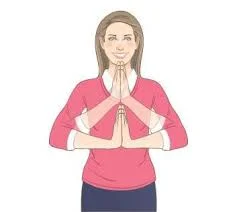
Praying position stretches
- Position: sitting position.
- Put your palms together in a prayer stance while you’re standing. Make sure your elbows are in contact. Place your hands in front of your face.
- From the tips of your fingers to your elbows, your arms should be in contact with one another.
- Slowly stretch your elbows apart while keeping your palms squeezed together. Lower your hands to waist height and do this action. When you feel the stretch or your hands are in front of your belly button, stop.
- Raise one arm shoulder-high in front of you.
- With your palm toward the floor, keep it down.
- Ten to fifteen repetitions per session are recommended.
- Hold duration: 5 seconds is enough.
Opposition stretch

- Position: Sitting or standing position.
- With your palm facing up, place your hand on a level surface.
- Make contact between the tips of your thumb and pinkie finger. The other three fingers should be as flat to the surface as possible.
- Put your fingers back where they were.
- Ten to fifteen repetitions per session are recommended.
- Hold duration: 5 seconds is enough.
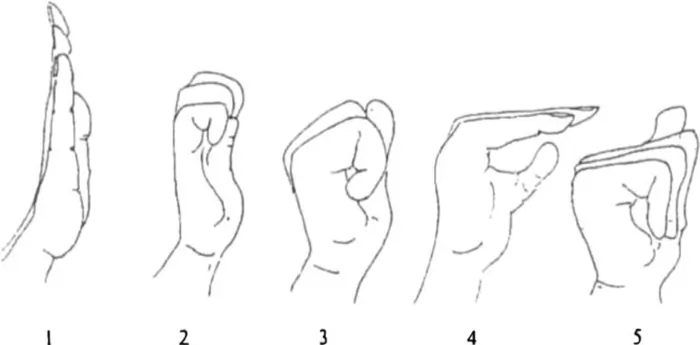
Tendon glides
- Position: Sitting position.
- Raise your hand to give a high five.
- Place your fingers at your top (distal) and middle (proximal) interphalangeal joints and bend them down into your palm.
- For five seconds, maintain this hunched posture.
- Put your fingers back where they were before.
- Ten to fifteen repetitions per session are recommended.
- Hold duration: 5 seconds is enough.
Finger spring

- Finger spring
- Position: sitting position.
- Attach a rubber band to the outside of your thumb and fingers.
- Press your thumb and fingers outward on the rubber band to stretch it.
- Ten to fifteen repetitions per session are recommended.
- Hold duration: 5 seconds is enough.
Finger Thumb Tapping

- Position: Sitting position.
- This is another easy exercise that just requires you to tap your fingers. In order to contact the upper portion of your thumb, you must touch each finger individually.
- Try to keep your thumb as still as you can and your fingers straight while doing this.
- The index finger can be used to begin tapping, then the middle, ring, and pinky fingers. Next, do it again in the opposite sequence. Use both hands at once if at all possible.
- Perform this workout ten times or more.
Supination and Pronation

- Position: Sitting position.
- The radius bone tends to move laterally around the ulna during supination, which causes your arm to rotate with the palm facing upward.
- It’s similar to picturing yourself with a bowl of soup.
- The opposite of supination is pronation. In this instance, the radius rotates medially around the ulna.
- When the hand is rotated in pronation, the palm of the hand faces downward. It is comparable to selecting an apple from a basket.
Spreading Fingers

- Position: Sitting position.
- All you have to do for this exercise is spread your fingers.
- You would need a rubber band to offer some resistance, which is beneficial.
- Put a rubber band around the center or top of your fingers, then spread them out.
- Fingers should be spread as widely apart as possible. After that, relax by bringing your fingers back to one another. Do it fifteen to twenty times.
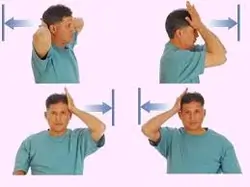
Neck isometric
- Position: Sitting position.
- First, place your feet flat on the floor and sit on a chair.
- To ensure that you are evenly balanced on your buttocks, your weight should be somewhat forward.
- Keep your head level and your shoulders relaxed. You might be able to maintain your equilibrium by using a chair with arms.
- Put your hand on your forehead. Use the muscles in your neck to resist. Hold for ten seconds. Calm down.
- Apply pressure to the side of your head and repeat the exercise. Change sides.
- Apply pressure on the back of your head and repeat the practice.
Medical management
Non-medical treatment: Weighting the limb, usually with wrist weights, can help some patients with their tremors. For some individuals, this dampens the tremor sufficiently to enhance functioning or offer some relief. Some people may benefit from non-medical relaxation methods and biofeedback since stress and worry worsen the tremor.
If at all possible, medications that are known to worsen tremors should be stopped or decreased. Avoiding dietary stimulants like coffee may be beneficial for those with ED. Additionally, certain people may benefit from commercially accessible devices, such as weighted utensils.
There have been some encouraging outcomes from pharmacological therapy for ET. Primidone and propranolol are the most often utilized medications. They work on patients between 50 and 70 percent of the time. Nevertheless, there are certain adverse effects, including fatigue, nausea, rapid or slow heartbeat, and dizziness. Another treatment for ET is topiramate, which is frequently used when the first two don’t work. About 22–37% of patients find it to be useful.
Deep-brain stimulation and thalamotomy are the two primary surgical methods used to treat essential tremor. Originally used to treat Parkinson’s disease, deep brain stimulation (DBS) has also been utilized to treat ET. Electrodes are implanted in the ventral intermediate nucleus of the thalamus. After that, they are linked to a pulse generator, which is usually situated beneath the collarbone. When activated, it reduces tremor via stimulating the thalamus.
The patient has the option to switch it on and off. According to a 2010 comprehensive study, DBS considerably enhanced ET patients’ results. Moreover, by adjusting the deep-brain stimulation pulse, any negative effects they caused were lessened.
Physiotherapy Management
Enhancing muscular control, balance, and coordination while lessening the influence of tremors on day-to-day tasks is the main goal of physiotherapy treatment for essential tremor. To determine the extent and functional restrictions caused by the tremor, a physiotherapist starts with an evaluation.
Stretching to release muscular tension, coordination training to improve fine motor abilities, and upper limb strengthening exercises to increase stability are all part of the treatment. For stability when moving, balance and postural re-education are frequently used.
Yoga, breathing exercises, and relaxation techniques are used to reduce stress, which can worsen the tremors. To improve control while performing tasks, adaptive techniques like the use of wrist weights or weighted utensils may also be suggested.
- Exercises for stretching help maintain muscle elasticity and lessen stiffness. To increase mobility in affected regions, your physical therapist could suggest certain stretches.
- Strength training to improve wrist, forearm, and hand muscular strength and stability, use resistance workouts using weights or bands.
- To enhance fine motor abilities, perform hand strength and coordination exercises like tapping fingers, handling small items, or squeezing stress balls.
- Exercises for balance improve coordination and stability, which lessens the impact of essential tremor on everyday motions other than the hands.
Benefits
- Enhances muscular control: Consistent exercise improves stability and coordination, which lessens the intensity of tremors.
- Strength training: Strength training improves control over trembling limbs by strengthening the muscles used in movement.
- Improves posture and balance: Balance exercises increase general body stability and lower the chance of falls.
- Encourages relaxation: Stress-reduction techniques like yoga, deep breathing, and stretching can lessen the severity of tremors.
- Increases blood flow: Exercise increases blood flow to muscles and nerves, which enhances their functionality.
- Decreases anxiety and depression: Engaging in regular exercise generates endorphins, which aid in the management of emotional stress, which is a typical cause of tremors.
- Enhances fine motor skills: Focused exercises, such as hand and finger drills, increase accuracy in everyday tasks like writing and eating.
- Promotes brain health: Aerobic workouts improve brain plasticity and nerve signalling, which may help manage tremor symptoms.
- Improves general quality of life: Being physically healthy encourages self-reliance and self-assurance in carrying out everyday duties.
- Daily exercise: Regular exercise can help control symptoms naturally, which may eventually lessen the need for medication.
Complication
- Daily task difficulty: Simple chores like eating, writing, dressing, and drinking can be challenging for those with tremors.
- Social embarrassment: Self-consciousness, anxiety, or social disengagement might result from visible shaking.
- Emotional distress: Low self-esteem, despair, or dissatisfaction might result from persistent tremors.
- Speech issues: Unstable or wobbly speech can be caused by tremors that impair the voice box.
- Head and neck strain: Constant movement of the head or neck can lead to soreness or exhaustion in the muscles.
- Sleep disturbance: Anxiety and tremors might prevent you from getting a good night’s sleep.
- Decreased productivity at work: Precision-demanding tasks, such as typing or utilizing tools, might become difficult.
- Injury risk: Unexpected shaking or a loss of coordination might make mishaps, burns, or falls more likely.
- Side effects of medication: Prolonged usage may result in weariness, sleepiness, or problems with balance.
Reduced quality of life: Independence and general well-being may be impacted by persistent symptoms and functional constraints.
Grades for essential tremor
Tremors are frequently categorized according to their grade or severity, which aids medical professionals in assessing how much they interfere with day-to-day functioning and informing treatment decisions. This is a typical grading scheme:
- Grade 0: No Tremor: There is no obvious shaking.
- Grade 1: Mild Tremor: Hardly perceptible, only happens in certain circumstances, and doesn’t go in everyday tasks.
- Grade 2: Moderate Tremor: Easily noticeable, but still tolerable for everyday activities. It interferes with some fine motor skills, such as writing or holding utensils.
- Grade 3-Severe Tremor: This type of tremor is noticeable, long-lasting, and substantially interferes with most everyday tasks, including eating, drinking, and dressing.
- Grade 4: Disabling Continuous and severe tremor makes it very difficult to do daily tasks and take care of oneself without help.
Conclusion
In summary, essential tremor is a common neurological disorder that mostly affects the hands, head, or voice and is characterized by uncontrollable, rhythmic shaking. It can greatly affect everyday activities, fine motor skills, and quality of life, even though it is often not life-threatening.
The precise explanation is frequently attributed to age-related changes, aberrant brain activity, or hereditary factors, and stress, exhaustion, or stimulants may worsen symptoms. While there isn’t a permanent solution, symptoms can be effectively managed with a mix of lifestyle changes, focused exercise, stress reduction, medicine, and adapted equipment.
For people with essential tremor, sustaining independence and enhancing general well-being depend on early detection, appropriate assessment, and continuous management.
FAQs
How to stop tremors in the hand?
Although the source of hand tremors will determine how to stop them, there are a number of successful management or reduction techniques. Hand stability can be aided by regular physical treatment and exercise, which helps increase muscular strength, coordination, and control. Since worry and emotional strain frequently worsen tremors, stress-reduction practices like yoga, meditation, and deep breathing are crucial. Shaking can also be lessened by leading a healthy lifestyle that excludes coffee, nicotine, and other stimulants. In certain situations, a doctor’s prescription for drugs like beta-blockers or anticonvulsants may help manage the symptoms.
What conditions cause tremor?
Numerous neurological, physiological, and lifestyle-related disorders can result in tremors. Essential tremor, a condition of the neurological system that produces rhythmic shaking, often in the hands, head, or voice, is one of the most frequent causes. Another important reason is Parkinson’s disease, in which dopamine-producing brain cells die, resulting in tremors. Tremors can also be caused by other neurological conditions such as multiple sclerosis, stroke, or traumatic brain damage. Hand shaking can result from a number of metabolic and hormonal disorders, such as low blood sugar or hyperthyroidism, an overactive thyroid gland. Side effects from medications, especially those from stimulants, antidepressants, or asthma medications, may also be a factor.
Is a tremor a serious problem?
The impact of tremor varies depending on the underlying reason and the degree to which it interferes with day-to-day functioning, although it is not always a major issue. Although essential tremor is not usually fatal, it can progressively increase over time and make everyday activities like eating, writing, and dressing challenging. A more serious underlying problem that needs medical treatment may be indicated by tremors associated with neurological illnesses such as multiple sclerosis or Parkinson’s disease. Even slight tremors can negatively impact a person’s quality of life by causing social disengagement, emotional stress, or shame.
Can diabetes cause tremors?
Indeed, tremors can occasionally result from diabetes, particularly when hypoglycemia—a condition in which blood sugar levels fall too low—occurs. Stress hormones like adrenaline are released when the body doesn’t have enough glucose to power the brain and muscles. This can produce shaking or trembling, especially in the hands. Other symptoms, including perspiration, lightheadedness, hunger, disorientation, or a fast heartbeat, frequently accompany these tremors. When a person consumes sugar-containing food or beverages, tremors caused by low blood sugar often go away. To ensure appropriate assessment and treatment, it is crucial to seek medical advice if tremors are frequent or continue even when blood sugar levels are normal.
Can exercise reduce essential tremor?
Exercise can greatly lessen the intensity of essential tremor and enhance general movement control, but it cannot totally cure it. Engaging in regular exercise can help treat tremors by strengthening muscles, improving balance, and improving coordination. Activities that assist in calming the nervous system and encourage more stable hand and body motions include yoga, strength training, stretching, relaxation methods, and fine motor control exercises. Aerobic workouts also increase blood flow and lower stress, both of which may worsen the tremors. Exercise, therefore, serves a significant supporting role in lowering symptoms and enhancing quality of life, even though it does not completely eradicate essential tremor.
Essential tremors: what to avoid?
Avoiding things that worsen their symptoms is advised for those with essential tremor. Coffee, tea, and energy drinks include caffeine, which can raise nervous system activity and highlight tremors. Frequent or excessive drinking should be avoided since, although it may momentarily lessen tremors, it frequently makes them worse once its effects wear off. Maintaining proper sleep, relaxation, and stress management is crucial because stress, worry, and exhaustion also have a tendency to worsen tremors. It is essential to speak with a doctor before taking any medications that may worsen tremors, such as corticosteroids, stimulants, and some asthma or psychiatric medications.
References
- Sworkit Health. (2020, March 1). Fist and open – Sworkit Health | On-Demand Fitness, Mindfulness, Recovery, and Nutrition. Sworkit Health | On-Demand Fitness, Mindfulness, Recovery, and Nutrition. https://sworkit.com/exercise/fist-and-open
- The Healthline Editorial Team. (2019, May 14). Stretches for wrists and hands. Healthline. https://www.healthline.com/health/chronic-pain/wrist-and-hand-stretches#from-our-expert
- Clinic, C. (2023, November 24). 11 Exercises and stretches for wrist pain. Cleveland Clinic. https://health.clevelandclinic.org/wrist-pain-exercises
- Neck Exercises: Neck isometrics | Veterans Affairs. (n.d.). https://www.veteranshealthlibrary.va.gov/Encyclopedia/3,89949
- Admin, & Admin. (2021, May 17). 7 Most Effective Exercises for People with Hand Tremors | Tremor Care. Tremor Care | Tremor Knowledge and Product Review. https://tremorcare.com/most-effective-hand-exercises-for-people-with-tremor/