

12 Best Teres Muscle Exercises
Introduction:
Teres muscles, which include the teres major and teres minor, play a key role in shoulder stability and upper arm movement. Strengthening these muscles can improve shoulder function, enhance posture, and help prevent injuries. Teres muscle exercises typically focus on shoulder rotation, extension, and stability.
Shoulder pain can be avoided by strengthening the teres major and minor muscles, which are essential for shoulder stability and mobility.
The significant components of the rotator cuff that support arm motions and preserve shoulder stability are the teres major and minor muscles.
Despite having separate locations on the humerus, these muscles work together to facilitate fluid shoulder movement. Understanding the structure and functions of the shoulders can help prevent and lessen shoulder pain.
Strengthening the teres muscles and preserving shoulder health requires a mix of warm-up methods, focused exercises, and stretching regimens.
Myofascial release, cold and heat therapy, and deep tissue massage are among recovery techniques that can help lessen teres muscle pain and speed up healing.
Anatomy and Function of the Teres Major:
The teres major is placed below the teres minor on the inner side of the shoulder. The muscles attach to the front of the upper arm after joining at the lower shoulder blade, often known as the back of the armpit. Together, they rotate the elbow inward, bring the arm down, and draw it towards the chest. Together with the posterior deltoid, they also help with the arm’s backwards extension.
Anatomy and Function of Teres Minor:
A little shoulder muscle called the teres minor aids in stabilising and outward rotation of the arm. It is used for attaching the upper arm to the back of the shoulder. Tightness in this muscle can cause excruciating shoulder pain, which often worsens when resting on the side that is impacted or performing certain activities.
Overuse, such as frequently reaching up or back, might make pre-existing pain worse. Self-massage, stretches, strengthening exercises, avoiding strain, and improved posture are all part of the treatment.
Health Advantages for the Teres major and Teres minor:
- It helps keep the shoulder joint stable.
- It supports the arm’s external or even lateral rotation at the shoulder joint.
- The teres major and teres minor muscles must be strengthened in order to prevent shoulder pain in the future.
- Aids in giving the shoulder joint stability.
- Aids in expanding the shoulder joint’s range of motion (ROM), allowing the patient to do daily tasks and sports activities more easily.
- More precisely, this will expand the shoulder joint’s external rotation range.
- This encourages normal blood flow around the shoulder joint.
- This helps the scapula move as well.
12 Best Exercises for the Teres Muscles:
Doorway Stretch

The doorway stretch increases shoulder mobility and releases the teres major stiffness. To feel the stretch, position your forearms against the door frame while standing in a doorway and bending forward a little.
It increases flexibility, relieves discomfort, and improves shoulder movement.
Crossbody Stretch

The teres minor is released from tension via the cross-body stretch. The other hand should be used to gently tug on your elbow while holding your arm, crossing your body. Hold painlessly for 15 to 30 seconds.
It alleviates back and shoulder strain while increasing mobility.
Face pulls

- The cable machine rope should be adjusted to head height.
- Maintain a neutral grip on the rope while facing the machine and taking a step back with your feet shoulder-width apart.
- Raise your chest, engage your core, and stretch your arms to pull the rope towards your face until your hands are near your ears.
- Take a moment, squeeze your shoulder blades, and then gently return to the starting point. Do it again.
Dumbbell Pullover

- Lie across the bench, with the bench supporting your upper back and neck.
- Using both hands, hold the dumbbell in a triangle or by holding onto the inner plate.
- With your elbows slightly bent, hold the dumbbell just over your chest.
- Slowly lower the dumbbell as far as you can over your head and past your face while using your core.
- To return to the starting position, pull the dumbbell back over your face.
- Do the required number of reps.
Band Pull Aparts
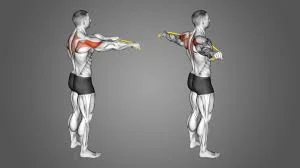
- Select the resistance band that you like most.
- Your feet should be shoulder-width apart.
- Lift the resistance band until it is shoulder-width apart.
- Straighten your arms out in front of you while holding the resistance band, then pull your shoulder blades back.
- While keeping a tall chest and a firm core, extend both arms out to the sides.
- The band should contact your chest when you pull it.
- Try to squeeze your shoulder blades together and hold for a moment.
- Let the band gradually return to its initial position.
- Repeat as many times as you’d like.
Side-lying External Rotation
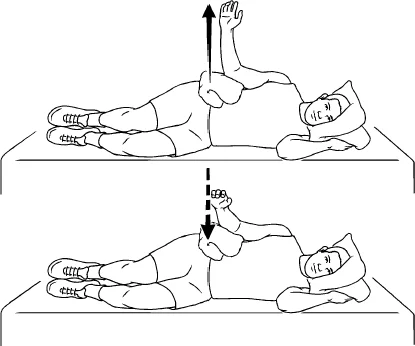
- Start with a side-lying position.
- The injured arm should be positioned upward.
- Place a cloth in your armpit to provide additional support and smoother rotation.
- As you complete the exercise, contract your shoulder blades back and down.
- Keep your elbow pinned to your side as you slowly spin upward.
- Use a lighter weight at first, and if you have pain, reduce your speed or stop.
Rear Cable Fly
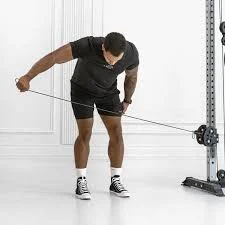
- Look for a machine with two cables in your gym.
- Attach handles—or nothing at all—to either side of the machine, depending on what is most comfortable to hold.
- Raise the cables to around head height in order to isolate the teres major.
- Cross your arms and face the machine, holding the attachments in front of your face.
- Pull your shoulder blades back as you move the weight across your torso.
- Make a 45-degree angle with your body by extending and lowering your arms. Your elbows should remain slightly bent.
- After pausing, go back to where you were before and repeat.
Reverse Dumbbell Fly
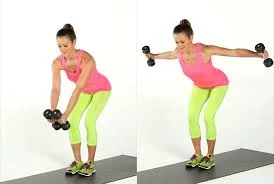
- Hold two dumbbells of mild to moderate weight and place them shoulder-width apart.
- Position yourself in a bent-over row position, with your hips hunched at about a 45-degree angle and your knees slightly bent.
- Raise your arms laterally in place of rowing, as though you were performing the reverse motion of a chest fly.
- For lateral abduction, concentrate on squeezing your shoulder blades.
- As you continue, you should have some upper back strain.
- Do 10-15 reps.
Pull Ups

- Start with standing position.
- Place your hands shulder-width apart.
- Maintain an gripon the bar.
- Place your arm fully extended.
- Next, lift your chest as high as you can in the direction of the bar.
- Then hold for a little period.
- Then, return to the normal position.
- Repeat as many times as you like.
Single Arm Dumbbell Row
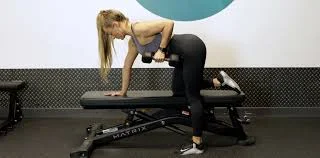
- Grab a dumbbell in a neutral grip with your right hand, then place your right knee and right hand on a bench under your shoulder.
- Straighten your left arm and place it beneath your left shoulder while holding the dumbbell.
- Raise the dumbbell until it is nearly at your hip while keeping your arm close to your body and bending at the elbow.
- Reduce to the beginning point gradually.
- Do 10-15 reps.
Cable Pullover
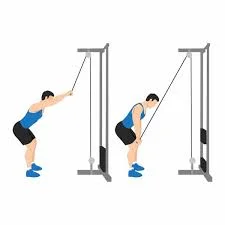
- Start with standing position.
- Hold a both cable.
- Whenever you grab the connection, bend your hips slightly and arch your back, you should feel some stretching in your teres major and lats (Latissimus Dorsi).
- In addition to bracing your core and bending your elbows slightly, squeeze your shoulder blades.
- Allow your upper body to raise a little as you draw the weight to your waist.
- At the bottom, squeeze your lats, hold for a moment, and then gently go back to the beginning.
- Concentrate on making deliberate, slow movements. To preserve your shoulders and prevent damage, start with a lighter weight.
Low Cable Row
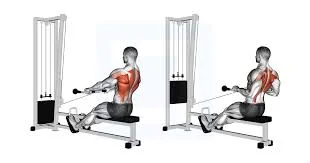
- Sit on the cable machine.
- Place foot on footrest and knee bent.
- With your shoulders back, chest out, and back straight, hold the attachment with a small forward tilt.
- Pull the weight a little bit down and into your stomach to engage your teres major and upper back.
- Maintaining your elbows in, pinch your shoulder blades.
- Don’t use momentum.
- Return to the beginning position after stopping when the handle is near your belly button. Do it again.
When did you not complete this task?
- If you were told to rest by the doctor.
- If a patient experiences any pain or discomfort throughout this workout.
- If there is a recent fracture to the arm bone.
- If there has been recent damage to the muscle.
Summary
In conclusion, shoulder stability and general upper body strength can be greatly increased by comprehending and working on the teres major and minor muscles. We’ve covered key ways to strengthen these muscles, from foam rolling and dynamic stretches for warm-ups to top strengthening exercises like face pulls, side-lying external rotations, and lat pulldowns with an underhand grip. Stretching exercises like the sleeper, cross-body, and doorway stretches also guarantee flexibility and lower the chance of developing shoulder soreness.
Maintaining proper posture, increasing exercise intensity gradually, and implementing ergonomic changes are all important ways to prevent teres muscle soreness. In order to effectively manage and relieve muscle discomfort, rehabilitation methods such as deep tissue massage, ice and heat therapy, and myofascial release are essential. You can attain ideal shoulder function, avoid injuries, and preserve general muscle health by adhering to these recommendations. Adopt these techniques and change your exercise regimen for a more effective, pain-free workout.
FAQs
Why does warming up the teres muscles before working out matter?
It is important for enhancing your workout performance and preventing injury. By lessening stiffness, it primes your muscles for more strenuous activity.
Which exercises work best for building muscle strength in the teres major and minor?
Face pulls
side lying external rotations
Low cable row.
How can I avoid experiencing teres muscle soreness when working out?
Focus on maintaining proper posture, progressively increasing workout intensity, and combining regular stretching and strengthening exercises to avoid teres muscle soreness during workouts. These techniques can greatly lower the chance of discomfort and harm.
Which recovery methods work best for teres muscle pain?
Myofascial release, cold and heat therapy, and deep tissue massage are helpful ways to relieve teres muscle pain because they can ease tension, lower inflammation, and speed up the healing process.
What are the teres muscle stretching exercises good for?
Stretching exercises benefit the teres muscles and help prevent future shoulder pain by reducing soreness, improving shoulder mobility, and increasing flexibility. By including these stretches in your routine, you can reduce stress and improve the general health of your shoulders.
Can the teres major develop trigger points?
In the teres major, trigger sites are quite prevalent. The posterior deltoid can be extremely uncomfortable as a result of these trigger points. Indications of severe discomfort and trigger points include reaching up and forward to retrieve something from a shelf or resting elbows on a table or desk.
Referances
- Prajapati, N. (2022, November 23). There are muscle-strengthening exercises. Health Benefits, How to do? Samarpan Physiotherapy Clinic. https://samarpanphysioclinic.com/teres-muscles-strengthening-exercises/
- Debutify. (2024, August 21). 11 BEST Teres Major and Minor Exercises. Back Muscle Solutions. https://backmusclesolutions.com/blogs/the-ql-blawg/teres-major-and-minor-exercises?srsltid=AfmBOopL_NsZ9Fx7-tKK0HuhODEMRRcJ8Zv0UoqLJwik2-su4r0kl2YY
- DiGiovanni, K. (2025, May 27). Top 15 Teres major and minor exercises. SET FOR SET. https://www.setforset.com/blogs/news/teres-major-teres-minor-exercises?srsltid=AfmBOorTmQRE55wq81B-6VQmOd-R_WNX7JJnp1K1s2lipAk9MqmuWlQT
- Royer, Y. (2025, March 5). 10 Best Teres Muscles Workout Exercises for Strength and Relief. Mikologym. https://gym-mikolo.com/blogs/home-gym/10-best-teres-muscles-workout-exercises-for-strength-and-relief?srsltid=AfmBOorq3TRBldiP9iVoIqAOXQ1PD6_OjmTcfWvsh5XJZ_DYxmGWurDX


