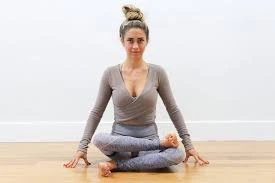
Spinal Extension Exercise
Introduction
Exercises for spinal extension are basic motions intended to complete the negative impacts of long periods of sitting, bad posture, and forward-flexed posture that characterise contemporary lives. In order to increase back strength, flexibility, and alignment, these exercises gently arch the spine backwards while working important muscle groups, including the quadratus lumborum, multifidus, and erector spinae.
Spinal extension helps improve functional mobility, relieve pain from muscle imbalances, and restore postural balance by opening up the chest and promoting a natural curvature in the lumbar area. Spinal extension is essential for preserving spinal health, avoiding injuries, and enhancing general movement efficiency, whether it is included in Pilates, physiotherapy, or general fitness regimens.
What is the maximum length of your back?
- Normal Ranges of Spinal Extension: About 30° of extension of the lumbar spine
- The majority of backward bending happens here, particularly when performing workouts like standing extensions or prone press-ups.
- Thoracic spine: around 20 to 25 degrees of extension
- More constrained because of structural stiffness and rib attachments.
- The cervical spine may extend around 60 degrees.
- You can easily glance up since the neck has the most freedom.
Relevant Anatomy
Primary muscle involvement
- Erector Spinae: The spine’s primary extensors; keep your posture straight.
- Multifidus: Segmental vertebral mobility is controlled by this deep stabiliser.
- The quadratus lumborum aids in lateral stability and lumbar extension.
- Gluteus Maximus: Assists in lumbar extension and pelvic alignment.
- Latissimus Dorsi: Promotes shoulder synergy and thoracic extension.
Skeletal and Joint Involvement
- Facet joints are prone to compression during hyperextension; they guide and restrict the extent of extension.
- During extension, the intervertebral discs undergo anterior compression and posterior decompression.
- Spinous processes: During extension, they approximate, particularly in the thoracic spine.
Stabilisers and Synergists
- Transversus abdominis: Prevents excessive lumbar lordosis by providing core stability.
- The erector spinae’s iliocostalis and longissimus are subsets that control spinal motion.
- Pelvic tilt muscles: During extension, lumbar mechanics are influenced by the hip flexors and extensors.
Function
- For standing up straight after sitting, spinal extension is necessary.
- Gaze elevation and overhead reaching.
- Reversing flexion-dominant postures in settings with a lot of technology.
Spinal Extension Exercise
Prone Hip Extension

- Position: Prone lying position
- This is a strengthening and range-of-motion workout for the hips. To isolate the action to the hip joint, make sure to reduce the amount of extension that takes place in the anterior pelvic tilt or the lower back. While maintaining a straight knee, raise your heel toward the ceiling while lying on your stomach.
- Hold duration is five to ten seconds.
- Repetition should be five to ten times each session.
Superman Exercise

- Position: Prone lying position
- With your arms out in front of you and your legs straight, assume a prone (facedown) position on the floor.
- Slowly raise your arms and legs about 6 inches (15.3 cm) off the floor, or until you feel the muscles in your back contracting, while maintaining a neutral head position (don’t look up).
- For strength, you should simultaneously target your lumbar, shoulder, and lower extremity muscles.
- Hold duration is five to ten seconds.
- Repetition should be five to ten times each session.
Cobra Stretch
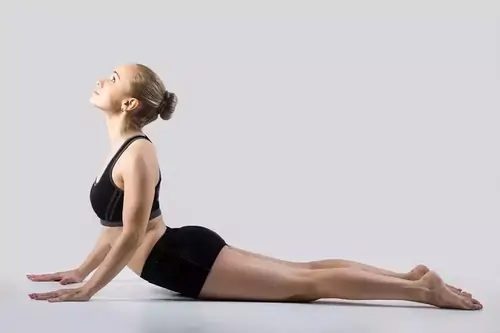
Cobra Pose steps:
- Position: Prone lying position.
- Positioned with your hands pointing forward, just beneath your shoulders. Plantar flex your ankles (toes pointing away from the torso) and extend your legs.
- Pull your chest away from the floor while maintaining a firm hip position. Exhale gently and press your hips into the floor or mat. This will stretch the muscles in your chest and abdomen and arch your lower back.
- Lower your upper body to lie back on the mat or floor while gently relaxing.
- Hold duration is five to ten seconds.
- Repetition should be five to ten times each session.
Bird-Dog Exercise

- Position: Tabletop position.
- Start in the tabletop posture on all fours.
- Put your hands beneath your shoulders and your knees beneath your hips.
- Your shoulder blades should be drawn together.
- Hold duration is five to ten seconds.
- Repetition should be five to ten times each session.
Modifications of these exercises
- Bird dog with weight
- Pushup position
Bridge pose

- Position: Supine lying position.
- Press your lower back onto the floor to tighten your buttocks and abdominal muscles.
- To make a straight line from your knees to your shoulders, raise your hips.
- To get back to the beginning position, lower your hips.
- Hold duration is five to ten seconds.
- Repetition should be five to ten times each session.
Modifications of the bridging exercise
- Straightened Legs
- Elevated Feet
- One leg bridging
Standing Back Extension

- Position: Standing position.
- Place your feet shoulder-width apart as you stand. For support, place your hands on your hips or the small of your back.
- Lean back and gently arch your back. Don’t tilt your head too far back; instead, keep it in line with your spine.
- Don’t go farther than you are comfortable. Instead of agony, you should sense a stretch.
- Hold duration is five to ten seconds.
- Repetition should be five to ten times each session.
Indications
- Adjusting posture: Perfect for people with kyphotic spine alignment, rounded shoulders, or forward head position.
- Lumbar disc derangement: advantageous in situations of disc herniation or bulging, particularly when extension motions cause the symptoms to concentrate.
- Low back ache caused by a machine: Good for general back discomfort that gets better as you move or adjust your position.
- Long periods of sitting or a sedentary lifestyle: aids in reversing flexion-dominant postures that are typical of desk work and tech-heavy settings.
- Restoration of spinal mobility: beneficial for restoring lumbar and thoracic spine extension range following immobility or injury.
- Rehabilitation after surgery: In later phases of healing, it is frequently recommended to restore spinal strength and mechanics (under supervision).
- Activation of the paraspinal and core muscles: focuses on the gluteal, multifidus, and erector spinae muscles to improve spinal endurance and stability.
- Preventive treatment for senior citizens: When included in safe, progressive routines, it promotes balance, upright posture, and the avoidance of falls.
- Integration of yoga and Pilates: frequently used to encourage breath synchronisation and spinal elongation in organised wellness programs.
Contraindication
- Extension of spinal stenosis may cause the spinal canal to narrow even further, worsen pain or numbness and nerve compression.
- Spondylolisthesis: Bending backward might exacerbate instability and promote spinal slippage. Extending the body puts strain on the facet joints, which may exacerbate arthritis or inflammation. If not approved by a doctor, recent spinal surgery or fracture extension may damage healing tissues or hardware.
- Extreme osteoporosis: Particularly in the thoracic spine, hyperextension can raise the risk of vertebral compression fractures.
- Symptoms of an acute disc herniation that are susceptible to extension: Extension should be avoided if it exacerbates neurological symptoms or radiating discomfort.
- Cardiovascular disorders or uncontrolled hypertension: Some extension positions, particularly the prone position, might cause circulation strain or blood pressure to rise.
- The last stages of pregnancy: Positions involving prone or deep extension may put pressure on the lumbar spine or compress abdominal tissues.
- Poor balance or motor control: Extension exercises might cause falls or compensatory strain if done incorrectly.
Special test
The purpose of the Passive Lumbar Extension (PLE) Test is to identify instability in the lumbar spine.
- Method: The prone lying position.
- The examiner keeps their knees extended and raises both legs around 30 cm.
- A positive test replicates low back symptoms such as discomfort, heaviness, or a “lifting off” sensation.
- Clinical Value: Excellent stability sensitivity (84.2%) and specificity (90.4%).
Lumbar Extension Standing on One Leg Test Objective: Checks for inflammation of the facet joints or spondylolysis.
- Method: The patient stretches their spine while standing on one leg.
- On the other leg, repeat.
- Localised back pain or discomfort is replicated by a positive test.
The Pheasant Test evaluates lumbar instability.
Method: The patient rests on their back (Prone lying position).
In order to exert pressure on the lumbar spine and stretch the quadriceps, the examiner flexes their knees. Stress or pain might be signs of instability.
Joint movement assessment
- Goal: Assess the stiffness and mobility of the segments.
- Technique: Vertebral movement and manual palpation during extension-rotation.
Extension (Quadrant Test)
- Goal: Determine whether there is lumbar spinal stenosis or facet joint inflammation.
- Method: The patient rotates, laterally flexes, and extends their spine. Compression of the nerve roots may be the cause of pain that travels down the leg.
Advantages of spinal extension exercise
- Enhances Posture: counteracts forward-flexed postures typical of sedentary lifestyles to encourage upright alignment. Activates important muscles such as the erector spinae, glutes, and hamstrings, strengthening the posterior chain and improving general stability and spinal support.
- Improves Spinal Mobility: This improves functional movement by restoring and maintaining the thoracic and lumbar spine’s extension range.
- Lessens Back Pain: especially beneficial for disc-related problems and mechanical low back pain that react favorably to extension-based regimens.
- Encourages Core Stability: enhances trunk control and reduces the risk of injury by activating deep stabilisers such as the multifidus and transverse abdominis.
- Encourages Active healing or recovery: When approved by a doctor, it provides a low-impact rehabilitation alternative, particularly after surgery or an accident.
- Increases Breathing and blood Circulation: improves circulation and respiratory mechanics while moving by opening the chest and diaphragm.
- Enhances Coordination and Balance: Particularly beneficial for senior wellness practices, since it lowers the risk of falls and improves proprioception. Fits in well with yoga and Pilates; enhances holistic practices that emphasise body awareness, breath control, and spinal elongation.
Avoid These Back Extension Mistakes
For you to reap the full advantages of back extension exercises and avoid injuries, you must use perfect technique. Hyperextending the back is the most frequent error people make when executing back extensions. You should arch your back past a straight line at that point.
Injuries can also result from negligent weightlifting. Carrying too much weight might strain your smaller muscles and cause overuse problems. To avoid this, pick a weight that challenges you but still allows you to complete 8 to 15 repetitions with proper technique.
By engaging particular muscle groups, back extension exercises should be done slowly and deliberately with the goal of increasing strength and stability. Avoid “swinging” or depending too much on momentum throughout the exercises, since this might lessen the overall resistance, you apply to your muscle groups and the overall training impact.
Easy Ways to Get Stronger, Safer Back Extensions
- Avoid rounding or overextending your spine; instead, keep it neutral.
- Instead of starting from the lower back, start from the hips.
- Throughout, use your hamstrings and glutes.
- You should calm, moderate repetitions while breathing correctly.
- Equipment should be adjusted to your body mechanics.
- Gently perform the movements. Intense strengthening is not the goal of this spinal extension—spinal flexion posture exercise. It’s more about aligning your body, warming up your joints and tissues, and cultivating movement awareness.
- Avoid working when in pain. Avoid doing this exercise altogether or take it easy if any part of it causes you pain. Before attempting this, you should, of course, get your doctor’s approval to exercise.
Flexion and Extension Pain in the Back: A beneficial Balance
It’s crucial to remember that some people get back pain when they bend and extend, thus both forward (flexion) and backward (extension) bending may be uncomfortable. Exercises that focus on spinal flexion must be balanced with lumbar extension exercises in these situations. Pain can be reduced and normal spinal function restored with a well-rounded exercise program that includes both flexion and extension.
FAQs
What advantages do spinal extensions contain?
Advantages of Back Extensions
Your erector spinae muscles become stronger and more stable with back extension workouts. Additionally, they increase your lower back’s range of motion and can help persons with bad lumbar or thoracic back posture.
What is the lumbar vertebrae’s anatomy?
The five vertebrae in your lower back make up your lumbar spine. The largest vertebrae in your entire spine are the lumbar vertebrae, also referred to as L1 through L5. Your lumbar spine is situated above the five fused bones that comprise your triangular sacrum bone and under your 12th thoracic (chest) vertebra.
In the spine, where are L3 and L4?
Segment of Spinal Motion: L3-L4 Animation
The L3 and L4 vertebrae and the anatomical components that connect them make up the L3-L4 spinal motion segment, which is situated in the centre of the lumbar spine. This segment supports the upper body, protects the cauda equina and nerve pathways, and gives the trunk and lower back flexibility.
Which tests are specific to the lumbar spine?
An explanation of the Slump Test for Lumbar Disc Herniation Diagnosis…
Special tests for the lumbar spine include the FABER (Flexion Abduction External Rotation) test to evaluate the hip, lumbar spine, or sacroiliac joint; the Straight Leg Raise (SLR) test and Slump test to evaluate sciatic nerve irritation; and the Femoral Nerve Tension test for nerve compression in the upper lumbar spine. Additional exams include the McKenzie Side Glide test, palpation for muscle spasms, Waddell signs for nonorganic abnormalities, and range of motion assessment for structural problems.
The Ober’s test: what is it?
The Ober’s Test is a physical examination used to detect tightness in the iliotibial band (ITB), sometimes referred to as the IT band, and the tensor fasciae latae (TFL) muscle. A patient lies on their side with the affected leg on top to do the test. The patient’s upper leg is then raised, extended, and gradually lowered by the examiner. If the leg stays up and does not drop to the examination table, indicating tightness, the test is considered positive.
Spinal extension: what is it?
The opposite of flexion is spinal extension, which you may think of as back-arching, but there is some technique involved in this exercise. To get the movement started, you will inhale. Spinal extension is naturally increased by inhalation.
Does abdominal fat decrease with bridge exercise?
Although it doesn’t specifically burn fat in the belly, the glute bridge exercise can help reduce belly fat by strengthening and toning the core muscles. Glute bridges must be used with a balanced diet and other types of exercise, such as cardiovascular activities and general strength training, to accomplish overall fat loss because no activity can “spot reduce” fat.
References
- Coleman, S., & Coleman, S. (2021, August 9). 18 back extension exercises for a super strong lower back. SET FOR SET. https://www.setforset.com/blogs/news/hyper-extension-back-exercises
- Twu, A. (2024, June 9). How to do back extensions. WebMD. https://www.webmd.com/fitness-exercise/how-to-do-back-extensions
- Baner, S. O. &. P. C. I. (2025, March 18). Lumbar extension Exercises for lower back pain relief | Dr. SumitZ. Drsumitz. https://www.drsumitz.com/blogs/lumbar-extension-exercises-for-lower-back-pain-relief-dr-sumitz
- Song, D. (2024, October 30). Prone hip Extension — Rehab Hero. Rehab Hero. https://www.rehabhero.ca/exercise/prone-hip-extension
- Cpt, K. D. M. R. (2023c, April 12). Try the Superman Exercise to Stand Tall and Proud. Healthline. https://www.healthline.com/health/fitness/superman-exercise#benefits
- Cobra Stretch | Exercise Library | ACE. (n.d.). https://www.acefitness.org/resources/everyone/exercise-library/16/cobra/?srsltid=AfmBOooPf2eVFRB40DTtWmJN7UhIi8KoXxSpn8dbIXgQHkt96M_u15Ss
- Cronkleton, E. (2023b, October 27). How to perform the bird dog exercise and its core benefits. Healthline. https://www.healthline.com/health/bird-dog-exercise#alternative-exercises
- Ms, E. Q. (2024, June 5). Glute Bridge exercise: proper form, variations, and common mistakes. Verywell Fit. https://www.verywellfit.com/how-to-do-the-bridge-exercise-3120738
- Cpt, A. A. (2024a, February 9). How to do spinal extension and flexion exercises. Verywell Health. https://www.verywellhealth.com/spinal-extension-and-flexion-exercise-296842