
7 Essential Yoga Asanas for Back Pain Relief at Home
One of the most prevalent conditions impacting millions of individuals globally is back pain. Sedentary lifestyles, bad posture, or underlying medical issues can all lead to severe discomfort and negatively affect one’s quality of life. Yoga provides a holistic approach to back pain relief, even if medical treatments and therapies are frequently advised. Yoga positions can improve general posture and target the muscles that cause back discomfort by combining strengthening, stretching, and mindfulness.
It’s crucial to comprehend the causes of back discomfort before attempting the particular yoga poses. Muscles, ligaments, tendons, vertebrae, and discs make up the intricate structure of the human back. Pain or discomfort may arise from any misalignment or damage to these parts.
Common causes of back pain include:
Muscle strain: Overuse or damage to the muscles, especially the lower back.
Herniated Disc: Pain can result from a disc in the spine slipping out of position and pressing against a nerve.
Postural Problems: Prolonged standing, sitting, or bad posture can cause muscle strain and chronic back discomfort.
Arthritis: Inflammatory diseases that affect the spine, such as rheumatoid arthritis or osteoarthritis, can cause pain and stiffness.
Sciatica: Pain that travels down the legs from the lower back as a result of pressure on the sciatic nerve.
By strengthening weak muscles, improving alignment, and stretching tight ones, yoga can successfully treat many ailments.
Benefits of Yoga for Back Pain
For those with back discomfort, yoga has many advantages, such as:
Increased Flexibility: You can improve stress and pain by stretching your hips, hamstrings, and back muscles.
Improved Posture: Strengthening the muscles that support the spine is a benefit of many yoga positions.
Stress Relief: Yoga helps ease tension and stress, which is a common cause of back pain. It does this by combining movement with mindful breathing.
Strengthening Core Muscles: A robust core can help prevent injuries and support the back.
Improved Body Awareness: By practicing yoga, you can become more conscious of your body and steer clear of actions that could exacerbate your back discomfort.
Best Yoga Poses for Back Pain Relief
These are some of the most effective yoga poses for lowering back pain. Every pose has a variety of advantages, from lengthening and stretching to strengthening and stabilizing, and it focuses on various parts of the back.
1) Cat-Cow

The spine is mobilized and stretched by this easy, gentle backbend. You can also extend your neck, shoulders, and torso by using this stance.
Muscles worked:
- erector spinae
- rectus abdominis
- triceps
- Serratus anterior
- gluteus maximus
How to do this:
- Put your hands and knees down.
- Place your wrists beneath your shoulders and your knees beneath your hips.
- Divide your weight equally among the four areas.
- Inhale as you look up and allow your tummy to sink into the mat.
- Draw your navel into your spine, tuck your chin into your chest, and arch your spine toward the ceiling while exhaling.
- Keep an awareness of your body as you execute this exercise.
- Recognize and release the tension in your body.
- Continue this fluid movement for a minimum of one minute.
2) Downward-Facing Dog

This classic forward bend can be relaxing and revitalizing. Sciatica and back discomfort can be alleviated by doing this pose. It enhances strength and aids in correcting bodily imbalances.
Muscles worked:
- hamstrings
- deltoids
- gluteus maximus
- triceps
- quadriceps
How to do this:
- Lie down on all fours.
- Put your knees beneath your hips and your hands under your wrists in the proper positions.
- Tuck your toes under, press onto your palms, and raise your knees.
- As you sit, raise your bones toward the ceiling.
- Lengthen your tailbone and spine while keeping your knees slightly bent.
- Your heels should remain slightly above the ground.
- Put a strong grip on your hands.
- Evenly distribute your weight over both sides of your body, being mindful of how your shoulders and hips are positioned.
- Maintain your head in alignment with your upper arms, or slightly tuck your chin in.
- For a maximum of one minute, hold this stance.
3) Extended Triangle

Sciatica, neck pain, and backaches may be lessened by adopting this traditional standing position. Your shoulders, chest, and legs are strengthened, and your spine, hips, and groin are stretched. It might also aid in reducing anxiety and tension.
Muscles worked:
- latissimus dorsi
- internal oblique
- gluteus maximus and medius
- hamstrings
- quadriceps
How to do this:
- Walk four feet apart from where you are standing.
- Put your left toes out at an angle and your right toes facing forward.
- With your hands facing downward, raise your arms parallel to the ground.
- To move your arm and body forward, tilt forward and hinge at your right hip.
- Place your hand on the floor, a yoga block, or your leg.
- Reach up to the ceiling with your left arm.
- Look forward, up, or below.
- For a maximum of one minute, hold this stance.
- Repeat with the other side.
4) Sphinx Pose
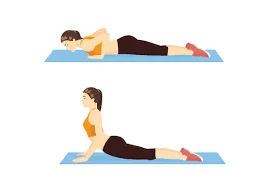
Your buttocks and spine will be strengthened by this mild backbend. Your shoulders, abdomen, and chest are all stretched. It might also lessen tension.
Muscles worked:
- erector spinae
- gluteal muscles
- pectoralis major
- trapezius
- latissimus dorsi
How to do this:
- With your legs out in front of you, lie on your stomach.
- Activate your thighs, buttocks, and lower back muscles.
- With your hands facing down and your forearms on the ground, bring your elbows beneath your shoulders.
- Elevate your head and upper body gradually.
- Lift your back gently and use your lower abdominal muscles to support it.
- Instead of slumping into your lower back, be sure you are raising through the crown of your head and up through your spine.
- While you are completely at ease in this stance, maintain an active and focused gaze.
- You can hold this stance for up to five minutes.
5) Cobra Pose

This mild backbend opens up your abdomen, chest, and shoulders. Engaging in this pose fortifies your spine and could alleviate sciatica. Additionally, it might assist in easing stress and tiredness associated with back pain.
Muscles worked:
- hamstrings
- gluteus maximus
- deltoids
- triceps
- serratus anterior
How to do this:
- Place your hands beneath your shoulders while lying on your stomach with your fingers pointing forward.
- Tighten your arms over your chest. Avoid letting your elbows extend to the side.
- Gently raise your shoulders, head, and chest by pressing into your hands.
- Partially, partly, or fully can be lifted.
- Your elbows should remain slightly bent.
- You can deepen the posture by letting your head drop back.
- Exhale and release yourself back onto your mat.
- Place your arms at your sides and lay your head down.
- To alleviate stiffness in your lower back, slowly move your hips back and forth.
6) Locust Pose

Fatigue and lower back pain may be relieved by this mild backbend. It fortifies the arms, legs, back, and torso.
Muscles worked:
- trapezius
- erector spinae
- gluteus maximus
- triceps
How to do this:
- Place your arms close to your torso while lying on your stomach, palms facing up.
- Turn your heels to the side and bring your big toes together.
- Put your forehead lightly on the ground.
- Lift your arms, chest, and head halfway, all the way, or slowly.
- You might clasp your hands together and intertwine your fingers behind your back.
- Lift your legs to increase the depth of the position.
- Lengthen the back of your neck and look either straight ahead or slightly upward.
- For up to a minute, hold this stance.
- To repeat the posture, take a break.
7) Bridge Pose
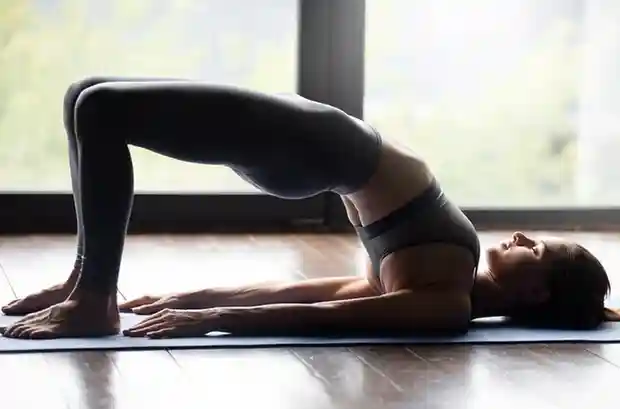
This inversion and backbend can be restorative or stimulating. It may help with headaches and backaches by stretching the spine.
Muscles worked:
- rectus and transverse abdominis
- gluteus muscles
- erector spinae
- hamstrings
How to do this:
- With your heels pressed against your sitting bones and your knees bent, lie on your back.
- Alongside your body, rest your arms.
- Raise your tailbone while pressing your arms and feet into the ground.
- Keep rising until your thighs are level with the ground.
- Put your hands under your hips for support, or leave your arms where they are, bringing your palms together with interlaced fingers.
- For a maximum of one minute, hold this stance.
- Release by carefully lowering your spine, vertebra by vertebra, back to the floor.
- Your knees should come together.
- In this position, breathe deeply and relax.
8) Half Lord of the Fishes

Your spine is energized by this twisting stance, which also relieves back pain. It extends your neck, shoulders, and hips. In addition to stimulating your internal organs, this stance can assist reduce weariness.
Muscles worked:
- rhomboids
- serratus anterior
- erector spinae
- pectoralis major
- psoas
How to do this:
- Draw your right foot in close to your body as you are seated.
- Extend your left foot beyond your leg.
- Twist your body to the left, lengthening your spine.
- Place your left hand on the ground behind you to provide support.
- Wrap your elbow over your left knee or extend your right upper arm to the outside of your left thigh.
- To strengthen the twist in your spine, try to maintain a square hip position.
- Look over both of your shoulders.
- For a maximum of one minute, hold this stance.
- Repeat with the opposite side.
9) Two-Knee Spinal Twist
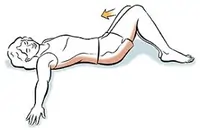
This healing twist encourages back and spine movement and mobility. It extends your shoulders, back, and spine. You can ease back pain, hip pain, and stiffness by doing this stance.
Muscles worked:
- erector spinae
- rectus abdominis
- trapezius
- pectoralis major
How to do this:
- Stretch your arms out to the side while lying on your back with your knees drawn against your chest.
- With your knees as close together as you can, slowly lower your legs to the left.
- You can put a pillow between your knees or under both of them.
- Your knees can be lightly compressed with your left hand.
- You can either keep your neck straight or tilt it to either side.
- In this position, pay attention to your deep breathing.
- At least 30 seconds should be spent in this position.
- Repeat with the other side.
10) Child’s Pose

The ideal approach to unwind and relieve stress in your neck and back is to gently fold forward. It stretches and lengthens your spine. Additionally, Child’s Pose extends your thighs, ankles, and hips. Stress and exhaustion can be reduced by performing this stance.
Muscles worked:
- gluteus maximus
- rotator cuff muscles
- hamstrings
- spinal extensors
How to do this:
- Put your knees together and recline on your heels.
- A blanket or bolster can be placed beneath your forehead, torso, or thighs to provide support.
- Lean forward and move your hands in front of you.
- Put your forehead down on the ground softly.
- With your palms facing up, keep your arms out in front of you or bring them up beside your body.
- As your upper body drops into your knees, concentrate on releasing tension in your back.
- For up to five minutes, hold this stance.
Conclusion
When done properly, yoga positions for back pain are an easy, affordable, and efficient technique to enhance spinal health. They treat underlying problems, including bad posture, weak muscles, and stress,s in addition to relieving pain.
But yoga isn’t a universally applicable remedy. It’s critical to comprehend your condition and practice safely.
It’s crucial to consult a doctor before starting any fitness regimen if your back discomfort continues or gets worse.
FAQS:
Which yoga poses help relieve back pain?
Back discomfort may be alleviated by strengthening and relaxing muscles through yoga poses, es including triangle, lotus, and cat-cow. Yoga might be just what your doctor prescribed if you have back pain. Yoga is a mind-body treatment that is frequently suggested to address both back pain and the associated stress.
Is yoga good for lymph nodes?
Indeed, the lymphatic system benefits greatly from yoga, which acts as a pump to promote drainage, lessen edema, and increase immunity. It prevents congestion by moving lymph fluid through deep breathing, muscle contractions, and poses that target nodes in the groin, armpits, and neck.
What are the 4 asanas for back pain?
Balasana (Child’s Pose), Marjaryasana-Bitilasana (Cat-Cow Pose), Bhujangasana (Cobra Pose), and Salabhasana (Locust Pose) are four poses that are useful for relieving back pain. These positions improve flexibility, strengthen the spine, and lessen lower back stress. It is advised to practice gentle regularity to enhance posture and reduce discomfort.
Which asanas to avoid for back pain?
Bow Pose.
Camel Pose.
Upward-Facing Dog.
Crescent Lunge Twist.
Boat Pose.
Full Wheel.
Fish Pose.
Shoulder Stand.
References:
- Cronkleton, E. (2020, August 25). The 10 best yoga poses for back pain. Healthline. https://www.healthline.com/health/fitness-exercise/yoga-for-back-pain
- Patil, S. (2024, October 15). 12 key yoga poses for back pain relief | Ultimate Guide. Polarishealthcare. https://www.polarishealthcare.in/post/yoga-poses-back-pain-relief
- Yoga Poses for Back Pain: Safe Relief & Daily Routine. (n.d.). The Spine Foundation. https://thespinefoundation.org/yoga-poses-for-back-pain/