
12 Best Full Body Mobility Exercises for Pain-Free Movement
Introduction
Any fitness program must include mobility exercises to improve the range of motion, flexibility, and general function of the muscles and joints. Mobility exercises, as opposed to static stretching, emphasise dynamic movements that actively engage the body and improve stability and control.
By making sure that the body moves effectively and freely, these exercises help improve posture, lessen stiffness, and avoid accidents. Including mobility exercises in your routine may result in better physical health, more comfort, and long-term resilience, regardless of whether you’re an athlete looking to increase performance or someone looking to make daily motions easier.
Benefits of mobility exercise
- Increased Range of Motion increases muscle and joint flexibility. Makes movement easier and more effective. Strengthens the muscles that support and stabilise joints.
- Improved Alignment and Posture: reduces stiffness and imbalance in the muscles.
- Lessens back discomfort and promotes spinal health.
- Improved Efficiency.
- Improves movement mechanics, which increases athletic ability.
- Quicker Recovery.
- Helps lessen post-exercise stiffness and pain.
- The Relationship Between Mind and Body
- Promotes control and awareness of the body.
- Enhances balance and coordination.
Aspects That Impact Mobility
Your mobility may be impacted by a number of factors, including age, joint structure, muscle length, and illnesses or injuries. Joint stiffness brought on by conditions like arthritis can restrict movement. Many orthopedic problems, including bursa inflammation, ligament strains, sprains, and other conditions, can limit joint mobility.
If you sprain your knee, for example, you could find that you can’t bend or extend it as much as you used to. It may be more difficult to fully rotate your arm to put on a jacket or reach for objects above your head if you have a rotator cuff injury. People’s mobility may change as they age because of things like neurological disorders, joint issues, or muscular weakening.
12 Best Full Body Mobility Exercises Video
Mobility Exercises
Neck rolls

- Position: sitting or standing position.
- With your head pointing directly forward, take a comfortable seat or stand. Maintain a straight back and relax your shoulders. To start without tension, you must be in this neutral stance.
- If you experience any pain or discomfort, do not force the movement. Otherwise, you should roll your neck in all directions.
- This stretch contracts the muscles in the front of the neck while releasing tension in the rear.
- Throughout the exercise, take deep breaths, inhaling as you raise your head and releasing them as you lower it.
- Hold duration is five to ten seconds.
- Repetition should be 10-15 times each session.
Shoulder rolls

- Position: sitting or standing position.
- These exercises come in a variety of forms; if you want to squeeze your shoulder, do so; if not, rotate it.
- Remain calm, go back to the beginning position, and repeat as instructed.
- Hold duration is five to ten seconds.
- Repetition should be 10-15 times each session.
Hip circles
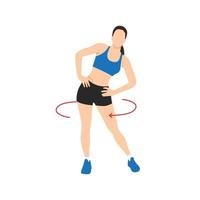
- Position: standing position.
- When performing hip circles, place both hands on your waist and then stand with the appropriate base of support. For equilibrium, stay away from slouching and hunching over.
- Maintain a straight back.
- With a fluid, deliberate motion, continue the rotation back toward the starting position.
- Repetition should be 10-15 times each session.
Arm swing

- Position: standing position.
- They’re ideal for relaxing after extended hours of sitting or warming up before exercise. This exercise improves upper-body joint flexibility, blood flow, and muscle activation.
- For shoulder movements, align both shoulders at a precise level.
- Back behind you, swing them as far as it feels comfortable.
- Controlled Motion: Avoid jerky movements and instead make them fluid and rhythmic.
- Hold duration is five to ten seconds.
- Repetition should be 10-15 times each session.
- Modifications: Single-Arm Swings: For more control, alternate swinging one arm at a time.
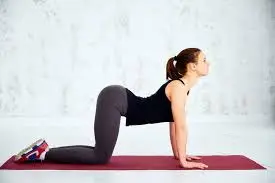
- Position: Quadruped position.
- The yoga stance known as “cat cow” blends the motions of the cow and cat poses.
- Better posture, stronger core muscles, and less tension and anxiety are some advantages of the cat cow.
- Additionally, it can aid with coordination and balance.
- Hold duration is five to ten seconds.
- Repetition should be 10-15 times each session.
Deep lunges

- Position: Standing position.
- Stride forward: Use one leg to take a large stride forward.
- Make sure your ankle and knee are in alignment before bending, and then establish a 90-degree angle with your ankle and hip joints.
- Hold duration is five to ten seconds.
- Repetition should be 10-15 times each session.
Modifications: - Walking Lunges: To improve dynamic flexibility, include forward motion.
- Twisting Lunges: To activate the spine, rotate your body in the direction of your front leg.
Deep Squat

- Position: standing position.
- Place your feet hip-distance apart and stand tall.
- As though you were going to recline in a chair, bend your knees, and extend your buttocks back.
- Get back up and do it again.
- Only knee bending when standing should be taken into consideration, as this is not a functional squat.
- Hold duration is five to ten seconds.
- Repetition should be 10-15 times each session.
Lunges with thoracic twist
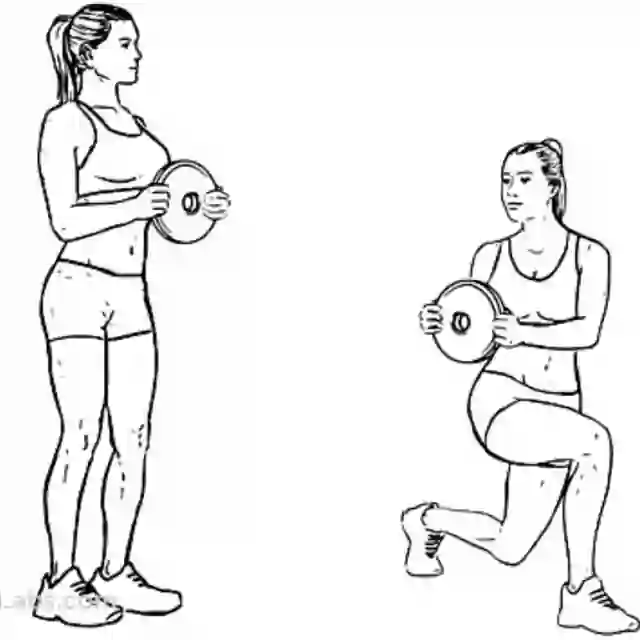
- Position: kneeling position.
- Following this posture, you should rotate your neck to give yourself the right amount of flexibility, or from the centre to the backside.
- Hold duration is five to ten seconds.
- Repetition should be 10-15 times each session.
Standing forward fold

- Position: Standing position.
- Start by standing with a suitable base of support, then bend as much as you can from the pelvis.
- For a proper stretch, loosen your shoulder and relax your head while bending.
- Hold duration is five to ten seconds.
- Repetition should be 10-15 times each session.
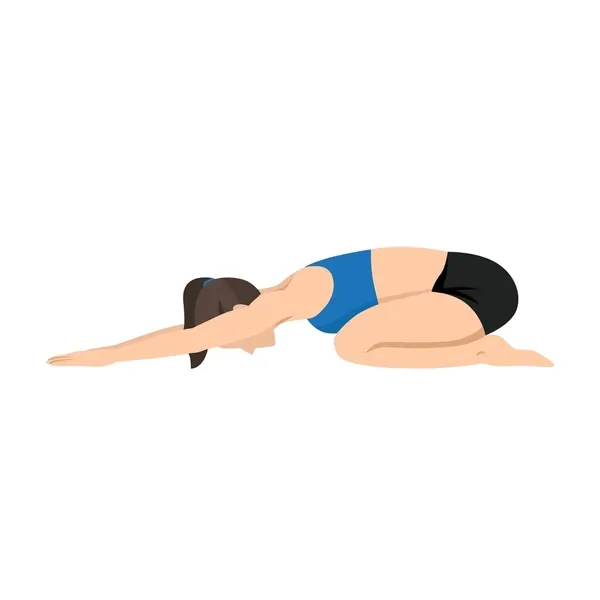
- Position: Sitting position.
- Continue by assuming a kneeling stance. Hold both hands together while keeping your knees together. Then descend to the surface while keeping your breath in rhythm.
- Breathe deeply and slowly while maintaining this posture.
- Hold duration is five to ten seconds.
- Repetition should be 10-15 times each session.
Neck stretch

- Position: sitting or standing position.
- With one hand on your head and the other on your shoulder for stability, you can pull your head with the least amount of support. Or your left arm should be behind your back for stabilisation.
- Hold duration is five to ten seconds.
- Repetition should be 10-15 times each session.
Wrist circles
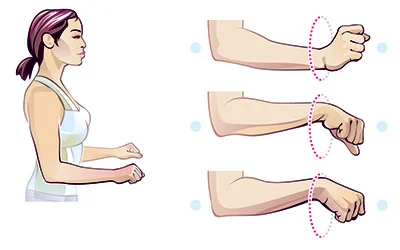
- Position: sitting or standing position.
- Form a Fist: Gently clench your hands into fists, or, if you’d rather, keep your fingers loose.
- Reverse: For an additional 10 to 15 seconds, rotate counterclockwise.
- Hold duration is five to ten seconds.
- Repetition should be 10-15 times each session.
Mobility assessment: what is it?
A combination of methods used to examine a person’s mobility and balance is called a mobility and balance assessment. When performing a mobility evaluation, four main areas are evaluated. A person’s gait is the first area. A person’s gait is evaluated based on their movements, lameness, and likelihood of losing their balance if they trip.
Falling is the second assessment area. When someone falls, how do they respond to it? Are they capable of catching themselves and recovering or positioning themselves to minimise injuries? People who are mobile and have good balance can recover some of their equilibrium and lessen the severity of a fall.
The third area of evaluation is static balance, which examines how a person distributes their weight when they are not moving. It takes into account the capacity to maintain a centre of gravity that does not put the individual at risk of falling. Like static balance, dynamic balance assessment is crucial. This section examines your body’s ability to maintain balance while moving.
Instruments for Mobility Evaluation
Numerous instruments are available for evaluating balance and mobility. Let’s begin with the fundamental assessment points and aspects of the six majors.
- Close to Tandem. This test evaluates your ankle muscle strength and static balance.
- Sit to Stand: This test assesses static balance and leg muscle strength.
- The Alternate Step exam evaluates strength, balance, and coordination.
- We have outlined the four phases for dynamic mobility evaluation.
- The purpose of the exam is to evaluate your joint mobility and coordination.
- The walk test assesses a person’s gait.
- Additional techniques that are more thorough in assessing mobility and balance are available if necessary.
Role of physiotherapy for body mobility
- Recommending activities for strengthening
- Endurance training
- Retraining of gait
- Preventing falls and maintaining balance
- Giving advice on assistive technology
- Exercises to Build Strength: We must have strong muscles to support our body weight and move it from one location to another so that we can move freely. The greatest way to identify specific muscle weakness and create an exercise regimen based on the condition is through physiotherapy.
- Before advancing the exercises to begin moving various body segments, strengthening exercises are frequently recommended as a beginning point to create the foundation for our muscles to be able to hold or move specific body segments in a particular position.
- Exercises for Endurance: We must increase our endurance as our muscles get stronger in order to walk or engage in other physical activities for longer periods of time. Exercises that need endurance include swimming, cycling, and trekking. In order to teach the body to tolerate movement for longer periods of time, physiotherapists will begin increasing the repetitions of specific exercises in the strengthening program.
- Retraining Gait: Medical gait refers to a patient’s or a person’s walking style. Physiotherapists are adept at analysing gait patterns and spotting any abnormalities that would need to be fixed to improve walking efficiency and lessen the load on other body parts if we continue to walk abnormally. In order to strengthen our muscles and increase our tolerance to movement, gait retraining typically begins with endurance and strength training. External aids, such as ankle foot orthoses, splints, and orthoses, can be used to assist in restoring the alignment of the body in a variety of conditions when exercise is ineffective.
- Maintaining Balance and Preventing Falls: To avoid tripping or falling when walking, we must make sure we have adequate balance. The capacity to regulate your body’s position while standing or moving is known as balance. If we can respond quickly enough to stay upright, having good balance can help us avoid falling over even if someone pushes into us unintentionally. Physiotherapists are qualified experts who teach fall prevention and balancing techniques so that our bodies can use the proper muscles at the right moment with the right amount of force needed for the task at hand.
- AT stands for assistive technology: The term “AT” describes tools or equipment that support or enhance a person’s mobility. Many supportive orthoses are available in the field of physiotherapy, including wheelchairs, braces, cock-up plints, ankle foot orthoses for foot drop, and common peroneal nerve injuries. If exercises are unable to address a lack of mobility, such as a chronically weaker side following a stroke, physiotherapists can evaluate the patient and recommend assistive technology (AT) to increase mobility.
Differences between Flexibility and Mobility
Despite having rather different meanings, the two terms are frequently used interchangeably.
Muscle flexibility is the degree to which you can easily move a joint or the range of your muscles. For example, how far I could stretch your hamstrings and move your leg as a physiotherapist. For example, how far you can stretch your hamstrings by moving your leg on your own (without using your hands to pull).
Both are essential for maintaining our regular motions, postures, and activities. But it’s arguable that having high mobility is what enables us to reach our full potential and advance our activities.
FAQs
What do mobility exercises mean?
Muscle strength and control are also necessary for movement. They are different from simple stretching, which solely concentrates on muscle length, and consist of a variety of motions that target joint health. Mobility exercises help improve posture, release tense muscles, promote joint flexibility, and prevent injury. All static and dynamic exercises, yoga positions, and Pilates were included in the mobility exercise.
What does coordination mean to you?
The practice of arranging and coordinating disparate components, endeavours, or activities so they cooperate effectively and efficiently to accomplish a shared objective is referred to as coordination. It can also refer to the physical capacity to manage and produce harmonic movement in various bodily parts. In the context of business or management, it is the “soul of management,” tying together all managerial duties to guarantee coherence and harmony in operations.
What does physical fitness coordination mean?
In terms of physical fitness, coordination is the neurological system’s capacity to combine the motions of muscles and body parts into a fluid, effective, and regulated action. In order to perform activities like walking or playing sports, one requires exact timing, direction, and force from a variety of muscles. By strengthening, balancing, and avoiding injuries, it improves total physical fitness. Improving coordination through particular workouts, sports, or everyday tasks can result in increased functional independence and physical autonomy.
What is an example of balance and coordination?
The best example of balance, coordination, and swimming. Tapping a balloon back to someone while kneeling (no hands on the ground). Hopscotch: Needs the child to quickly and regularly change their movement patterns.
What leads to poor coordination and balance?
Ataxia, or a lack of balance and coordination, can result from a number of conditions that impact the brain, spinal cord, or nerves. Coordination and balance can also be affected by certain drugs, excessive alcohol consumption, and even some illnesses.
What is mobility, exactly?
The ability to move with purpose throughout the day is known as mobility. It serves as the cornerstone for leading an autonomous and healthy life. If I may tell you, the elbow joint has a range of 80, the shoulder has 180, and every other joint in the body has a certain range.
What are the four components of mobility?
There are four components of mobility.
Mobility is the ability of a certain joint to move, and having enough mobility either helps or hinders day-to-day functioning. Being mobile makes you self-sufficient. Your regular activities or the strength and mobility needed for a certain movement are among the components. It serves as the cornerstone for leading an autonomous and healthy life. Mobility includes the ability to move freely throughout daily activities, which necessitates a sufficient range of motion for all joints and a sufficient level of muscular strength.
What are the best exercises for upper limb and lower limb mobility at home?
There are many exercises for mobility and to strengthen your muscles at home without any special considerations or equipment.
Shoulder rolls in all directions
Neck movements in all directions.
First, open and close and squeeze the ball.
Wand exercise.
Hip circles.
ankle toe movements
Shoulder blade squeeze.
Thoracic rotation.
Heel raise.
Wrist circles.
One leg stand.
Standing with eyes closed.
References
- User, G. (2025, June 12). Neck rolls for flexibility and pain relief: A simple guide to neck health — Optimal Wellness Health Center (UT). Optimal Wellness Health Center (UT). https://www.owchealth.com/blog/2024/11/4/neck-rolls-for-flexible-muscles-and-pain-relief
- Kuzey. (2025, July 7). How to perform hip circles to increase Mobility and Warm-Up. FitnessProgramer.com. https://fitnessprogramer.com/exercise/hip-circles/
- Kamb, S., & Kamb, S. (2020, May 14). 16 Wrist mobility Exercises (How to Improve wrist Mobility) | Nerd Fitness. Nerd Fitness. https://www.nerdfitness.com/blog/the-ultimate-guide-for-improving-wrist-mobility-16-exercises-for-the-gym-home-or-office/
- Jones, H. (2023, August 8). 10 neck stretches and exercises for pain, posture, and better sleep. Verywell Health. https://www.verywellhealth.com/neck-stretches-7557800
- Child’s pose. (n.d.). [Video]. Hingehealth. https://www.hingehealth.com/resources/articles/childs-pose/
- Physiotherapy exercise. (n.d.-b). [Video]. https://www.physitrack.com/exercise-library/how-to-perform-the-cat-cow-exercise
- Ms, E. Q. (2022, May 24). How to lunge with a twist: proper form, variations, and common mistakes. Verywell Fit. https://www.verywellfit.com/lunge-with-twist-3120590
- Umel, A. U. (2023, July 5). How to do a Yoga Standing Forward Fold (Uttanasana). Liforme. https://liforme.com/blogs/blog/yoga-poses-standing-forward-fold
- Matthew. (2025, February 21). What is mobility and why is it so important? Bodyset. https://www.bodyset.co.uk/blog/what-is-mobility-and-why-is-it-so-important/
- National 360. (2023, June 1). 5 ways physiotherapy can increase mobility – National 360. National 360. https://national360.com.au/5-ways-physiotherapy-can-increase-mobility/
- Mobility: definition, techniques, benefits & more. (n.d.). Hingehealth. https://www.hingehealth.com/resources/glossary/mobility/