Ardha Uttanasana (Standing Half Forward Bend)
What is Ardha Uttanasana?
Ardha Uttanasana, or Standing Half Forward Bend, is a rejuvenating yoga pose that stretches the hamstrings and spine while strengthening the back and improving posture. It helps lengthen the front body, energize the mind, and prepare for deeper forward bends.
In order to gradually lengthen the spine and deepen the stretch, practitioners place their hands on the floor, thighs, or shins. It facilitates better posture, eases back strain, and increases flexibility. This pose is frequently used as a stand-alone stretch to relieve lower body tension or as part of yoga sequences to prime the body for deeper forward bends.
Many Ashtanga vinyasa flows are broken off by the intermediate pose Ardha Uttanasana. For instance, the Sun Salutation A and B series is the most widely used sequence and is beneficial for extending the upper body, hamstrings, and lower back. In addition, it comes before leaning into the chaturanga dandasana and Uttanasana (complete standing forward fold).
It is simple to set up the natural condition of flexibility since the upper body dives into the lower. As a result, incorporating Ardha Uttanasana into your regular yoga practice reduces effort and increases physical movement efficiency.
Muscles Work During Ardha Uttanasana:
- Middle Back Muscles
- Hamstring Muscle
How to Perform?
- Get into a standing tadasana stance to start this asana. Keep your feet hip-width apart and in line with one another.
- In Urdhva hastasana, extend your arms overhead and look at the tip of your thumb.
- Now release the breath and lean forward from the lower back. Place yourself in a tabletop position with your palms flat on the floor and your back somewhat lower than your hips. If required, reach down with your palms flat on the floor while microbending your knees.
- From this position, steadily raise your torso until it is nearly parallel to the floor. You can do this by raising your palms so that only your fingertips are in contact with the ground.
- Make sure your neck is straight, your hands shoulder-distance apart, and your shoulders parallel to one another. eyes focusing on the ground.
- This is Ardha uttanasana in its entirety.
- As long as it seems comfortable, hold the position while breathing freely and regularly. To relax your body, take a breath and return to a standing position from the lower back when you’re ready to leave.
Beginner Advice:
- Beginners’ hamstrings would be too tense to allow them to contact the ground all at once. To effortlessly reach the ground, they should bend their knees.
- You risk deforming your position if you place your hand on your knees and thighs. Steer clear of this since it also curves the back, which prevents the chest area from opening up during the stance.
- When bending forward, the lower back and the entire spine should be balanced. When lowering the upper body forward, make sure the spine stays engaged and straight.
- Spreading the legs hip-distance apart can help beginners who are having trouble standing during Ardha Uttanasana.
Preparatory Pose:
- Balasana (Child Pose)
- Dandasana (Staff Pose)
- Ardha Bhekasana (Half Frog Pose)
- Adho Mukha Savasana (Downward Facing Dog Pose)
Benefits:
Enhances core muscle strength:
The active support of the core muscles is necessary for holding the torso in Ardha Uttanasana. This puts a great deal of strain on the area in question, which eventually helps to strengthen the muscles.
Increases the flexibility of the hamstrings:
The hamstring muscles can be deeply stretched by reaching the ground with the hand. Nonetheless, consistent practice improves flexibility and hamstring strength.
Enhances the Whole Lower Back:
Engaging the lower back is necessary for both entering and exiting Ardha Uttanasana. It gives the torso and spine the support they need. By doing this, the area’s muscles and bones experience healthy blood flow, which further feeds the area’s skeletal and muscular regions.
Reduce High Blood Pressure:
One of the best yoga poses for reducing the effects of hypertension is Ardha Uttanasana. It dynamically combats hypertension.
The respiratory system is strengthened:
This asana promotes blood circulation throughout the body, which makes the lungs perform as per the needs. Over time, this helps them grow and become stronger. But chronic respiratory conditions can also benefit from Ardha Uttanasana.
Chakras are stimulated:
One of the poses that activates multiple chakras is Ardha Uttanasana. Some of the chakras that can be activated with proper breathing techniques are the Heart Anahata chakra, the Root or Muladhara chakra, and the Naval or Solar plexus chakra.
Modifications:
- In the early stages of pregnancy, one can perform Ardha Uttanasana by spreading their legs wide enough to prevent contact between their stomach and thighs, but it is not recommended for the last stages. To obtain support, one might lean against the chair’s seat or the wall!
- Since it would hurt to aggressively reach the ground while descending, yoga blocks can be used in cases of herniated discs.
- It’s common for your feet to become out of line with your posture because of weak thighs. To achieve stability in the pose, position a yoga block between your thighs and squeeze it gently.
- It may be difficult for practitioners with weak backs to balance in Ardha Uttanasana. Thus, using a chair or wall for support may be useful in this situation.
Variations:
Half bound lotus standing forward bend

- To begin, stand up and place your hands on either side of your torso.
- Now release your breath and bend forward to use your thumb, middle finger, and index finger to grasp your big toes.
- From here, take a breath to raise your arms straight up and your chest.
- Exhale once more to stabilize the big toe into the ground and to bend the elbows.
- Allow the head to hang downward after removing the shoulder.
- Hold this posture for a while, then return to unwind.
Half Forward Fold Hands On Back
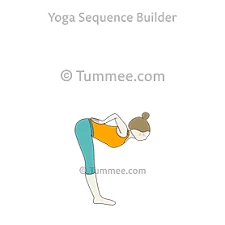
- Start by standing erect, then bend forward by exhaling. When descending, be sure to use your lower back.
- Allow your hand to fall to the ground. Plant your toes firmly on the floor.
- Now take a breath and swing your hand just above your hip. With your palm up. Look at the ground. To find equilibrium, dig your toes into the ground.
- Exhale to return to the bending position after a few breaths, and then inhale to return to the Namaste mudra or finishing pose.
Precautions:
- To lessen the strain on the hamstrings, if you have a hamstring problem, avoid getting all the way into the pose or just bend your knees.
- Practitioners who suffer from sciatica should bend their knees and place their toes inward.
- Exaggerating the neck in both an upward and downward orientation is not recommended. Keeping it neutral enhances the posture’s elegance.
- You could lose your balance if you bend into Ardha Uttanasana via your spine. Preferably, lower your back as you enter and exit the stance.
Contraindications:
- It is best to avoid from performing Ardha Uttanasana in the latter phases of pregnancy and menstruation.
- Because it could aggravate their current condition, practitioners with neck and lower back issues avoid this pose.
- In acidity, it should be avoided. Suppressing the stomach while lowering the body may be dangerous.
- Ardha Uttanasana should not be performed by patients who have had abdominal surgery within the last few months unless specifically instructed by their physician.
Conclusion:
The first yoga pose, Uttanasana, has a sister pose called Ardha Uttanasana. If done on a regular basis, it is a powerful yoga technique that strengthens the body in addition to expanding its range of motion.
But in addition to its physical advantages, Ardha Uttanasana was found to be helpful in enhancing the practitioner’s mental well-being. The many chakras in the body are stimulated when you practice yoga with a knowledgeable or experienced instructor.
FAQs
What is the difference between Ardha Uttanasana and Uttanasana?
As part of the Sun Salutation sequence, you are likely familiar with the Ardha Uttanasana (Standing Half Forward Bend) pose. It’s the one that comes after Standing Forward Bend, or Uttanasana. It might also have been referred to as Half Lift or Halfway Lift by a teacher.
Who should avoid Ardha Uttanasana?
Injury and Surgery: People who have lower back or hamstring injuries should not perform Ardha Uttanasana. Avoid this pose if you have joint pain or an abdominal hernia. When the lower back hurts, one should avoid this pose or perform the stretch while bending their knees.
What are common mistakes in Ardha Uttanasana?
Typical Errors to Avoid When Rounding the Back: Instead of folding deeply, concentrate on stretching the spine.
Looking Up Too Much: To prevent compression, keep the neck in alignment with the spine.
Putting your hands on your knees might cause joint strain; instead, place them on your thighs or shins.
Knee overextension: Maintain a microbend to protect your joints.
What are the disadvantages of Uttanasana?
Students who have migraines, vertigo, or high blood pressure should avoid this stance since it causes a blood rush to the brain. Because this posture causes the spine to stretch deeply, students with spinal conditions such as herniated discs, advanced cervical and lumbar spondylitis, scoliosis, and kyphosis should avoid it.
Is Ardha Uttanasana good for back pain?
One of the best poses for preventing backbends is the standing forward fold. Under the supervision of a qualified yoga instructor, the pose can help ease stiffness in the back when done correctly.
Is Ardha Uttanasana good for balance?
By stretching the hamstrings, calves, and spine, Ardha Uttanasana increases flexibility and releases tension in these regions. Additionally, it improves stability and balance by strengthening the lower back, core, and leg muscles.
What props can help with Ardha Uttanasana?
This version requires two yoga blocks (if you want to fold further), a chair (to hold onto for support and to help you lengthen your spine), and some free wall space (to help you locate the verticality in your legs).
References:
- Singhdeo, A. (2024, July 1). How to do Ardha Uttanasana. https://www.shvasa.com/yoga-blog/how-to-do-ardha-uttanasana
- Standing Half Forward Bend Yoga Pose (Ardha Uttanasana). Tummee. https://www.tummee.com/yoga-poses/Ardha Uttanasana
- Ardha Uttanasana (Standing Half Forward Bend): Steps, Benefits, Precautions – Fitsri Yoga. https://www.fitsri.com/poses/ardha-uttanasana