
10 Best Exercises For Scoliosis
Introduction
People with scoliosis often experience a noticeable curvature in the spine, which can take on an S or C shape. Although it usually manifests in childhood, it can also occur during maturity.
Numerous factors, including heredity, an unequal pelvic posture, previous spinal or joint operations, abnormalities of the knee or foot, or even brain trauma, can cause scoliosis in adults.
Curves vary in degree of severity. Surgery or bracing may be used to treat moderate to severe instances of scoliosis. You should speak with your doctor about a suitable treatment plan if you think you may have scoliosis.
Exercises To Correct Scoliosis
The following are the exercises to correct a Scoliosis:
Pelvic Tilts

- Position the patient in a supine posture with knees flexed and ensure the feet are placed flat on the floor for stability.
- Initiate an abdominal contraction to achieve lumbar flexion, resulting in full spinal contact with the floor.
- Allow your body to relax and reset.
- Perform 10 reps per set, for a total of 2 sets, as tolerated.
Cat and Cow

- Start in a hands-and-knees position.
- Maintain a neutral spine by straightening your back and aligning your head to support correct postural alignment.
- During exhalation, activate your deep abdominal muscles by drawing the navel inward toward the vertebral column.
- Engage your core by lifting your abdominal muscles, then slowly arch your spine as you inhale fully.
- Engage your core as you depress the lower abdomen, then extend the cervical spine to elevate the head toward the ceiling.
- Complete two rounds of 10 reps each.
Latissimus Dorsi Stretch
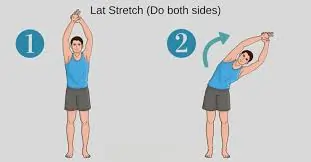
- Position the body in a neutral standing stance, ensuring proper postural alignment.
- Keep your knee and shoulder in the same line, making sure they stay aligned throughout the movement.
- Elevate both upper limbs overhead; use the left hand to secure the right wrist for a controlled stretch.
- Lean right. Stop when your left side stretches.
- Hold the pose for 30 seconds.
- Perform the same movment on other side.
- Repeat 5–10 times per side.
Abdominal Press

- Back flat, knees bent, feet down.
- Keep your spine straight, neutral, and relaxed.
- Activate your hip flexors and knee joints by lifting and bending your legs to achieve a 90-degree alignment.
- Press your hands firmly on your knees and activate your core to pull them inward with stability.
- This is an isometric (static) exercise—your arms and legs should stay still as you apply pressure.
- Sustain the isometric contraction through three full respiratory cycles, then release muscular tension.
- Perform 2 sets of 10 reps each, taking a short break in between.
Plank

- Lower yourself into a prone position by softly resting your chest on the mat.
- Place both hands on the mat, making sure they are correctly positioned beneath your shoulder for alignment.
- From there, move into a strong push-up position.
- Throughout the action, keep your body straight and rigid because your abdominal muscles are contracting.
- Hold your plank for as long as it feels comfortable and controlled, up to one minute, while remaining stable and centred.
Bird Dog

Bird Dog Exercise Steps
- Start with an all fours position.
- With steady breath, reach your right arm forward, lifting it gently to shoulder height.
- Perform left hip extension, elevating the limb posteriorly to align with the pelvic level.
- Hold this posture for as long as your trainer or healthcare provider recommends.
- Complete the exercise on the other side to ensure your strength and flexibility.
Hip Roll
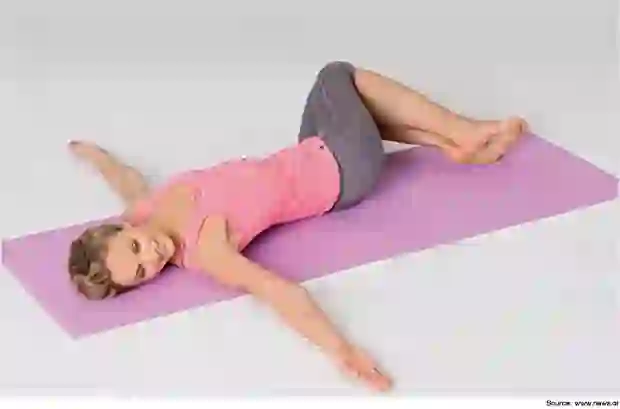
- Assume the supine position with arms positioned naturally at the sides to ensure neutral spinal alignment.
- When you bend your knees, you will observe that your feet remain together.
- At this point, rotate your knees towards one side of the torso, bringing them as close to the floor as possible while maintaining proper alignment.
- Balance both sides by performing the same action on your other side.
- Feel free to repeat this as many times as is comfortable for you, based on your own limits.
Side Plank With Rotation

- Initiate the movement by aligning your legs in a lateral plank position, ensuring your weight is stabilized on one forearm.
- Stay strong in your plank, slide your top arm under your body, and then reach it high toward the ceiling.
- The rotation works on your side and back muscles, boosting core strength and stability.
- Performing a standard side plank with rotational movement can assist in addressing muscular imbalances associated with scoliosis.
- Perform this exercise on the opposite side.
Single Leg Balance
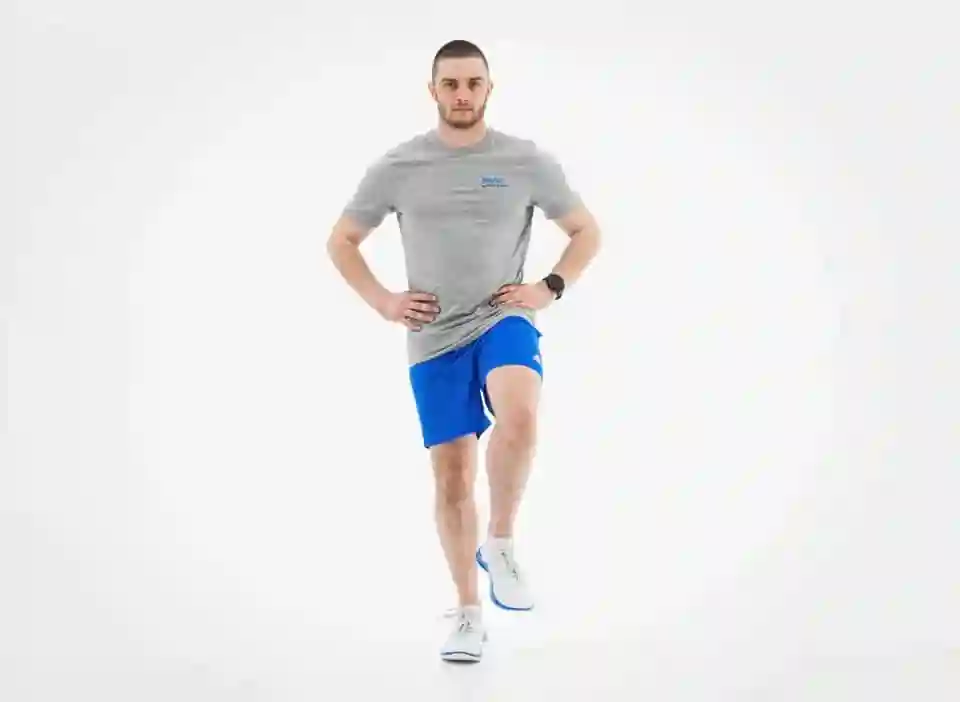
- Start this exercise in standing.
- Stabilize your body on a single leg and elevate the opposite knee until it reaches a 90-degree flexion at the hip.
- You can use a table or chair to assist you stay balanced if necessary.
- You’ll want to work toward performing this routine without assistance.
- Increase the level of difficulty by close your eyes or position your arms across the chest.
- To achieve the best outcome, perform this several times on each side.
Kettlebell Suitcase Deadlift
- Choose a kettlebell weight that is manageable to lift with one hand.
- Begin by standing upright, ensuring your feet are aligned directly under your hips.
- Carefully set the kettlebell down on the floor, ensuring it’s positioned just outside the line of your right foot.
- Gently begin by folding from your hips, letting your knees soften as you bend them, keeping your spine long, neutral, and free from tension.
- Grab the kettlebell. Lift with a neutral spine.
- Continue this exercise following the given instructions.
Exercises to Avoid
Heavy Lifting:
When performing exercises like deadlifts or squats, especially with heavy weights, it’s important to be mindful of the significant strain they can place on your spine. To prioritize spinal health, these exercises should be avoided or modified.
Repetitive Twisting:
Activities that involve repeated twisting motions, such as certain yoga poses or golf swings, require a cautious approach. To protect your spine, it’s crucial to modify these movements to minimize excessive spinal rotation.
High-Impact Activities:
Exercises that put a lot of strain on your spine, including sprinting, jumping, or contact sports, should be avoided. It’s wise to exercise caution or even refrain from them, particularly if you experience any pain or discomfort.
Excessive Backward Bending:
Exercises that involve extreme backward bending, like certain yoga backbends, should be approached with care. To prevent spinal strain and potential injury, these movements should be limited or avoided, especially if you have pre-existing spinal conditions or experience discomfort.
One-Sided Exercises:
Exercises that work primarily on one side of the body, such as single-arm rows, can worsen existing scoliosis or create muscular imbalances, potentially worsening the spinal curvature.
Prolonged Sitting or Standing:
Prolonged periods in the same position can strain your spinal muscles, which might worsen scoliosis symptoms.
Considerations:
Consult a Professional:
It’s crucial to consult a healthcare professional or physical therapist specializing in scoliosis before beginning any exercise program. They can take a look at your situation and help you find the right exercises and tweaks that fit your needs.
Listen to Your Body:
Doing planks and pelvic tilts is a great way to strengthen your core, straighten your posture, and keep your spine healthy.
Modify Exercises:
For those with scoliosis, a wide range of exercises can be modified to ensure their safety and effectiveness. For instance, weightlifting can be done using lighter weights and focusing on proper form. Similarly, some yoga poses can be modified to prevent hyperextension, ensuring they don’t strain the spine.
FAQs
Can scoliosis be corrected with exercise?
While exercises offer benefits for managing scoliosis, they cannot fully correct the spinal curvature, particularly in moderate to severe cases. Exercise can help improve posture, reduce pain, enhance flexibility, and strengthen the muscles surrounding the spine, but it’s not a standalone solution for significant structural changes.
Can walking reduce scoliosis?
Walking isn’t just movement; it’s a fantastic way to build muscle strength, enhance your posture, and boost spinal flexibility. Plus, consistent walks can actively alleviate pain and ward off stiffness in your back. It also assists in maintaining proper spinal alignment and may even slow the condition’s progression by promoting muscle balance.
How late is too late to fix scoliosis?
It’s Never Too Late to Address Scoliosis
While early detection and intervention are highly beneficial, it’s important to know that it’s never too late to start working on managing your scoliosis.
What exercises avoid scoliosis?
For those with scoliosis, a wide range of exercises can be adapted to ensure both your safety and the best possible outcomes. Bodyweight workouts are a healthy way to strengthen your spine, but severe weightlifting is dangerous.
At what age does scoliosis get bad?
Scoliosis diagnosed in children aged 3-10 (juvenile) can accelerate significantly with growth, while adolescent idiopathic scoliosis is usually identified in the pubertal years (10 through skeletal maturity).
References:
- Ames, H. (2024b, March 1). The 7 best stretches and exercises for scoliosis. https://www.medicalnewstoday.com/articles/325385#arm-and-leg-raises
- Ashpari, Z. (2023, May 9). Scoliosis exercises you can do at home. Healthline. https://www.healthline.com/health/scoliosis/exercises-at-home#exercises
- WebMD Editorial Contributor. (2025, March 9). Best exercises for scoliosis. WebMD. https://www.webmd.com/back-pain/best-exercises-scoliosis
- 12 Scoliosis Exercises for Pain Relief | Jason Lowenstein, MD. (n.d.). Dr. Jason Lowenstein | Scoliosis & Spinal Deformities Surgeon. https://jasonlowensteinmd.com/12-scoliosis-exercises-for-pain-relief/
- The ScoliClinic Connect. (2022, March 31). Core exercises to AVOID if you have Scoliosis (And Why) [Video]. YouTube. https://www.youtube.com/watch?v=rkbYrlEt_Hc
- Smith, J. (2024, July 11). The best lower ab exercises for a tight core. Shape. https://www.shape.com/lower-belly-fat-exercise-5517450
- Pilates-exercises-for-beginners-knee-rolls – Advance Physio. (2018, February 15). Advance Physio. https://www.advancephysio.biz/top-pilates-exercise-for-relieving-low-back-pain/pilates-exercises-for-beginners-hip-rolls/


