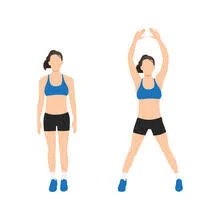

8 Best Exercises for Frozen Shoulder
Frozen shoulder (adhesive capsulitis) causes stiffness and pain in the shoulder joint. Gentle stretching and mobility exercises can help restore movement, reduce pain, and improve shoulder flexibility over time.
What is Frozen shoulder?
Another word for frozen shoulder is adhesive capsulitis, which makes the shoulder joint painful and stiff. Usually, the signs and symptoms start out slowly before getting worse. Symptoms improve with time, typically in a year or three.
The risk of having frozen shoulder is increased when a shoulder must be kept motionless for an extended period of time. This may occur following surgery or an arm break.
Range-of-motion exercises are part of the treatment for frozen shoulder. As part of treatment, numbing medications and corticosteroids are sometimes injected into the joint. In rare cases, arthroscopic surgery is required to increase the joint capsule’s range of motion.
Symptoms of frozen shoulder (adhesive capsulitis)
Three stages are used by medical professionals to categorize frozen shoulder symptoms:
- The “freezing” stage: Your shoulder gets stiff and difficult to move throughout this phase. Slowly, the pain gets worse. It might get worse at night. It gets harder to move your shoulder. Six weeks to nine months is the duration of this period.
- The “frozen” stage: Your shoulder may get less painful at this point, but it will still be stiff. Daily chores and activities become more challenging as a result. Two to six months pass throughout this phase.
- The “thawing” (recovery) stage: At this point, your shoulder’s mobility gradually increases, and the pain gradually subsides. Recovery is complete or almost complete when normal strength and motion return. From six months to two years, the stage lasts.
Who’s at risk for developing frozen shoulder?
- Age: Adults aged 40 to 60 are most frequently affected by frozen shoulder.
- Sex: Females are more likely than males to be affected by the disease.
- Recent shoulder injury: Your chance of developing frozen shoulder is increased by any shoulder injury or surgery that necessitates the use of a shoulder brace, sling, shoulder wrap, or other device to prevent your shoulder from moving. A rotator cuff tear and fractures of the upper arm, collarbone, or shoulder blade are a few examples.
- Diabetes: About 10% to 20% of diabetics have frozen shoulder.
- Other health diseases and conditions: This involves heart disease, Parkinson’s disease, stroke, hypothyroidism (underactive thyroid gland), and hyperthyroidism (overactive thyroid gland). Because a stroke may block shoulder and arm movement, it is a risk factor for frozen shoulder. Why other medical conditions raise the risk of getting frozen shoulder is unknown to researchers.
Exercises for Frozen Shoulder
1. Pendulum Exercise
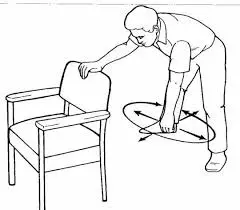
A good place to start is with the pendulum exercise, sometimes referred to as the Codman pendulum. You may move your shoulder gently and without overloading it with this workout.
This is how you do it:
- Lean forward a little while standing or sitting. Use a table to support your unaffected arm.
(Note: Consult your physical therapist for advice on the ideal posture for you.) - Relax and let your affected arm hang down straight.
- Swing your arm slowly in little circles, first counterclockwise and then clockwise.
- In a planned motion, move your arm forward and backward.
- Avoid pushing the action and stop if you experience pain.
You can safely stretch your shoulder in the early stages with this exercise. But it might not make a big difference in shoulder mobility over the long run. In certain situations, your doctor might gradually suggest more exercises.
2. Table-Top Arm Slides

With no tension, a tabletop arm slide could increase the range of motion.
This is how to do it:
- Place yourself in a chair by a sleek table.
- Elevate your affected arm onto the table using your unaffected arm.
- Bend forward slowly, letting the affected arm move across the table.
- Hold for 5 to 10 seconds, or longer if your muscles are tense, 20 to 30 seconds.
- After ten repetitions, stand back up straight.
3. Wall Crawl

Because the wall crawl stretches the muscles and tendons surrounding your shoulder joint, it may increase its flexibility.
To do it:
- With your afflicted arm bent and in a “V” shape at the elbow, face the wall.
- Grasp the wall with your fingers, then slowly raise them as far as feels comfortable.
- After a few seconds of holding the pose, slowly bring your arm back to waist height.
- Increase the height as comfortably and repeat 10–20 times daily.
4. Towel Stretch

The external rotation of your shoulder is the focus of the towel stretch, which may increase the range of motion.
To begin the activity, follow these steps:
- A towel should be rolled into a tight, lengthy roll.
- Grab the towel behind your back with the affected arm.
- Gently stretch your injured shoulder while pulling the cloth with your healthy arm.
- After holding for 15 to 30 seconds, let go.
- Ten to twenty times, repeat this.
5. Cross-Body Stretch

Shoulder stiffness, flexibility, and range of motion may all be improved with cross-body stretches.
You must complete the following to do a cross-body stretch:
- With your back straight, stand or sit.
- Place your affected arm across your chest.
- Push the arm gently toward your body with your unaffected hand.
- After holding for 15 to 30 seconds, let go.
- Do this 10–20 times a day, based on how comfortable you are.
6. Sleeper stretch

Internal rotation, the most limited movement in a frozen shoulder, is the focus of the sleeper stretch. When paired with physical therapy, this exercise may help with shoulder pain and range of motion.
To do a sleeper stretch, follow these steps:
- Place your injured arm at a 90-degree bend while lying on your unaffected side.
- Push your injured arm gently down toward the bed with your unaffected arm.
- Return to the starting position after holding for 30 to 60 seconds.
- Stretch like this two or three times a day.
Note: To avoid irritation or harm, don’t push too hard.
7. Gentle Resistance Band External Rotation

The shoulder muscles, particularly the rotator cuff, may be strengthened with external rotation exercises.
To begin the workout:
- Attach the resistance band at waist height to a sturdy surface.
- With your elbow bent at a 90-degree angle, grasp the band with the affected arm.
- Keep your elbow close to your side as you slowly rotate your arm outward.
- Go back to where you were before.
- Do this ten to fifteen times.
8. Shoulder Shrugs and Scapular Retraction
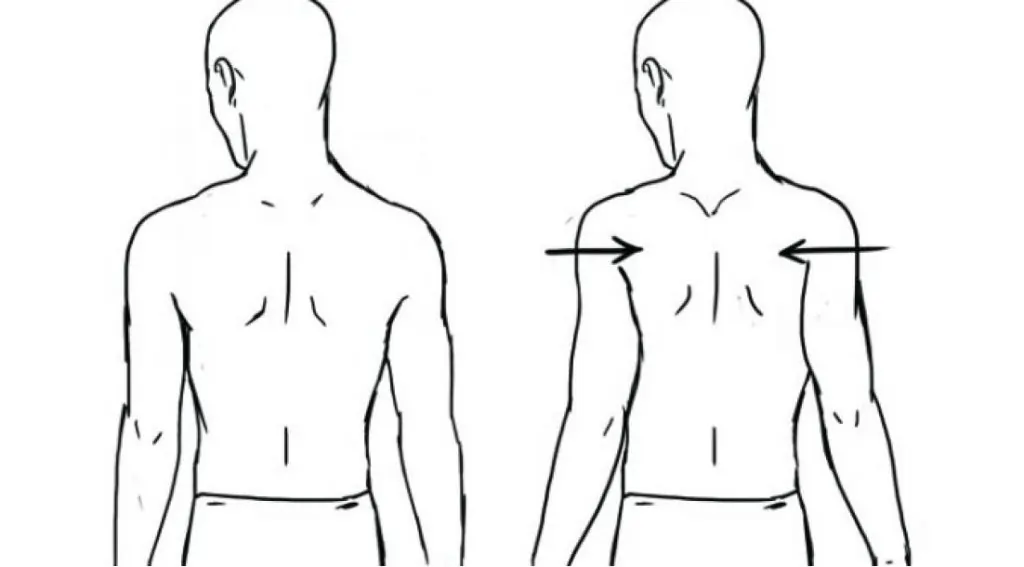
For increased mobility, these workouts strengthen your shoulders, increase stability, and lessen pain.
To complete this:
- With your shoulders relaxed, sit or stand up straight.
- Shrug your shoulders up slowly, as though you were reaching for your ears.
- Maintain this posture for two to three seconds, then let go.
- After that, squeeze your shoulder blades together as though you were holding a pencil between them.
- Release after two to three seconds of holding.
- Each set, repeat ten to fifteen times.
Isometric Shoulder Exercises
9. Isometric Shoulder Flexion

- Position yourself in front of a wall.
- Make a fist and bend the elbow on the affected side.
- Between the fist and the wall, place a folded towel, then gently push the hand against the wall.
- Wait five seconds.
- To activate the shoulder muscles, perform 10 to 15 repetitions of this exercise.
10. Isometric Shoulder Abduction
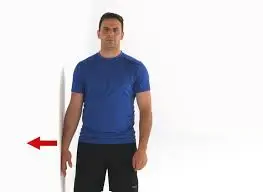
- Position yourself approximately six inches away from a wall, but make sure your torso is perpendicular to it.
- The side that is impacted should have its shoulder toward the wall.
- Press your fist against the wall, using a folded towel for added comfort.
- As though you were trying to raise your arm out to the side, gently press into the wall and hold it there for five seconds.
- Release the strain on the wall gradually.
- Do ten to fifteen repetitions.
11. Isometric Shoulder External Rotation

- The teres minor and infraspinatus muscles of the rotator cuff can be strengthened with this exercise.
- To carry out the exercise:
- Keep standing six inches away from a wall, perpendicular to it.
- The affected side’s shoulder ought to be closest to the wall.
- As you rotate your arm outwards, make a fist, bend your elbow 90 degrees, and press the back of your hand on the wall.
- For approximately five seconds, gently press the hand against the wall.
- Release the strain on the wall gradually.
- Perform ten to fifteen repetitions.
12. Isometric Shoulder Internal Rotation

- To execute internal rotation of the isometric shoulder:
- Body position: face a wall’s exterior corner or a door frame.
- The affected side’s shoulder needs to be close to the corner or door opening.
- As though attempting to spin your hand inside towards your belly button, make a fist, bend the elbow 90 degrees, and softly press onto the door jamb or corner wall.
- For protection, use a tiny folded towel.
- Hold for five seconds.
- Do ten to fifteen repetitions.
13. Isometric Shoulder Extension

- Place your back against a wall and stand six inches away from it to do an isometric shoulder extension.
- With the elbow straight, place the hand close to your hip.
- Form a fist and press it softly against the wall behind you.
- There should be very little shoulder mobility.
- Release the pressure gradually after holding it against the wall for five seconds.
- Perform 10 to 15 reps.
When should I avoid doing frozen shoulder exercises?
- stroke survivor
- adult aged 40 to 60 years
- people with hypothyroidism or hyperthyroidism
- people with a heart condition, Parkinson’s disease
- women who have undergone a mastectomy
- recent shoulder injury, such as a rotator cuff tear
- fracture of the upper arm, collar bone, and shoulder blades
- a patient recovering from a medical procedure or a condition that prevents her from moving her arm
- shoulder brace, shoulder splint
- pregnancy
- Recent fracture
- Recent pop
- Recent inflammation or injury
- Malignant tumor
Precautions
- Do not completely stop shoulder movement due to pain;
- Instead, avoid tasks that require sudden movement, such as heavy lifting on the affected side.
- After recovery begins, restart gradual movement.
- Prevent inflammation,
- Avoid sleeping on the shoulder that is affected, and attend regular physical therapy and exercise sessions.
- Maintain a healthy diet, quit smoking and drinking,
- See a shoulder specialist if frozen shoulder treatment doesn’t work, and exercise as directed by a physician.
FAQs
What is Frozen shoulder?
Another word for frozen shoulder is adhesive capsulitis, which makes the shoulder joint painful and stiff. Usually, the signs and symptoms start out slowly before getting worse. Symptoms improve with time, typically in a year or three.
The risk of having frozen shoulder is increased when a shoulder must be kept motionless for an extended period of time. This may occur following surgery or an arm break.
Range-of-motion exercises are part of the treatment for frozen shoulder. As part of treatment, numbing medications and corticosteroids are sometimes injected into the joint. In rare cases, arthroscopic surgery is required to increase the joint capsule’s range of motion.
What are the symptoms of frozen shoulder?
The “freezing” stage: Your shoulder gets stiff and difficult to move throughout this phase. Slowly, the pain gets worse. It might get worse at night. It gets harder to move your shoulder. Six weeks to nine months is the duration of this period.
The “frozen” stage: Your shoulder may get less painful at this point, but it will still be stiff. Daily chores and activities become more challenging as a result. Two to six months pass throughout this phase.
The “thawing” (recovery) stage: At this point, your shoulder’s mobility gradually increases, and the pain gradually subsides. Recovery is complete or almost complete when normal strength and motion return. From six months to two years, the stage lasts.
Who’s at risk for developing frozen shoulder?
Age: Adults aged 40 to 60 are most frequently affected by frozen shoulder.
Sex: Females are more likely than males to be affected by the disease.
Recent shoulder injury: Your chance of developing frozen shoulder is increased by any shoulder injury or surgery that necessitates the use of a shoulder brace, sling, shoulder wrap, or other device to prevent your shoulder from moving. A rotator cuff tear and fractures of the upper arm, collarbone, or shoulder blade are a few examples.
Diabetes: About 10% to 20% of diabetics have frozen shoulder.
Other health diseases and conditions: This involves heart disease, Parkinson’s disease, stroke, hypothyroidism (underactive thyroid gland), and hyperthyroidism (overactive thyroid gland). Because a stroke may block shoulder and arm movement, it is a risk factor for frozen shoulder. Why other medical conditions raise the risk of getting frozen shoulder is unknown to researchers.
How to perform the pendulum exercise?
A good place to start is with the pendulum exercise, sometimes referred to as the Codman pendulum. You may move your shoulder gently and without overloading it with this workout.
This is how you do it:
Lean forward a little while standing or sitting. Use a table to support your unaffected arm.
(Note: Consult your physical therapist for advice on the ideal posture for you.)
Relax and let your affected arm hang down straight.
Swing your arm slowly in little circles, first counterclockwise and then clockwise.
In a planned motion, move your arm forward and backward.
Avoid pushing the action and stop if you experience pain.
You can safely stretch your shoulder in the early stages with this exercise. But it might not make a big difference in shoulder mobility over the long run. In certain situations, your doctor might gradually suggest more exercises.
How to perform the sleeper stretch exercise?
Internal rotation, the most limited movement in a frozen shoulder, is the focus of the sleeper stretch. When paired with physical therapy, this exercise may help with shoulder pain and range of motion.
To do a sleeper stretch, follow these steps:
Place your injured arm at a 90-degree bend while lying on your unaffected side.
Push your injured arm gently down toward the bed with your unaffected arm.
Return to the starting position after holding for 30 to 60 seconds.
Stretch like this two or three times a day.
How to perform the shoulder shrug and scapular retraction exercise?
For increased mobility, these workouts strengthen your shoulders, increase stability, and lessen pain.
To complete this:
With your shoulders relaxed, sit or stand up straight.
Shrug your shoulders up slowly, as though you were reaching for your ears.
Maintain this posture for two to three seconds, then let go.
After that, squeeze your shoulder blades together as though you were holding a pencil between them.
Release after two to three seconds of holding.
Each set, repeat ten to fifteen times.
References:
- Mehta, P. (2025, June 13). The best 8 exercises for frozen shoulder. Resilience Orthopedics. https://www.resilienceorthopedics.com/shoulder/frozen-shoulder-exercises/
- Frozen shoulder (Adhesive capsulitis). (2025, June 2). Cleveland Clinic. https://my.clevelandclinic.org/health/diseases/frozen-shoulder-adhesive-capsulitis
- https://samarpanphysioclinic.com/exercise-for-frozen-shoulder/