
Plyometrics Exercises For Beginners
Introduction
Plyometric exercises for beginners concentrate on controlled, explosive movements like Pogo Hops, Squat Jumps, Broad Jumps, Lateral Jumps, and Skater Hops. These exercises promote quick ground contact and soft landing, building power with minimal impact. They frequently use bodyweight movements like basic jumps, skipping, or controlled hops over lines, and as strength increases, they progress to more complex moves.
If you’ve heard the term before, it’s likely been associated with jumping movements like box jumps. However, plyometrics may be used for any short, quick, and explosive exercise or activity that enables you to maximise muscular force in the shortest amount of time.
According to an exercise physiologist, incorporating plyometric exercises into your training has many advantages, such as increased strength, explosiveness, speed, agility, and power.
What Are Plyometrics?
Plyometric training targets the lower body’s fast-twitch muscle fibres with short high-intensity bursts of activity. These fibres contribute to the production of explosive power, which boosts jumping height and speed.
Competitive athletes who play sports like basketball, volleyball, baseball, tennis, and track and field thatrequired quick, forceful movements, employ plyometrics. In addition to providing a great, heart-pumping workout, plyometrics can help with coordination, agility, and flexibility.
Who can safely try plyometrics?
Plyometric workouts come in a variety of forms. The majority of people are familiar with gym plyometrics, which include jumping over hurdles or onto the top of boxes.
However, these are difficult exercises that should only be tried with a trainer’s help after you’ve gained some skill and muscular strength.
Before beginning any plyometric exercise, consult your doctor if you have any joint problems, particularly with your knees, back, or hips, or if you have any balance issues.
How tomaximisee effort while minimising risk of injury
- Select a surface that has some flexibility. A well-padded, carpeted wood floor, grass or ground outside, or a thick, solid mat (not a thin yoga mat) are all excellent options that help absorb part of the impact when you land. Avoid jumping on asphalt, concrete, or tile surfaces.
- To begin, try to get just a few inches off the ground. Your impact on landing increases with the height of your fall.
- When you land, bend your legs. Avoid locking your knees.
- Avoid landing only with your heels or the balls of your feet; instead, land gently.
Simple plyometric exercises
To get your plyometric training started, try these three beginner-level movements.
Side Jumps or Lateral Jumps
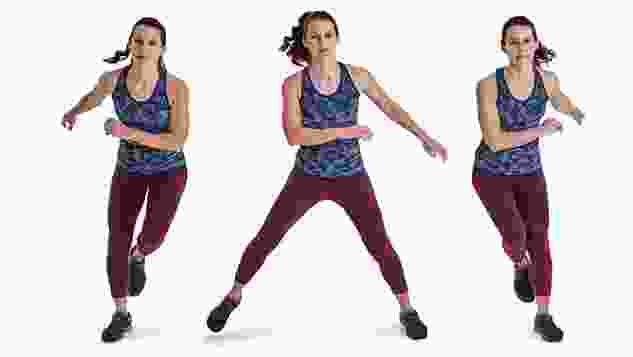
- Place your feet together and take a tall stance. Leap as far to the left as you can while shifting your weight to your right foot, landing with your left foot first, then your right. Hopping to your right, repeat. One representative, that is.
- You can swing your arms freely or hold them in front of you.
- When you jump, try not to bend or turn your shoulders forward.
- Stay closer to the floor and hop a shorter distance to the side to make this exercise simpler.
- To finish a set, perform five to fifteen repetitions. Perform one to three sets, pausing in between.
Jump rope

- The short, rapid ground contact period that jumping rope emphasises makes it an efficient plyometric workout. It also measures coordination and repeated jumping height when you clear the rope.
- Jump rope for two minutes at first, then extend the duration or add more sets.
- If two minutes is too long, divide it into 10- to 30-second parts.
- If your feet become knotted, take a moment to recover your equilibrium before continuing.
- Going through the jumping rope exercises without the rope is a simpler choice.
Forward hops
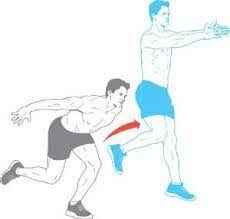
- Place your feet together and take a tall stance. Jump forward one or two feet while bending your knees. To finish one repetition, turn your body around and jump back to the beginning position.
- Let your arms swing naturally during the hop.
- Stay closer to the floor and hop a shorter distance to make this workout simpler.
- Hop higher and farther if you want a greater challenge. Try jumping over little objects as this gets easier. Start with something like a stick, and then use books of different thicknesses to raise the height.
- To finish a set, perform five to ten hops. Perform one to three sets, pausing in between.
Pogo Hops
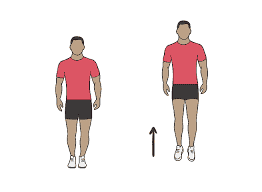
To get the most out of pogo hops and avoid damage, proper technique is essential. Here’s a detailed how-to:
- Starting Position: Place your arms by your sides and stand with your feet shoulder-width apart. Maintain an upright torso and use your core.
- Start the Hop: To hop vertically, push off the ground with your ankles and calves. Your feet should stay close to the floor, and your knees should stay slightly bent.
- Landing: Let your muscles absorb the impact by landing gently on the balls of your feet. Rebound into the following hop right away.
- Repetition: Reduce the time you spend in contact with the ground by aiming for a continuous, rhythmic action.
Squat Jumps
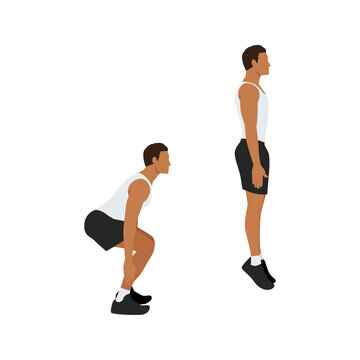
This is an advanced dynamic power workout that should only be performed following a thorough warm-up.
- Place your feet and bend your knees.
- Lower yourself to a full squat by bending your knees.
- Engage the hamstrings, glutes, and quadriceps to raise the body off the ground while extending the legs.
- Go through your foot (toes, ball, arches, and heel) to descend and control your landing. Then, descend into the squat once more for another powerful jump.
- Repeat the next jump as soon as you land.
- Your goals will determine how many squat jumps you perform in a set. If you want to increase your vertical jump and gain power, aim for higher and more forceful jumps. For three or four sets, you might simply perform five repetitions. You would perform more and faster leaps if you wanted overall conditioning.
Broad Jumps
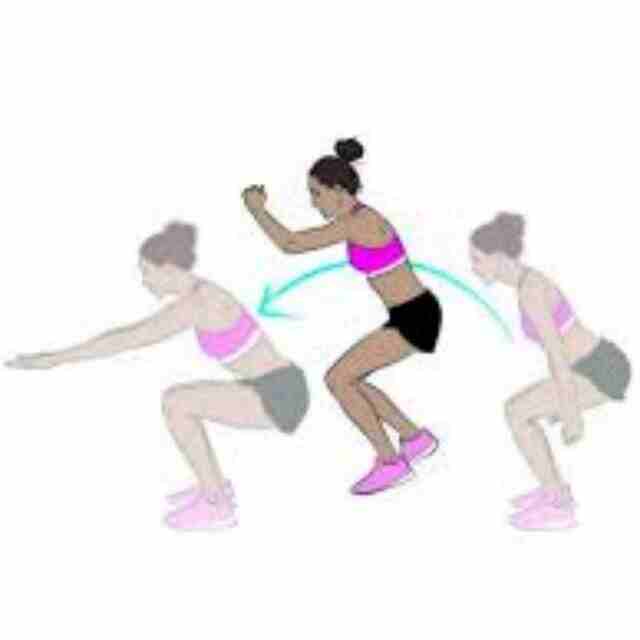
- From a standing position, do a normal countermovement jump with the goal of moving as far forward as you can.
- Stand with your feet hip-width apart, hold your trunk, bend at the knees and hips to load your legs, swing your arms back, then swing your arms forward while you lean forward and use your legs to press as hard as you can against the ground.
- After getting off the ground, bend your knees and hips to absorb the impact by lifting and reaching your feet in front of you. For every successive rep, start over from zero.
- As with any jumping variation, by keeping the hands loosely at the chest and doing away with the arm swing, you can increase the effort for the legs and hips.
Skater Hops
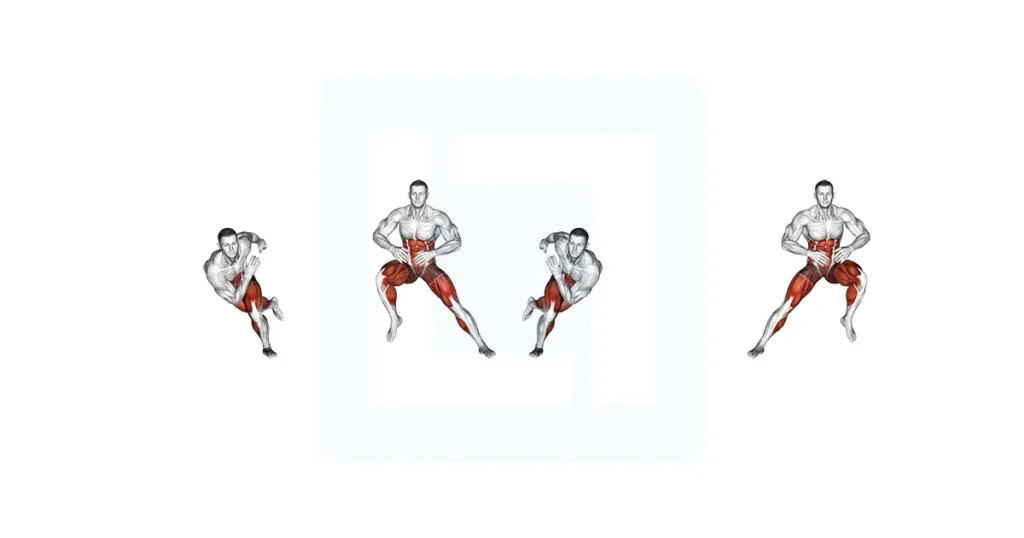
- Shift your weight onto your left leg while standing with your feet hip-width apart. Bend your left knee to raise your right foot off the ground and lower your hips a few inches.
- Push off with your left leg to bind to your right.
- Gently land on your right foot such that your arms swing across your body in the same direction as your left leg crosses behind you.
- After pausing, repeat the motion, landing on your left leg after pushing off with your right.
- Keep bouncing around.
Benefits of Plyometrics Exercises
Plyometric exercises have a lot of advantages. They may be done anywhere, at any time, and with little to no equipment. Increased muscle strength from plyometric exercise enables you to run faster, jump higher, and change directions more rapidly. They enhance performance in any sport where running, jumping, or kicking are required.
Concentric contractions, which shorten the muscles, are followed by eccentric contractions, which stretch the muscles, in a process called the stretch-shortening cycle. This improves balance, agility, stability, and muscle strength. Your muscles can operate faster and more effectively because of these combined advantages.
Plyometric exercises promote cardiovascular health, burn calories, and tone the entire body. They also increase your metabolism and endurance.
Plyometric workouts also help you move more effectively by quickly stretching your muscles. Although this is a fantastic way to enhance force, you have to be careful because it might lead to more stress and injuries. Additionally, it has been demonstrated that performing plyometric workouts correctly can help avoid injury.
Make sure you have the strength, range of motion, and flexibility necessary to complete these exercises, particularly in your hips, knees, and ankles. Leg, lower back, and core strength are also essential. A lot of plyometric workouts work the entire body. By using a variety of muscles, they aid in reducing the body. You can improve strength and elasticity, and strengthen connective tissue.
Non-athletes can use plyometrics to increase general fitness, which will benefitthemu in day-to-day activities. To maximise the advantages and avoid damageyou must perform the exercises correctly. Strain and injury can be avoided by using proper alignment and form. Do these whenever you have a lot of energy and freshness.
Before beginning plyometric exercises, give your body a 10-minute warm-up to help it relax. There should be a cooldown after every session. Given that yin yoga improves joints and connective tissue, it might be the ideal addition to a plyometric exercise. On your days off, you might think about practising yin yoga.
This exercise works your lower back, hamstrings, glutes, and abdominal muscles in addition to your core. Plyometric workouts are recommended for anyone who plays sports like baseball, football, soccer, or track that include a lot of sprinting.
Squat jumps and other activities that require explosive muscle power have been shown in numerous studies to enhance sprint performance. Children as young as five years old can benefit from it as well, since it will help them improve their balance, agility, and running and kicking skills.
FAQs
What is a plyometric workout?
Plyometric training is a form of exercise that builds muscle power by using force and speed in various actions. Plyometric exercise can improve your physical performance and ability to complete a variety of jobs.
What are good plyometric exercises?
It’s necessary to begin with workouts using only your own body weight and no external boundaries or resistance. Squat, tuck, and single-leg leaps are a few of the exercises.
Is 20 minutes of plyometrics enough?
Can strength be developed with just 20 minutes of plyometric training? Yes, provided that there is enough respite in between efforts, suitable intensity, and a suitable volume (e.g., 80–120 ground contacts) during the session. Target high-quality repetitions and gradual overload.
Do plyometrics help you dunk?
The faster the contact time is between the feet and the floor, will influence how much force you will be able to express, allowing you to jump higher. For this reason, it’s important to practice a range of plyometric exercises that emphasise reactive strength. An excellent way to learn about each aspect of the vertical jump is through the box gauntlet.
What are the negatives of plyometric training?
Overtraining can arise from excessive plyometric training sessions without enough rest time, which raises the risk of injury, fatigue, and poor performance.
What is the 3/2/1 rule in the gym?
For general fitness, strength, and mobility without burnout, the 3-2-1 workout method consists of three days of strength training, two days of Pilates (or low-impact) exercise, one day of cardio, and a rest day. It’s ideal for beginners and experts alike because it’s flexible, letting you change the intensity, duration (20–45 minutes), and particular exercises (bodyweight, dumbbells, yoga) to suit your objectives and schedule.
The breakdown
Strength Training for Three Days. For progressive overload, concentrate on your main muscle groups and use weights, bodyweight, or resistance bands.
Pilates/Low-Impact for Two Days focuses on flexibility, posture, and core strength; it can be substituted for yoga, barre, or sculpt.
One Day: Cardio Walking, hiking, cycling, or high-intensity interval training are examples of activities that raise your heart rate.
Rest/Active Recovery for One Day is vital for avoiding overtraining and repairing muscles.
How It Operates and Why It Works
A balanced approach integrates cardiovascular health, core stability, and muscle growth.
Prevents Burnout: Variety keeps workouts fresh and motivates consistency.
Adaptable: Sessions can be brief or lengthy, and they can be completed at home with little equipment.
An example of a weekly schedule
Strength Training on Monday
Pilates/Low-Impact on Tuesday
Wednesday: Strength Training
Cardio on Thursday
Strength Training on Friday
Pilates/Low-Impact on Saturday
Sunday: Rest and Active Recuperation
Tips for Customisation
Beginners: For cardio, start with brisk walking, bodyweight strength, and a lower intensity.
To build muscle, use Pilates for mobility and lift heavier weights on strength days.
Weight Loss: Reduce the amount of time spent resting in between strength sets and increase the intensity of your cardio.
Do sprints count as plyometrics?
Athletes participating in plyometric exercises must exert a lot of force while moving quickly. Additionally, they need the athletes to generate this force in extremely little time. Sprinting is perhaps the best instance of this.
What are common plyometric mistakes?
Excessive volume is a common problem that causes your training objective to shift from speed or power to conditioning. Plyometric exercise volume should be determined by the recommended exercise intensity.
When not to do plyometrics?
However, definitely the most significant contraindication to plyometrics is when the athlete does not have the foundational strength or training base upon which a plyometric program can be developed.
Is plyometrics bad for joints?
When done correctly, they strengthen your joints rather than damage them. They actually increase joint stability, develop explosive strength, and help you keep movement longevity as you age by teaching your muscles, tendons, and ligaments to absorb and control stress.
What kills muscle gains the most?
Lack of consistency, chronic stress, overtraining (too much cardio or lifting without rest), inadequate nutrition (particularly protein), and poor diet choices like processed foods, added sugars, and trans fats are what kill muscle gains the most.
Nutritional Issues: Not Enough Protein & Calories: For muscle growth and repair, you need a small excess of calories and enough protein (1.6–2g/kg body weight).
Poor Quality Foods: Eating a lot of processed foods, added sugars (soda, candy), and trans fats (fried foods, pastries) provides empty calories and prevents muscle growth.
Alcohol: Reduces performance and slows recovery.
Training Errors
Overtraining: Not allowing rest days for muscles to grow back stronger.
Too Much Cardio: Muscle loss can result from excessive cardio without enough fuel.
Too Much Weight/Bad Form: Lifting too much weight with bad form results in injury rather than growth.
Lack of Progressive Overload: You aren’t regularly pushing your muscles with bigger weights or more repetitions over time.
Lifestyle Factors
Lack of Sleep: Lack of sleep directly blocks the growth and repair of muscles and can even cause muscle loss.
Chronic Stress: Stress-related elevated cortisol levels degrade muscle tissue.
Inconsistency: Poor habits and infrequent exercise slow long-term progress.
References
- CPT, J. M. (2025a, October 24). 16 plyometric exercises that’ll build explosive strength. SELF. https://www.self.com/story/a-10-minute-fat-burning-plyometric-workout-you-can-do-at-home
- Csps, M. a. M. a. C. (2026, January 22). A Beginner’s Guide to Plyometrics Workouts. Hospital for Special Surgery. https://www.hss.edu/health-library/move-better/plyometrics-workouts-for-beginner
- International Sports Sciences Association. (n.d.). The Essential Guide to Plyometrics—Plus a sample workout | ISSA. https://www.issaonline.com/blog/post/the-essential-guide-to-plyometrics-plus-a-sample-workout
- Solan, M. (2023, August 2). Plyometrics: Three explosive exercises even beginners can try. Harvard Health. https://www.health.harvard.edu/blog/plyometrics-three-explosive-exercises-even-beginners-can-try-202308022960
- Bedosky, L. (2024, April 9). How to do skater jumps for better strength, agility, and balance. BODi. https://www.bodi.com/blog/skater-jumps
- Broad Jump exercise demo video & info. (n.d.). https://www.catalystathletics.com/exercise/549/Broad-Jump/
- Miller, D. (2024, August 1). Pogo Jump. Garage Strength. https://www.garagestrength.com/blogs/news/pogo-jump?srsltid=AfmBOoogvpYnMvnadFV7xwqR_vYi5SASOZXOJCKAaikPECwECi1DTI8z
- Ms E. Q. (2024, October 2). How to do squat jumps. Verywell Fit. https://www.verywellfit.com/squat-jumps-build-agility-and-power-3120594