Top Exercises for Trigger Finger
Introduction
Trigger finger is a common condition that causes one or more fingers to become stiff, painful, or locked in a bent position.
Increasing flexibility and reducing trigger finger symptoms may be possible with specific workouts and stretches. To get the best effects, the workouts must be done consistently.
Trigger finger happens when the tendons that flex your finger swell and become inflamed, making it difficult for them to pass through the surrounding sheaths.
Combining hand stretches and exercises with conventional therapies may help reduce discomfort, improve strength and mobility, and aid in the healing process following surgery, according to some specialists.
What Is Trigger Finger?
A tendon disorder called trigger finger causes your thumb or fingers to “lock” or become difficult to move when they are flexed in the direction of your palm. Sometimes your thumb or finger will lock straight, making it impossible to bend it in the direction of your palm.
The position your fingers can become caught in is the source of the term “trigger finger.” You appear to be attempting to pull an unseen trigger. The identical problem, but with your thumb, is called trigger thumb. The medical term for trigger finger or trigger thumb is stenosing tenosynovitis.
It may be difficult or impossible to straighten your diseased fingers if you have trigger finger. In the past, medical professionals believed that the ring finger was the most typical location. However, a 2025 study discovered that it primarily affects the middle fingers.
Any digit can be impacted by trigger finger. In more than one finger at a time, one in three people get it.
Symptoms and Causes
Trigger finger symptoms
The following are the most typical signs of stenosing tenosynovitis in your thumb or fingers:
A popping or snapping sound when you move them: Your diseased digits may feel as though they are “catching” or becoming trapped.
Flexing them in toward your palm may cause pain and stiffness; moving them may be more difficult than usual. Moving them could also cause pain.
Soreness in the base of your palm: When you’re clutching, grasping, or squeezing something, this discomfort usually gets worse.
Swelling or a sensitive lump in the palm of your hand: If you touch the bump, it could hurt like a bruise. It might also feel a little warm.
If your affected digits lock or remain flexed, you may need to force them straight again with your other hand.
First thing in the morning is typically when symptoms are most severe. This is particularly true for locked positions and rigidity. As you begin utilising your thumb and fingers throughout the day, the stiffness will often lessen.
What causes trigger finger?
Trigger thumb or trigger finger is caused by swelling in or around your hand’s tendons.
The bands of tissue that connect muscles to bones are called tendons. Your hands’ tendons and muscles cooperate to flex and straighten your fingers. These tendons are encased in a tissue tunnel known as a tendon sheath. They are kept in position and protected by the sheath.
When the tendons in your injured fingers or thumb are irritated, trigger finger occurs. Swelling and inflammation are caused by irritation. They are therefore unable to pass through their sheaths with ease. On your affected tendon, a lump known as a nodule may also develop. The tendon may find it even harder to pass through its tendon sheath as a result.
The portion of your tendon sheath is frequently where the nodule snags or becomes lodged. Your finger will feel stiff or stuck if it is more difficult for your tendon to pass through the pulley.
Risk factors
Trigger finger can strike anyone. However, those between the ages of 40 and 60 are most likely to experience it.
One typical reason is having a work or activity that requires you to use your hands in difficult, repetitive actions. Examples include:
- Farming or gardening
- Industrial work or working with tools
- Playing an instrument
- Playing racket sports like tennis, racquetball, or pickleball
- Osteoarthritis
- Rheumatoid arthritis
- Gout
- Diabetes
- Amyloidosis
- Thyroid disease
Trigger Finger Exercises
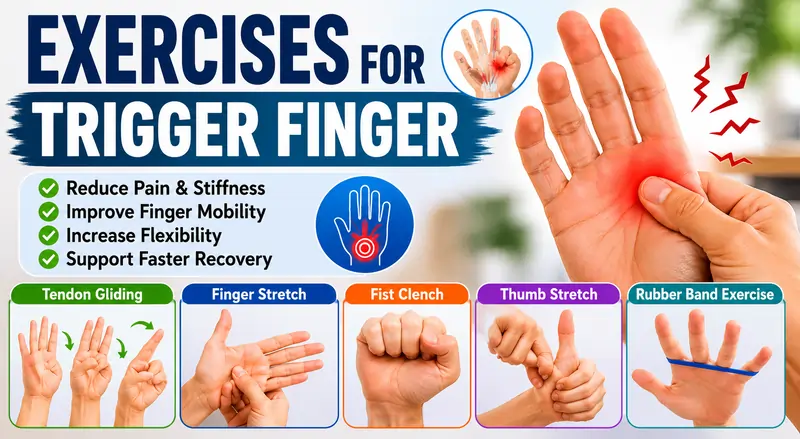
Exercises involving hand gliding are useful for promoting tendon movement and reducing discomfort, oedema, and inflammation.
At least three to five times a day, try doing ten repetitions of each exercise.
Hand clench
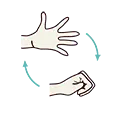
One of the most popular hand gliding exercises for trigger finger is this one.
- Place your hand on a table.
- Extend your fingers as much as you can.
- Make your fingertips touch the top of your palm by bending your fingers.
- Spread your fingers wide and straighten them once more.
- This is regarded as a single repeat.
Finger touch
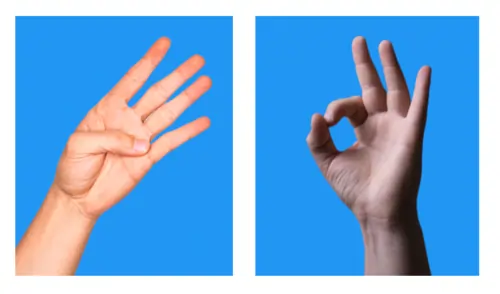
Each finger can be stretched and activated separately with this workout.
- With your palm pointing up toward the ceiling, place your hand flat on a table.
- Extend your fingers as much as you can.
- Spread your fingers out once more after curling your pinky inward and touching it with your thumb. With each finger, repeat this motion, meeting the thumb in the centre.
- One complete repeat is when each finger touches the thumb once.
Single finger joint bend
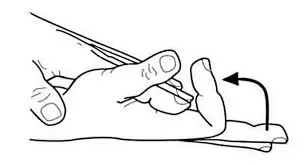
The injured finger is isolated throughout this workout.
- Pinch the wounded finger around its base, just above the knuckle, using your thumb and index finger on the other hand to isolate it.
- The wounded finger should be slowly extended before being brought back down.
- This is considered a single repeat.
Sideways wrist bends

The tendons that go through the wrist can be gradually stretched with this exercise.
- Put your palm down on a level surface. Hold your fingers together.
- Bend your wrist until your hand can no longer go to the right, then move it all the way to the left.
- Like a windshield wiper, keep moving side to side.
- One repetition is one movement to the left and one movement to the right.
Finger extensor stretch

The problematic finger’s range of motion may be improved with this exercise.
Make sure you’ve warmed up your fingers with the other hand gliding exercise before beginning this one.
- On a table or other firm surface, extend your hand flat, palm down.
- Using your other hand, slowly raise the affected finger. The remaining fingers should remain flat.
- Without exerting any effort, raise and extend the finger as high as it will go. After two seconds of holding it there, let it drop again.
- This is considered a single repeat. You may perform this stretch on your thumb and all of your fingers.
Finger abduction
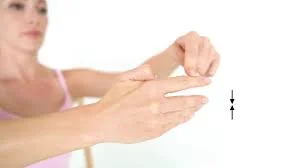
In order to begin strengthening your fingers and tendons, this workout involves some resistance.
- Put your hand out, palm down, on a level surface.
- Stretch both the affected and undamaged fingers.
- To apply resistance, lightly press the outstretched fingers with your thumb and index finger from the other hand.
- Both the affected and unaffected fingers should be extended against the resistance. After holding this for two seconds, go back to where you were.
- This is considered a single repeat.
Don’t forget about self-massage
By improving circulation, self-massage may also assist in supporting trigger finger and lowering the chance of more damage.
To self-massage the affected finger, rub in a circular manner for approximately 30 seconds after applying strong but light pressure.
Since your hand, wrist, and forearm are all related and are helpful in improving circulation, you can massage the individual joint or the entire region.
Diagnosis and Tests
How doctors diagnose this condition:
A physical examination will be used by a medical professional to diagnose trigger finger. They will check your hand and fingers and inquire about any symptoms you may have seen. When you initially experience stiffness or pain, let your provider know. Don’t forget to mention any activities that exacerbate the symptoms.
To feel for clicking, your physician may straighten your thumb or fingers. This will enable them to determine whether your tendons are moving normally and how stiff your fingers are. Inform them of any painful positions or motions.
In most cases, trigger finger can be diagnosed without the need for specialised testing. However, they may employ imaging tests, such as X-rays or ultrasounds, to capture images of the bones and tissue in your hand.
Management and Treatment
Trigger finger treatment
Which finger has stenosing tenosynovitis and how severe it is will determine the best course of action for you. The most popular therapies consist of:
Putting on a splint: A splint will assist your affected digits in returning to their normal position while keeping them in place. Typically, your healthcare practitioner will advise you to wear a splint solely at night while you are asleep.
Stretching exercises: To assist your tendons in restoring their flexibility, your healthcare physician may recommend stretching exercises.
Anti-inflammatory drug: Over-the-counter NSAIDs, such as ibuprofen or naproxen, reduce swelling and ease discomfort.
Steroid injections: You might require injections of cortisone or another kind. However, the symptoms typically take a few weeks to go away. If the first or second round of injections doesn’t work, your doctor might give you another dose.
Trigger finger surgery: If alternative therapies are ineffective, you may require surgery. A trigger finger release surgery will be carried out by a surgeon. They will have greater room to move as a result.
FAQs
What not to do with a trigger finger?
Reducing inflammation and allowing the tendon to move freely are the objectives in trigger finger (stenosing tenosynovitis).
Avoid repetitive gripping, forcing the finger to straighten, stress balls, vibrating tools, or anything that irritates the tendon. Don’t ignore symptoms to avoid permanent locking, and don’t try to “push through” exercises that cause sharp pain.
Do trigger finger exercises work?
Actually, trigger finger (stenosing tenosynovitis) symptoms can be managed with mild exercise and stretching. Exercises will not cure the condition completely,y but they are very useful in reducing stiffness, ensuring smooth tendon gliding, and relieving pain.
Good exercises are:
Tendon Glides: (5) Start with your palm open. Slowly curl the fingers into a ‘hook’ shape, then straighten again.
Lift your fingers by placing them flat on a table. Raise each finger individually as far as is comfortable, hold for 2-3 seconds, and then lower.
Resistance Exercises: Put a rubber band around your fingers and thumb. Open up your fingers slowly against the resistance.
Helpful Tips:
Be Gentle: Do not force the finger to bend if it is locked or snapping. This can cause more irritation.
Medical Advice: If exercises increase pain or symptoms don’t get better, you should see an orthopaedic specialist or doctor. Trigger finger is often treated with other conservative measures like splinting or steroid injections.
What is the root cause of trigger finger?
A mechanical issue called trigger finger is caused by inflammation and tendon sheath constriction. The finger tendon may not glide smoothly as a result. The tendon then tries to pass through a narrowed tunnel and becomes stuck, resulting in the finger popping, clicking, or locking.
Can I massage a trigger finger myself?
To self-massage those suffering from trigger finger, rub in a circular manner for approximately 30 seconds after applying strong but light pressure. Since your hand, wrist, and forearm are all related and can aid in improving circulation, you can massage the individual joint or the whole area.
How many times a day should I do trigger finger exercises?
You can perform the following exercises four to five times a day. They are intended to improve your finger’s range of motion and lower the possibility of stiffness or loss of function. Keeping your back knuckles straight, begin with your fingers straight (1) and hook them all forward (2). Form a complete fist by bending the fingers down (3).
Is trigger finger a vitamin deficiency?
Trigger finger is mainly a mechanical problem caused by inflammation and swelling of the tendon sheath in the finger. Vitamin B6 and vitamin D deficiencies are not a direct cause, but there is some evidence that they may contribute to the inflammation of nerves and tendons, which worsens the condition.
The Link to Vitamins
Vitamin B6: It is important for nerve function and reducing inflammation. Some medical professionals claim that a B6 deficiency could worsen tendon issues or lead to trigger finger symptoms.
Vitamin D: Vitamin D deficiencies are increasingly associated with general musculoskeletal and tendon health that can influence how your hands work.
References
- Clinic, O. (2026, February 22). Best exercises for trigger finger: Safe stretches to improve movement. Orthopaedic Innovation. https://www.orthopaedicinnovation.co.uk/best-exercises-for-trigger-finger-safe-stretches-to-improve-movement/
- Cronkleton, E. (2025, November 3). 10 Trigger finger exercises to try and when to see a doctor. Healthline. https://www.healthline.com/health/fitness-exercise/trigger-finger-exercises
- DeNoble, P., MD. (2025, December 23). How to treat trigger finger – Modern Orthopaedics of New Jersey. Modern Orthopaedics of New Jersey. https://modernorthonj.com/blog/trigger-finger-exercises-how-to-treat-trigger-finger-and-reduce-pain/
- Finger: exercises. (n.d.). https://myhealth.alberta.ca/Health/aftercareinformation/pages/conditions.aspx?hwid=bo1571
- Trigger finger. (2026, April 8). Cleveland Clinic. https://my.clevelandclinic.org/health/diseases/7080-trigger-finger