Flat Foot Correction Exercises
Introduction
Flat feet (pes planus) are usually referred to as fallen or collapsed arches. It is a relatively common illness that affects up to 30% of the population and causes symptoms in one out of every ten people. Usually, both feet are afflicted, but a falling arch can occur on only one foot.
Flat feet are caused by several factors, including accidents, obesity, and arthritis. Age, genetics, and pregnancy can all contribute to flat feet. Flat feet are also more common if you have a neurological or muscular illness like cerebral palsy, muscular dystrophy, or spina bifida.
Flat feet require regular care because they can cause discomfort, stress, and imbalances in other regions of the body. Working to correct a flat sensation might assist in bringing your entire body into alignment. This could assist in correcting other problems in your body caused by flat feet.
Here are some exercises that can help straighten fallen arches and relieve pain. Aim to perform these exercises at least three times each week. Ideally, you may include them in your everyday routine and do them throughout the day.
As you progress through these exercises, concentrate on elevating, strengthening, and lengthening your arches.
Essential Exercises for Flat Feet
Towel curls
Step-by-Step Instructions
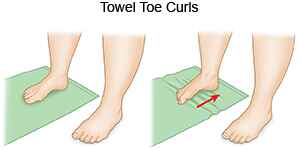
- A small towel or exercise band is required, as well as a chair or bench to sit on if needed. You can perform this exercise anywhere you can sit or stand with your feet flat on the ground. It is easier to do on a firm surface like wood or tile than on carpeting.
- You will be moving the towel toward yourself, so keep additional fabric in front of your foot. (If you’re using a band, make sure it’s long enough in front of you for your toes to hold.)
- Sit in a chair (or stand) with your heels under your knees. Make sure your legs and feet are parallel to one another, with toes pointing forward. Keep your heel down, elevate your toes, and bend your foot back.
- Leave your heel on the towel while reaching out equally along both sides and the middle of your foot to fall on the towel as far as possible.
- Keeping the heel still, descend the towel in with your arch and toes.
- Using both sides of your foot (all five toes), aim to form a deep dome beneath the arch. You will only be able to move a small portion of the towel with each extension and pull back. After a few reps, you may need to stop and smooth the towel or band.
- Repeat the move at least five times, then switch to the other foot. This exercise can be done every day, orpossiblye numerous times per day.
Common Mistakes
Not Firmly Planting Your Heel
For the best results from this exercise, keep your heel still and firmly on the ground. If your heel is up or moving with your toes, you will miss out on the numerous foot-strengthening benefits that toe curls provide.
Improper Posture
Proper posture is essential when performing the toe curl exercise, whether sitting or standing. Maintain a firm core, shoulders back, and relaxed arms at your sides. If you are sitting, make sure your legs are at a 90-degree angle, and your toes are visible. Stand with a slight bend in your knees.
Heel raises
Step-by-Step Instructions
- Heel raise exercises help to strengthen the muscles at the rear of your lower leg, as well as your ankles and feet.
- Here’s how you do things.
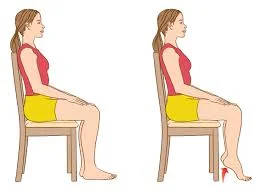
- Stand with your feet a few inches apart and your hands resting lightly on a counter or chair in front of you to maintain balance.
- Slowly elevate your heels off the floor, rolling up onto your toes while keeping your knees straight.
- Keep your heels lifted for approximately 6 seconds.
- Next, carefully lower your heels to the floor.
- Repeat this exercise 8 to 12 times, multiple times per day.
- Some soreness or discomfort is to be expected… but quit completing the workout if you experience increased pain.
Arch doming

Step-by-Step Instructions
Raising your foot’s arch without curling your toes is the fundamental idea.
- Start Position: Place your feet hip-width apart on the floor while seated in a chair.
- Activate: Try to drag the base of your big toe toward your heel to raise the arch of your foot without curling your toes or raising it off the ground.
- Hold: For three to five seconds, maintain the “domed” position.
- Release: Relax and slowly lower the arch to the ground.
- Repetitions: Do this two to three times a day, ten to fifteen times per foot.
Calf stretches
Step-by-Step Instructions
Calf muscle stretch with or without a wall

With a wall
- Step 1: Stand an arm’s length in front of a wall. Position the right leg in front of the left. Reach both arms against the wall.
- Step 2: Push the back (left) heel into the floor, straightening the back leg while maintaining the front bent. Hold this position for 15 to 20 seconds.
- Step 3: Perform three sets, then repeat with the opposite leg.
Without a wall
- Step 1: Move forward with your right leg.
- Step 2: Transfer the body’s weight to the front (right) leg while keeping the back heel pushed against the floor. Hold this position for 15 to 20 seconds.
- Step 3: Perform three sets, then repeat with the opposite leg.
- Tips
- A person should feel a stretch go down their calf muscle and into their heel. If this is not the case, move your rear leg further away until you feel a stretch.
- When performing this stretch, avoid arching your back.
Towel stretch

This stretch requires a hand towel.
- Step 1: Sit on the floor with your legs straight out in front.
- Step 2: Wrap a hand towel around the ball of one foot. Hold both ends of the cloth.
- Step 3: Pull the towel toward your body while keeping your legs straight. Hold this position for 30 seconds. Then stretch for 30 seconds.
- Step 4: Complete three sets.
- Tips
- To control the intensity of the stretch, pull harder on the towel as needed.
- The back should remain straight during the stretch.
Toe yoga
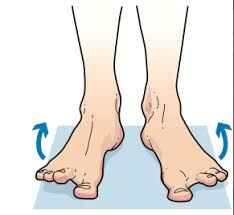
Step-by-Step Instructions
Spread Your Toes
- Spread your toes is a simple toe yoga exercise that can help you warm up.
- Begin by sitting up straight with your feet flat on the floor.
- Spread all of your toes apart on one foot.
- If you are having trouble spreading all of your toes, keep practicing! If you need a little help, start by guiding your toes apart with your fingers.
- Hold for up to ten seconds.
- Release. Relax your toes.
- Repeat with the other foot.
Tennis ball/Golf ball roll
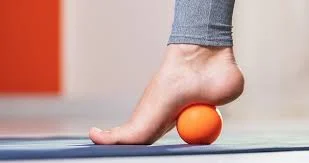
Step-by-Step Instructions
Flat foot correction exercises: Benefits
- Decreased Pain and Discomfort: These exercises reduce strain, weariness, and pain in the feet, ankles, knees, and even the lower back by strengthening the muscles that support the arch.
- Strengthened Arch Muscles: The tiny, intrinsic muscles that support the arch are strengthened by specific exercises like towel scrunches and arch lifts (doming).
- Increased Foot and Ankle Stability: Exercises that increase balance and stability, like heel raises and ankle rolls, lower the chance of sprains and other injuries.
- Improved Posture and Gait: More effective walking patterns and better general posture can result from strengthening the feet.
- Greater Flexibility: Tension, which frequently contributes to flat foot discomfort, can be relieved by stretching the Achilles tendon and calf muscles.
- Overpronation correction: These exercises assist in addressing the tendency for feet to roll inward, or overpronation.
FAQs
Can flat feet be corrected with exercise?
Frequent exercise, such as heel stretches, can help heal fallen arches and lessen pain. Fallen or collapsed arches are other names for flat feet (pes planus). Up to 30% of the population may be impacted by this somewhat frequent ailment, with 1 in 10 experiencing symptoms.
Can flat feet be corrected naturally?
Regular stretches can help most people with flat feet recover better from exercise and reduce pain after standing for lengthy periods of time. Heel stretches are among the best exercises. Golf or tennis balls roll.
Can flat feet get corrected?
Although they can’t completely fix arches, natural remedies can greatly lessen their discomfort. Without surgery, the majority of people with flat feet are able to effectively manage their symptoms. Orthotics (inserts), physical therapy, changing one’s lifestyle, and medical attention all help to alleviate everyday discomfort.
How to fix a flat foot at home?
Raise your arch.
Place your flat foot or feet on the floor to begin. Then, while keeping your toes and heel on the ground, try to roll your weight to the outside of your foot to raise your foot arch.
Can walking cure flat feet?
Indeed, walking—especially barefoot or in certain variations, like heel-to-toe walking—can help correct flat feet by strengthening the muscles supporting the arch. However, because it strengthens muscles rather than alters bone structure, it is best used in conjunction with other exercises, patience, consistency, and supportive shoes when necessary.
The benefits of walking
Walking barefoot: Walking barefoot at home or on different surfaces (such as sand) improves motor control, retrains arches, and strengthens intrinsic foot muscles.
Correcting your gait by walking on your toes or heels (heel-to-toe walking) improves your balance and support by engaging your foot and calf muscles.
Similar to strengthening a shoulder, muscle activation helps increase muscular support and make up for structural weakness.
Other productive workouts
Doming arch lifts: To bring the ball of your foot closer to your heel, squeeze your midfoot.
Towel scrunches: Scrunch a towel in your direction using your toes.
Calf raises: Your calves and ankles get stronger when you raise yourself onto your toes.
Essential factors to take into account
Be consistent: Moderate, regular exercise is essential, but pay attention to your body to prevent discomfort.
Supportive footwear: To avoid muscle weakness, wear shoes with arch support when necessary rather than avoiding them completely.
Patience: No significant advancement is seen for weeks or months.
When to see a doctor: If you are experiencing pain, you should see a doctor because you may need physical therapy or orthotics.
How long does it take to correct flat feet?
What is the estimated duration for fixing Flat Feet? It may take three to eighteen months to fix flat feet structurally.
Can physiotherapy cure flat feet?
By employing particular exercises and therapies to lessen discomfort and improve foot mechanics, physiotherapists play a critical role in treating flat foot problems.
Can flat feet go back to normal?
We can use specific exercises in physical therapy to strengthen your arches’ support system. We may suggest surgery to rebuild your arches if these conservative measures are ineffective for your adult-acquired flatfoot and you continue to have significant pain.
How to fix flat feet quickly?
Flat Foot Exercises
Heel stretches.
Golf or tennis balls roll.
lifts an arch.
The calf rises.
The arch of the stairs rises.
The towel curls.
The toe lifts.
Further therapies.
At what age is it normal for flat feet?
At what age do kids usually outgrow flat feet? By the age of six, flat feet often go away as the arches form and the feet lose their flexibility. Only roughly one or two children out of ten will have flat feet as adults.
Is flat foot a disability?
Although many people with flat feet (pes planus) have no problems, the condition can qualify as a disability if it results in decreased quality of life or substantial pain, instability, and limitations in daily activities. It is classified as a disability based on its severity, symptoms (such as fatigue, edema, and pain), and impact on function. To find out if it qualifies for a disability rating, a medical evaluation is frequently necessary.
When it’s asymptomatic (not a disability):
The majority of newborns have flat feet, and as they get older, arches frequently form.
It is regarded as a normal variation for many adults to have flat feet without any pain or issues.
When a symptomatic or pathological condition qualifies as a disability:
Pain & Fatigue: pain in the ankle, leg, heel, or arch, particularly when standing or walking long distances.
Activity Limitation: Having trouble playing sports or going about daily tasks.
Related Problems: May result in shin splints, hammertoes, bunions, and issues with the knee, hip, or back.
VA Disability: Based on symptoms like pain, swelling, and foot fatigue.
What is the reason behind flat feet?
Genetics, injuries, obesity, aging, and certain medical conditions like diabetes or arthritis can all contribute to flat feet. These conditions are often caused by weak tendons, particularly the posterior tibial tendon, or structural problems that hinder the formation of the arch or cause it to collapse over time, causing the sole to touch the floor.
Typical Reasons
Genetics: If flat feet run in your family, you may inherit them.
One of the main causes of acquired flat feet is posterior tibial tendon dysfunction (PTTD), which is characterized by a weakening or tearing of this important tendon that supports the arch.
Trauma & Injuries: Ankle or foot damage can cause the arch structure to become disrupted.
Obesity: Carrying too much weight strains the tendons in the feet, resulting in their collapse.
Aging: The foot’s supporting structures may become weaker with time due to wear and tear.
Hypermobility and Loose Ligaments: Low arches may result from loose tendons and ligaments.
Related Health Issues
Arthritis: Rheumatoid arthritis can harm the tissues and joints in the feet.
Diabetes: May have an impact on nerve health and foot structure.
Neuromuscular disorders include conditions such as nerve damage or cerebral palsy.
Flat feet may be associated with Down syndrome.
Congenital (existing from birth)
Tarsal Coalition: Movement is restricted by the fusion of the foot’s bones.
Ankle bone misalignment is known as vertical talus.
When They Grow
Infancy: Babies’ flat feet are common and frequently get better as they get older.
Adulthood: They may arise as a result of the acquired factors mentioned above, frequently accompanied by shin, ankle, or arch pain.
References
- Ryt, M. O. M. (2021, June 4). How to do a towel curl. Verywell Fit. https://www.verywellfit.com/learn-the-towel-curl-foot-strengthening-exercise-2704696
- How to do heel raises | NYP. (n.d.). NewYork-Presbyterian. https://www.nyp.org/healthlibrary/multimedia/how-to-do-heel-raises
- Onlineoptimism. (2024, June 14). 9 toe yoga exercises and their benefits. Breathing Deeply. https://breathingdeeply.com/toe-yoga-physical-therapy/
- PharmD, J. C. (2025, May 30). Calf stretches and how to do them. https://www.medicalnewstoday.com/articles/calf-stretches#stretches
- Cronkleton, E. (2023, April 19). Exercises for flat feet. Healthline. https://www.healthline.com/health/flat-feet-exercises