
14 Best Vastus Lateralis Exercises
The vastus lateralis is the largest muscle of the quadriceps group, located on the outer side of the thigh. Strengthening this muscle helps improve knee stability, athletic performance, and overall leg strength. Exercises that are specifically designed for it can help it become stronger and perform better.
The Vastus Lateralis: What is it?
The vastus lateralis is one of four muscles that comprise the quadriceps muscle group and is positioned on the outside of the leg. The vastus lateralis muscle’s name is derived from the Latin terms lateralis, meaning lateral side, and vastus, meaning big.
The largest and most powerful muscle in the quadriceps femoris is the rectus femoris. The vastus lateralis comes into contact with the broad, flat tendons that connect the femur and proceed to the exterior of the patella.
The quadriceps tendon, which extends above the knee, connects the other quadriceps muscles to the tibia.
Advantages of Exercises for the Vastus Lateralis:
There are many advantages to having strong, healthy leg muscles, and the vastus lateralis is no exception. Since our legs carry us around every day, it makes sense to properly stretch and exercise the quadriceps, which are the largest muscles in the body.
- Gives the appearance of fuller, broader legs.
- Improves knee stability.
- Enhances the health of joints.
- Increases growth hormone.
- Keeps bones healthy.
- Aids in increasing calorie expenditure.
14 Best Exercises for Vastus Lateralis:
The prone towel quad stretch
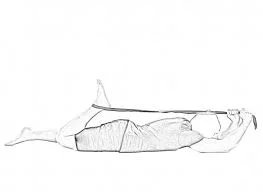
- Start with prone lying.
- While resting on your stomach, wrap a cloth or strap around your ankle.
- Pull the cloth carefully to fully bend your knee after bending it up.
- The front of your thigh should feel like it’s being pulled.
- After holding the stretch for 30 seconds, release it.
- You can perform the stretch three times.
The half-kneeling quad and hip flexor stretch

- Begin by kneeling.
- Move your body forward slowly until your thighs and hips start to expand.
- Hold for 30 seconds.
- After that, return to the starting position.
- Do it three times.
Standing quad stretch

- Start with a standing position.
- Place your Feet shoulder-width apart.
- Exhale and slightly recline your shoulders.
- Your right leg should remain balanced while you move your left foot towards your butt.
- Preserve an upright stance for 20-30 seconds.
- Switch up your footing.
Hero Pose Stretch

- Place your knees together on the floor.
- Place your feet apart behind you with your toes pointed in.
- After that, lean back a little.
- Then, change the distance between the feet.
- Brace yourself with your arms.
- Maintain this posture for 30 to 60 seconds.
- Return to the starting position gradually.
Leg Extensions

- Place the pad over your ankles while seated on the leg extension machine.
- Turn your toes inward.
- Your legs should be fully extended at the knees.
- Reduce gradually to the beginning point.
- Repeat as many times as you like.
Close Stance Leg Press

- Position yourself on the leg press machine.
- Position your feet on the platform so that they are a little closer than hip-width apart.
- As you complete knee extension, push your heels into the platform until your legs are nearly fully extended.
- Return to the starting position gradually.
- Repeat as many times as you like.
Dumbbell Lunges

- Start with a standing position.
- Hold a dumbbell in both hands.
- Maintaining a hip-width distance between your feet and flexing your front knee, take one stride forward.
- To return to the starting position, lower your knees till they form a 90-degree angle and your back knee is slightly elevated from the floor.
- Then push off with the heel of your front foot.
- Change sides.
Dumbbell Bulgarian Split Squat

- Hold a dumbbell in both hands.
- Reach back with your left leg, placing the highest point of your foot on the platform beyond you.
- Lower your left knee gradually until it is nearly touching the floor while standing erect.
- Use your front foot to push up until you’re back to where you started.
- After the necessary number of repetitions, switch sides.
Sissy squat
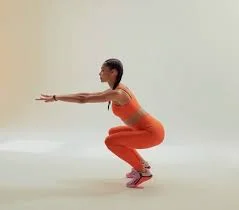
- Step onto the sissy squat bench’s platform.
- Your feet need to be approximately shoulder-width apart beneath the adjustable support bar.
- Use the support bar and lock pin to secure your feet in place.
- You can press your shoulders back and place your hands around your hips for more stability.
- Lean back as much as you can while maintaining a straight back by bending at the knees.
- Following that, the movement should be properly sustained before returning to the beginning position.
Single leg raises

- Start with supine lying.
- After that, while flexing your knees, maintain your feet flat.
- When completely extending your right leg in the direction towards you, you must use an ankle joint weight to help stabilise your thigh.
- Lift the right leg roughly 2 inches off the mat by contracting the vastus medialis muscle and squeezing your core.
- The leg time of this exercise must remain elevated.
- Be careful not to arch your back.
- There should be no gap between the mat and the back.
- For ten seconds, maintain this exercise position.
- Do this strengthening exercise three times a day and ten times in one sitting.
Terminal knee extensions (TKEs)

- Wrap a resistance band around a strong anchor, then slide the other end up so that it faces the anchor and is just above the rear of your right knee joint.
- Keep your distance until the band is taut.
- Next, straighten your left leg while maintaining a tiny bend in your right knee joint.
- After you release your breath, press your right knee joint back to match your left knee joint by contracting your vastus medialis muscle as much as you can.
- For ten seconds, maintain this exercise position.
- Do this strengthening exercise three times a day and ten times in one sitting.
Ball Bridges
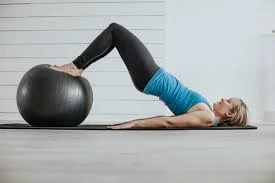
- Start with supine lying.
- Place your knee bent and feet hip distance apart.
- subsequently, tighten your glutes and slightly press the ball.
- Lift your buttocks as high as possible while keeping your spine straight.
- For ten seconds, maintain this exercise position.
- Do this strengthening exercise three times a day and ten times in one sitting.
Wall/Ball Squats

- A Swiss ball rests against the wall when you lie on your back.
- After that, squat down gradually until you are nearly seated in order to align your thighs with the floor.
- Re-enter slowly and do not lock your knee joint.
- Do this strengthening exercise three times a day and ten times in one sitting.
Step-Ups

- Start with a standing position.
- Stand in front of the bench or table.
- Instead of driving from your toes, step up onto a platform and use your gluteal muscles.
- Look for signs of an inward folding knee joint.
- It is pushed out or pressed.
- Next, make sure your knee joint is stable when you take a slow step down.
- Do this strengthening exercise three times a day and ten times in one sitting.
Summary
The vastus lateralis is the quadriceps’ biggest muscle. When you walk or run, the vastus lateralis helps you stretch your knee joint and keep it in place.
Strains, tendinitis, compression of the femoral nerve, and other injuries can affect the vastus lateralis. Following an accident, rehabilitation typically consists of strength and mobility exercises, massage, and the use of heat and cold.
FAQs
What is the vastus lateralis used for?
The vastus lateralis is the quadriceps’ biggest muscle. The defending quadriceps muscles and the vastus lateralis work together to help stretch the knee joint. Furthermore, it actively maintains the kneecap and thigh postures when running and walking.
Why does the vastus lateralis cause pain?
The kneecap is dragged slightly sideways by tightness in the vastus lateralis muscle, which impairs its ability to glide up and down and results in knee cap pain. Muscle strain is the result of overstretching or overloading the muscle, which tears the muscle fibres and strains the quadriceps.
How should a stretched vastus lateralis be treated?
Pain and inflammation can be lessened by applying ice to the affected area. Try using ice once or twice a day for 10 to 15 minutes. To prevent more swelling, gently cover the injured area with a soft bandage or Ace wrap. Elevation reduces swelling.
How is the vastus lateralis massaged?
Onto the lateral thigh, slide the palm distally. Examine the vastus lateralis’s oblique fibres both in front of and behind the iliotibial band. When the client slowly extends their knee, resist to ensure proper positioning.
Referances
- Colletta, M. (2022, June 12). The 10 Best Vastus Lateralis Exercises & Stretches. Steel Supplements. https://steelsupplements.com/blogs/steel-blog/the-10-best-vastus-lateralis-exercises-stretches?srsltid=AfmBOorAm6u8wOkwE-34-XndHSjyaxHcEnUXrX0e7CeqmD27YjRv8qEo
- DiGiovanni, K. (2025a, May 27). 12 Best Vastus Lateralis Exercises & Stretches To Build Impressive Outer Thighs. SET FOR SET. https://www.setforset.com/blogs/news/vastus-lateralis-exercises?srsltid=AfmBOor8QtaH9zxKZaArCMe0MKFM9hAsZMgtsHLpB3Bc1LCNKYws7Rpe
- Pt, B. S. (2024, August 20). Vastus lateralis muscle. Verywell Health. https://www.verywellhealth.com/vastus-lateralis-anatomy-function-and-rehabilitation-4769072