Essential Yoga Poses for Beginners
Introduction To Yoga
Starting a yoga journey can feel overwhelming, but practicing a few essential poses can make it simple and enjoyable. Beginner-friendly yoga poses help improve flexibility, build strength, enhance balance, and promote relaxation.
There are numerous forms of yoga, each with its own advantages, including Hatha, Vinyasa, Ashtanga, and Restorative yoga. Yoga can enhance flexibility, strength, balance, and general health, regardless of your preference for more vigorous activity or mild stretching. Frequent yoga practice has been shown to improve energy levels, lower stress and anxiety, and improve sleep quality.
Everyone can practice yoga, regardless of age or level of fitness. Every yoga practitioner can find something they enjoy, from simple poses like Mountain Pose and Downward Facing Dog to more complex ones.
It’s crucial to pay attention to your body and adjust or rest as necessary, particularly when performing standing yoga positions. Everyone will have a safe and joyful yoga experience thanks to this thoughtful approach.
Why start with foundational yoga poses?
“Asana poses,” or foundational poses, increase body awareness, strength, and flexibility. Foundational poses assist practitioners in grasping their alignment and movement by increasing body awareness. Gaining proficiency in these fundamental yoga poses helps avoid injuries and provides a solid foundation for more difficult poses. Starting with basic positions also fosters the development of breath awareness, focus, and mindfulness, all essential elements of yoga practice.
Types of yoga poses
Asanas, or yoga poses, fall into several categories, each of which has a distinct function in your yoga practice. You can develop a balanced and productive routine by being aware of these types:
- Standing poses: These comprise fundamental stances such as Warrior Pose and Mountain Pose. Standing postures promote flexibility, strength, and balance all over the body.
- Seated positions: Easy Pose and Forward Fold are two poses that assist in stretching the legs, hips, and back while encouraging flexibility and relaxation.
- Backbends: Exercises like Cobra Pose and Cat Cow provide a wonderful stretch and enhance spinal mobility while opening the chest and strengthening the shoulders and upper back.
- Yoga poses for beginners: Child’s Pose and Downward Facing Dog are simple choices that teach you the fundamentals of yoga poses.
- Advanced yoga poses: As you advance, you might try more difficult poses like Scorpion Pose or Headstand, which call for more control, strength, and flexibility.
- Resting or supine yoga poses: It’s important to learn your resting poses, particularly child’s pose, which you are advised to perform whenever you need a break. These resting yoga postures offer mild backbending, twisting, and inversion while continuing to train the hips and hamstrings.
Whether you’re just starting or want to enhance your experience, you may customize your yoga practice to your needs and goals by combining a range of different poses, such as standing poses, balancing postures, and gentle stretches.
1) Downward Facing Dog (Adho Mukha Svanasana)

Pose type: Standing
It’s not always simple, even if you’ve heard of Downward Facing Dog.
In this position, beginners frequently lean too far forward, making it more akin to a plank. Rather, maintain the majority of your weight in your legs, raise your hips, and extend your heels toward the floor (they don’t have to contact it).
If your hamstrings are tight, loosen your knees to make the exercise easier. Maintain a parallel gait.
2) Mountain Pose (Tadasana)

Pose type: Standing
Although it may not be as well-known as the Downward-Facing Dog, the mountain position is just as significant.
Imagine drawing a straight line with your shoulders and pelvis stacked from the top of your head to your heels to achieve proper alignment in mountain pose. Since each person’s body is unique, concentrate on extending your spine and roots down with your feet.
You can practice this yoga pose in class with your teacher, who will remind you to keep your weight on your heels and glide your shoulders down your back.
3) Warrior I (Virabhadrasana I)

Pose type: Standing
In Warrior I, it’s important to keep in mind that the hips should face forward. Your hip points should be nearly parallel to the front of your mat; think of them as headlights. You might need to adopt a wider stance for this yoga practice.
4) Warrior II (Virabhadrasana II)

Pose type: Standing
In Warrior II, the hips face the side of the mat, in contrast to Warrior I. When transitioning from Warrior I to Warrior II, the shoulders and hips are open to the side.
Additionally, you’ll turn your back foot such that your toes are angled at a 90-degree angle. Keep your front knee stacked over your ankle in both Warrior postures. Your toes are facing forward.
5) Extended Side Angle (Utthita Parvakonasana)

Pose type: Standing
Bringing your forearm to your thigh rather than laying your hand on the floor is one way to modify the Extended Side Angle yoga pose. It shouldn’t support much weight and should rest softly on your thigh. You can keep your shoulders open with this adjustment. Another option is to put your hand on a yoga block.
Your thoracic position may be compromised if you reach for the floor before you’re ready, turning your chest toward the floor rather than the ceiling.
6) Triangle Pose (Utthita Trikonasana)

Pose type: Standing
If you are uncomfortable reaching your arm to the floor in this yoga pose, you can modify the Triangle similarly to the Extended Side Angle by utilizing a yoga block for your bottom hand. Instead of placing your hand directly on your knee, you can place it further up on your leg, such as on your shin or thigh.
If you find this yoga pose difficult, don’t be afraid to micro-bend both knees. There won’t be a noticeable bend; instead, there will be just enough movement to release tension in your hamstrings and free your knees.
Strength (in the legs), flexibility (in the hips, hamstrings, and groin, as well as opening the shoulders and chest), and balance are just a few advantages of the triangle.
7) Standing Forward Bend (Uttanasana)

Exhale and fold over your legs to perform the Standing Forward Bend yoga pose. To release your spine if your hamstrings are excessively tight, soften your knees. Allow your head to dangle.
For improved stability, keep your feet hip-width apart and your knees supple (you can straighten your legs, but it is not necessary). Gently sway from side to side while clasping opposing elbows with opposing hands.
8) Reverse Warrior (Viparita Virabhadrasana)

Pose type: Standing
Similar to Warrior I, Reverse Warrior uses an optional backbend or a small, heart-opening side bend.
Engage your glutes and hamstrings, anchor the outside edge of your back foot, and root into the sole of your front foot to maintain stability in this yoga pose.
As your palm rises upward, direct your attention toward it. As you descend more into the hips, maintain your front knee tracking over your ankle.
9) Garland Pose (Malasana)

Pose type: Standing
Squatting, also known as a hip-opening yoga pose, is a great way to stretch the muscles surrounding your pelvis.
Surprisingly, it’s also beneficial for your feet, which are generally overlooked. Props can be helpful if squatting is difficult: Roll a blanket or yoga towel beneath your heels or sit on a block. Put your heels in contact with the ground.
10) Half Forward Bend (Ardha Uttanasana)

Pose type: Standing
This forward bend with a flat back (also known as the “halfway lift”) is typically performed as part of a sun salutation routine. Because of this, this yoga pose is frequently hurried, but it’s worthwhile to spend some time doing it on your own. Developing body awareness includes knowing when your back is flat.
Looking in the mirror is beneficial at first. To maintain a flat back, you can raise your hands off the ground and onto your legs. If necessary, soften your knees gently.
11) Pyramid Pose (Parsvottanasana)

Pose type: Standing
This yoga practice is more accessible when you use your yoga blocks for standing forward bends like the Pyramid pose. To “raise the floor” to a level that is comfortable for your hands, place a block on either side of your front foot. There will still be a pleasant stretch for your hamstrings.
12) Raised Hands Pose (Urdhva Hastasana)

Pose type: Standing
Urdhva Hastasana, which is based on Mountain pose, uses your legs to ground yourself while your arms strive for the sky. A full body stretch is the result, which is a fantastic way to start the physical portion of your yoga practice.
13) Low Lunge
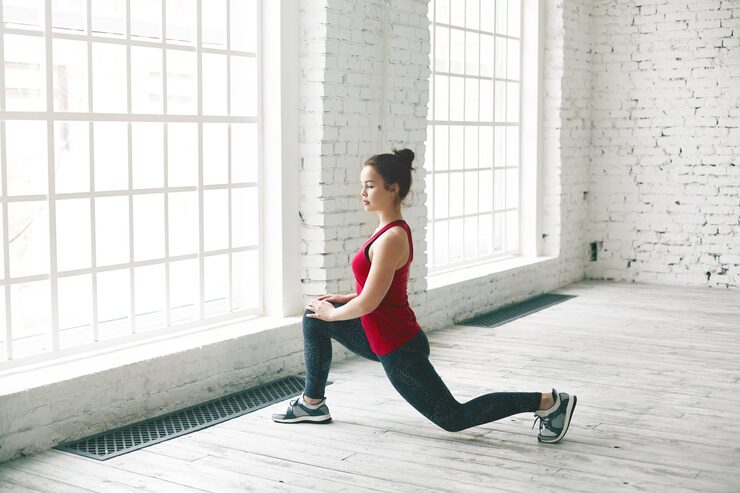
Your lunge’s alignment is crucial. Make a perfect angle with your front leg so that your thigh is parallel to the floor and your knee is exactly over your ankle. At the same time, root into your back leg and maintain a level hip position.
Many sag in the back and don’t go far enough into the front leg. Make sure you’re doing it correctly by taking a quick look in the mirror.
This yoga pose can be modified by lowering your back leg to the mat or placing your hands on blocks (with a blanket or towel for cushioning as needed).
14) Tree Pose (Vrksasana)

Pose type: Standing/Balancing
A great way to start learning balancing poses is with the tree pose. Step out with ease if you feel like you’re starting to fall. Just your hip to the side of your standing leg to prevent counterbalances.
Keep your eyes on the ground and experiment with different foot positions to determine what suits you: heel resting above or below the knee, on a block, or low on the ankle.
15) Downward-Facing Dog Split

Pose type: Standing/Balancing
The development of core strength is aided by the introduction of suitable balancing positions. It doesn’t matter how high you raise your leg in the Down Dog Split yoga pose. Rather, concentrate on maintaining equal weight distribution in both hands and roots into the hands.
16) Plank Pose

Pose type: Balancing
Since there is very little chance of falling, it may seem odd to refer to the plank as a balancing yoga stance, but it captures the essence of this pose’s core strength.
Many yoga postures, such as standing and arm balances, require a strong core, and a plank is a great method to improve your stability and endurance. Maintain a neutral spine and hips.
17) Cat-Cow Stretch (Chakravakasana)
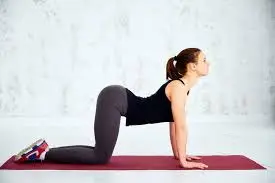
Pose type: Backbend
The combination of spinal flexion and extension is the best of both worlds. By synchronizing your movements with your breath, back-and-forth movement warms your back, enhances body awareness, and serves as a fundamental start to performing a vinyasa sequence.
Perhaps the most crucial yoga stance to learn is cat-cow, particularly if you suffer from back problems. Continue performing this stretch on your own, even if you just attend a few yoga courses.
18) Bridge Pose (Setu Bandha Sarvangasana)
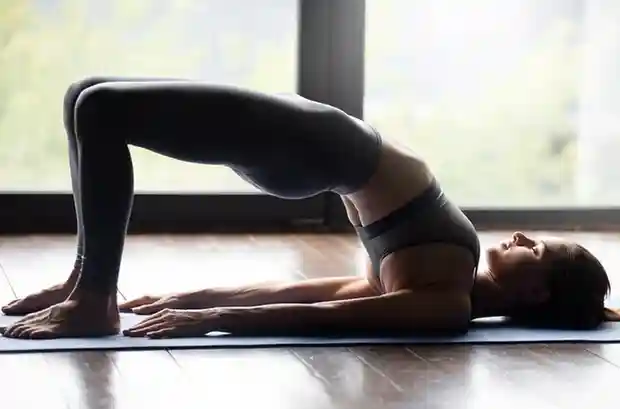
Pose type: Backbend
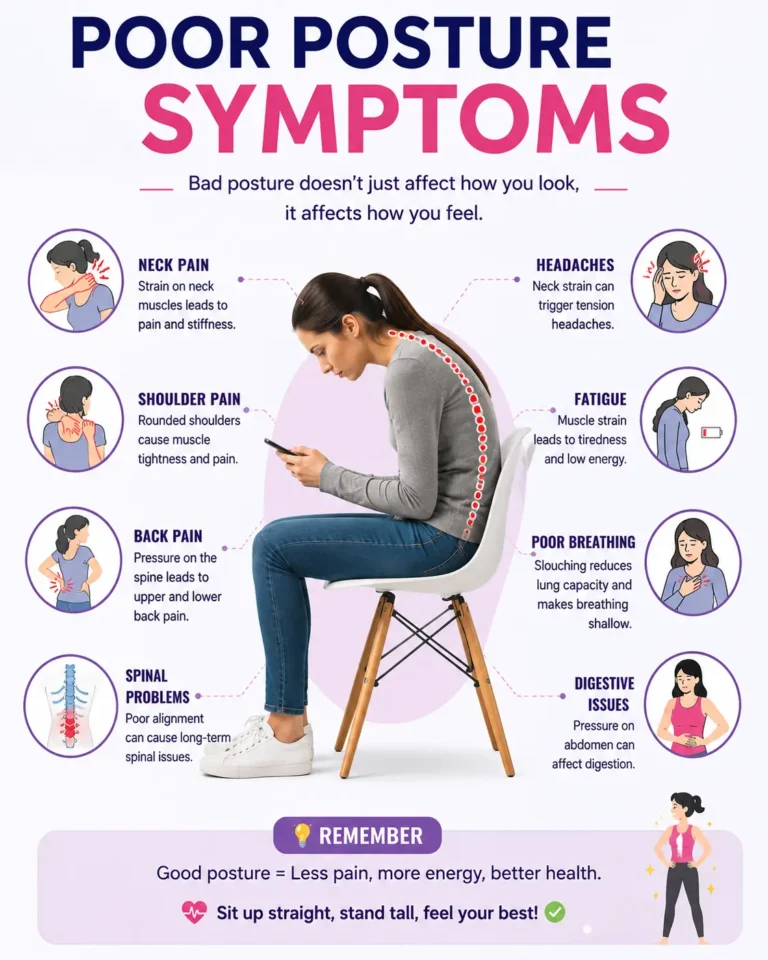
Bridge pose, sometimes referred to as a backbend, is a gentle technique to experiment with spine extension. It’s a good idea to start doing this kind of exercise since it increases your spine’s range of motion and mitigates the negative consequences of excessive sitting.
Try a supported bridge with a block if the Bridge yoga posture feels too demanding. In order to sustain the pose with your leg muscles, don’t forget to root into your feet.
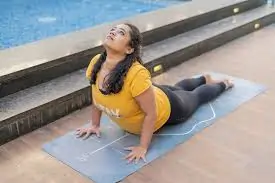
19) Cobra Pose (Bhujangasana)
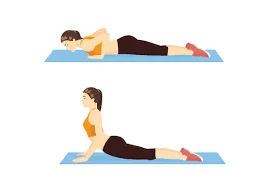
Pose type: Backbend
As part of the vinyasa sequence of yoga poses, Cobra is performed several times per class in flow yoga. While a full cobra with straight arms provides a deeper backbend, low cobras, which raise your chest without pressing into your hands, will strengthen your back.
As you raise the sternum, root into your feet, extend into your head’s crown, and widen through your collarbones. Before lifting, it’s crucial to secure your pelvis to the ground.
20) Knees, Chest, and Chin (Ashtanga Namaskara)

Pose type: Backbend
As an alternative pose and preparation for Chaturanga Dandasana, Ashtanga Namaskara was once taught to all new yoga practitioners. It has been less popular in recent years.
Some students are therefore hurried into Chaturanga before they are prepared. It should be included in the beginner’s sun salutation series. It’s also a great yoga pose to warm up for deeper backbends.
Go carefully from a plank into the yoga stance. With your toes tucked in, lower your knees to the yoga mat. As you lower your chin and chest to the floor, keep your elbows inside toward your body. Your shoulders should be above your hands.
21) Staff Pose (Dandasana)

Pose type: Seated
In that it provides alignment instructions for other seated yoga postures, the staff yoga pose is similar to a sitting version of Mountain pose (above). Flex your feet and contract your leg muscles.
Raise your chest and let your shoulders drop. For your shoulders to stack over your hips, you can also permit a slight bend in your knees.
If you find it difficult to sit upright with your butt flat on the floor, adjust by using a block or two folded blankets. This yoga pose leads to a forward bend in a regular session.
22) Cobbler’s Pose (Baddha Konasana)

Pose type: Seated
In Cobbler’s pose, let gravity stretch your inner thighs. If you find this yoga pose difficult, props can be helpful. Your hips are raised when you sit on a block, cushion, or blanket, allowing your knees to open more organically.
It takes a lot of work to keep your knees upright if they are high, and to benefit from the stretch, your legs must be relaxed. The solution is to give each knee something to rest on by placing a block or other supportive object underneath it.
This yoga pose stretches neglected parts of the body, especially the adductor groups of the groin, because sitting in this manner is rare in daily life.
23) Easy Pose (Sukhasana)

Pose type: Seated
Cross-legged sitting doesn’t have to be a challenging yoga practice. Similar to Cobbler’s stance, you can counteract the consequences of excessive chair sitting by using props wisely to change an uncomfortable position into one of relaxation.
24) Half Lord of the Fishes Pose (Ardha Matsyendrasana)

Pose type: Seated
A crucial component of yoga is the twist. In addition to improving spine mobility, twists also assist in moving your digestive tract; yes, they can alleviate constipation.
If you find it uncomfortable to have your lower leg bent behind you in this yoga pose, you can lengthen it. Another way to change it is to sit on a blanket. To ease shoulder, hip, and spine rotation, place the bent leg inside the extended leg.
25) Head to Knee Pose (Janu Sirsasana)

Pose type: Seated
Anyone with tight hamstrings may find it difficult to perform forward bends. Because you only stretch one leg at a time, Janu Sirsasana is easier to perform. To increase your reach, you can also wear a strap around your foot.
26) Seated Forward Bend (Paschimottanasana)

Pose type: Seated
There’s a good reason why beginning yoga includes a lot of hamstring stretches. People who sit a lot often have short, tense hamstrings, which can exacerbate lower back pain. It’s beneficial to stretch them while performing the Seated Forward Bend.
The entire back of the body is stretched in this yoga stance. Keep your neck in line with your spine and bend at the hips rather than the waist.
27) Seated Wide Angle Straddle (Upavistha Konasana)

Pose type: Seated
A somewhat different stretch from Paschimottanasana is achieved by opening your legs wide. To perform this yoga pose:
Put your legs wide apart.
Enter Upavistha Konasana by flexing both feet and engaging both legs on the floor.
Inhale to stretch your spine and exhale to deepen the yoga pose as you forward bend to the center.
It’s not about bringing your chest to the floor, even though that may appear to be the mandate. Instead, maintain a flat back, flex your feet, and rotate your pelvis forward rather than crushing through your spine. It makes no difference how far forward you lean if you do all three of these things.
28) Happy Baby Pose (Ananda Balasana)

Pose type: Supine
A great approach to end a yoga practice is to say “happy baby.” It’s also a great illustration of how effort and ease interact in yoga.
To bring your feet closer to your armpits, you should apply some pressure on them, but not enough to cause your tailbone to rise off the ground. Finding the midway ground in this happy yoga stance is preferable to going too far.
29) Supine Spinal Twist (Supta Matsyendrasana)

Pose type: Supine
Although there’s no law against starting your practice with a passive twist, it’s a traditional method to conclude a yoga session. It is up to you how the legs are positioned.
You can bend both of them; if you have the flexibility, you can wrap your legs around each other (like in Eagle pose) to stretch the outer hips, or you can straighten the top leg and grab onto your foot. Make sure your knees line up with your waist.
30) Child’s Pose (Balasana)
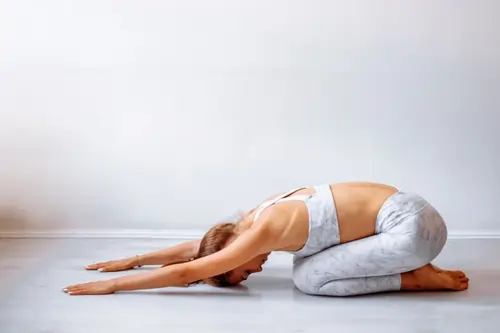
Pose type: Resting
Because it’s the pose you take whenever you need a break during a yoga session, the child’s pose is crucial. Don’t wait for the instructor to signal a break if you’re feeling worn out.
When you’re ready, return to the class after striking child’s pose. It doesn’t test your strength or balance and gives your back, hips, thighs, and ankles a nice stretch.
One of yoga’s greatest lessons, being aware of your body’s signals and honoring them above any outside guidance,e is introduced by taking Child’s pose, which is really up to you.
31) Corpse Pose (Savasana)

Pose type: Resting
Lying flat on your back in corpse posture is how most yoga sessions conclude. The transition from the end of your yoga practice to the remainder of the day is crucial. It is difficult for the mind to remain quiet when the body is brought to rest. This could be difficult for you at first, but it becomes simpler with practice.
Creating a yoga practice
Developing a yoga practice that suits your lifestyle is empowering and fulfilling. Start by scheduling a specific, distraction-free time and location for your yoga sessions. As your strength, flexibility, and confidence increase, progressively incorporate more difficult standing poses after starting with beginner-friendly ones.
To keep your yoga practice interesting and well-rounded, combine standing positions, seated stretches, backbends, and balancing poses. Observe your body’s cues, adjust poses, or take breaks as necessary, particularly if you’re feeling sore or exhausted. As you advance, taking online courses or practicing with a knowledgeable instructor can offer helpful advice and criticism.
To reap the full advantages, try to do yoga two or three times a week, but keep in mind that consistency is more crucial than intensity. Enjoy the trip and practice self-compassion and patience. Your strength, flexibility, and general well-being will all increase with regular exercise.
FAQs
What are the 5 basic yoga poses?
Child’s Pose (relaxation), Cat-Cow (spinal flexibility), Downward-Facing Dog (full-body stretch), Tree Pose (balancing), and Bridge Pose (back strengthening) are five simple yoga poses to begin with. For novices, these poses help enhance posture, strength, and flexibility.
Which yoga is best for diabetic patients?
Through postures like Dhanurasana (Bow Pose), Ardha Matsyendrasana (Half Spinal Twist), and Paschimottanasana (Seated Forward Fold), effective yoga for diabetes aims to stimulate the pancreas, reduce stress, and improve insulin sensitivity. Improved circulation and blood sugar regulation are two major advantages of daily practice that can lower HbA1c levels.
Can yoga reduce HbA1c?
The level of glycated hemoglobin (HbA1c) is often used as a stand-in indicator of how well blood sugar is controlled. Numerous studies have shown that practicing yoga dramatically lowers HbA1c levels, demonstrating the usefulness of yoga in the treatment of diabetes mellitus.
Which yoga is best for blood pressure?
The most effective yoga for high blood pressure emphasizes deep breathing, relaxation, and mild stretching to soothe the nervous system. Shavasana (Corpse Pose), Balasana (Child’s Pose), and Viparita Karani (Legs-up-the-Wall) are important positions. Anulom Vilom and Bhramari are two effective breathing exercises (pranayama) that assist in lowering blood pressure by reducing stress.
Which yoga should be done daily?
Focus on a combination of mobility, strength, and breathwork for a daily yoga practice that supports general health. Surya Namaskar (Sun Salutations) for warm-up, Downward-Facing Dog for strengthening and stretching, Cobra/Locust Pose for back strength, Child’s Pose for relaxation, and Bridge Pose are important everyday postures. Aim for 15 to 30 minutes, with Savasana (Corpse Pose) at the end.
References:
- Essential yoga poses for beginners: Your complete guide. (n.d.). Center for Yoga. https://centerforyogala.com/yoga-poses/
- Shah, S. (n.d.). Best 10 Yoga Poses for Beginners – Sri Sri School of Yoga. https://srisrischoolofyoga.org/na/blog/10-best-yoga-poses/