Neck Range Of Motion Exercises
Introduction
Neck Range of Motion (ROM) Exercises are gentle movements designed to improve neck flexibility, reduce stiffness, and maintain healthy mobility of the cervical spine. These exercises help relieve neck pain caused by poor posture, long sitting hours, or muscle tightness, and are especially useful for preventing injuries and improving daily functional movement.
During the rehabilitation process, these exercises are designed to help with neck mobility. These exercises are meant to serve as a guide, and you should have received some instruction from your physiotherapist or other healthcare provider before beginning
This guide’s sets and reps are meant to serve as a guide; you can progress these at your own pace, though you may want to perform fewer or more. You might want to consult your physiotherapist if the exercises cause your symptoms to worsen. Under the supervision and direction of your physiotherapist or other medical professional, advance at your own pace as your pain and stiffness permit.
Neck Range Of Motion Exercises
Cervical Chin Tuck
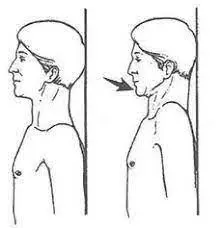
- Squeeze your shoulder blades together while sitting up straight.
- Maintaining a straight neck and head with your eyes facing forward, pull your chin in gently (not quickly or forcefully), without tilting your head up or down.
- Feel the stretch behind your neck after two seconds of holding the final position.
Cervical Extension with Chin Tuck (Looking Up)

- Squeeze your shoulder blades together and gently tuck your chin in while sitting up straight.
- Stretch your head backward and look up at the ceiling while keeping your chin tucked in. Reach as far as is comfortable, then go back to where you were.
- Keep in mind that you are attempting to get your joints and muscles moving, so proceed at a fairly moderate pace. A mild to moderate dull ache is typical at first; if you experience severe pain, you have gone too far.
- As you continue to exercise over the next few days or weeks, the pain and range of motion should gradually get better.
Cervical Flexion with Chin Tuck (Looking Down)

- Squeeze your shoulder blades together and gently tuck your chin in while sitting upright.
- Bend your head forward until you feel a stretch behind your neck, keeping your chin tucked in. Reach as far as is comfortable, then go back to where you were.
- Keep in mind that you are attempting to get your joints and muscles moving, so proceed at a fairly moderate pace. A mild to moderate dull ache is typical at first; if you experience severe pain, you have gone too far.
- As you continue to exercise over the next few days or weeks, the pain and range of motion should gradually get better.
Cervical Rotation (Looking over your Shoulder)

- Squeeze your shoulder blades together and gently tuck your chin in while sitting up straight.
- To keep your shoulders down, grasp a chair with both hands.
- Look over your right shoulder by rotating your neck. Reach as far as is comfortable, then go back to where you were.
- Keep in mind that you are attempting to get your joints and muscles moving, so proceed at a fairly moderate pace. A mild to moderate dull ache is typical at first; if you experience severe pain, you have gone too far.
- As you continue to exercise over the next few days or weeks, the pain and range of motion should gradually get better.
Cervical Lateral Flexion (Ear to Shoulder)

- Squeeze your shoulder blades together and gently tuck your chin in while sitting up straight.
- To keep your shoulders down, grasp a chair with both hands.
- Bring your left ear closer to your left shoulder by bending your neck to the side. Reach as far as is comfortable, then go back to where you were.
- Keep in mind that you are attempting to get your joints and muscles moving, so proceed at a fairly moderate pace. A mild to moderate dull ache is typical at first; if you experience severe pain, you have gone too far.
- As you continue to exercise over the next few days or weeks, the pain and range of motion should gradually get better.
Cervical Self SNAG Towel Exercise

- You can try doing the mobility exercises with a towel around your neck if you find any of them uncomfortable. Some people report that using the towel improves their range of motion, and this is typically less painful.
- Throughout the exercise, maintain the tension on the towel by wrapping it around the lower portion of your neck and pulling it forward.
- Next, pull the towel forward while performing any of the earlier cervical spine range-of-motion exercises.
- Keep in mind that you are attempting to get your joints and muscles moving, so proceed at a fairly moderate pace. A mild to moderate dull ache is normal at first; if you experience severe pain, you have gone too far.
- As you continue to exercise over the next few days or weeks, the pain and range of motion should gradually get better.
Benefits of Neck Range Of Motion
Exercises that increase the range of motion can be useful for relieving stiffness and pain. Stretching exercises significantly reduced patients’ neck pain, according to a study. However, neck range-of-motion exercises can do more than just reduce pain.
Improve posture: Many people’s necks stiffen as a result of spending hours hunched over their phones or computers, which reduces their range of motion. Before and after extended workdays, neck range-of-motion exercises can help straighten and realign the neck.
Reduce tension: Many people associate headaches with neck tension. A headache may be brought on by compression or irritation of the neck’s nerves. Stretching the neck can help reduce headache and migraine symptoms by releasing tension in the muscles surrounding the head.
Boost blood flow because your neck is an extension of your spine. Specifically, your spinal cord is most intimately attached to the vertebrae of your cervical spine. You can promote blood flow to the brain and spinal cord, which are key components of the nervous system, by contracting the muscles surrounding your neck. The healthy operation of the nervous system is promoted by increased blood flow.
Boost strength: Neck mobility exercises aid in neck strengthening. The weight of the head and shoulders can be supported more easily by a stronger, healthier neck. Additionally, it can assist in releasing pressure from the vertebrae. A stronger neck can also aid in brain protection. Stronger neck muscles better shield the brain from sports-related injuries, according to a study.
Types Of Neck Exercises
Numerous neck muscles can be targeted with a few range-of-motion exercises. You can help ease stiffness and pain in your neck by gently stretching it with just the weight of your head. Exercises may consist of:
Neck tilts: This includes tilting the neck to one side, holding it there for ten seconds, and then switching to the other side.
Turning the head as far to one side as you can and checking over your shoulder are examples of Neck rotations. Before switching to the opposite side, you can maintain this position for at least ten seconds.
Flexion and extension of the neck: In this exercise, the head is bent forward until the chin is near the chest. The head may then descend in the opposite direction until it is facing up. For at least ten seconds, you can maintain both positions.
FAQs
How to improve the range of motion in the neck?
Chin gently tucked in. Bend your head forward until you feel the stretch behind your neck, keeping your chin tucked in. Reach as far as is comfortable, then go back to where you were. Don’t forget to move your muscles and joints at a fairly moderate pace.
What is the normal range of motion for your neck?
With some individual variation, a normal neck (cervical spine) range of motion includes approximately 80–90° of flexion (chin to chest), 50–70° of extension (looking up), 20–45° of lateral flexion (side-bending), and 70–90° of rotation to each side.
Normal Movement Ranges (Approximate)
Flexion (Forward Bending): 80° to 90° from the chin to chest.
Extension (Backward Bending): 50° to 70° while facing the ceiling.
Lateral Flexion (Side Bending): 20 to 45 degrees from the ear to the shoulder.
Rotation (turning): 70° to 90° to each side, chin toward shoulder.
How to relieve neck pain in a child?
Important Things to Think About
Symmetry: From left to right, the range of motion should be comparatively symmetrical.
Full Motion: The sum of flexion and extension is typically about 130°.
Individual Variation: Depending on body type, age, and level of fitness, these figures may change.
Assessment: To check for pain, stiffness, or limitations, a doctor or physical therapist will ask you to move your head through these motions.
What are the 5 D’s for neck pain?
If your child doesn’t have a fever or other symptoms and has a stiff or sore neck but wasn’t hurt: If there is pain, apply a warm, moist cloth to the neck for 20 minutes every three to four hours. For pain, use ibuprofen or acetaminophen. A baby younger than six months should not be given ibuprofen.
How to regain range of motion?
The late stages of CAD also exhibit the classic cardinal signs of cervical ischemia, also known as the “5Ds and 3 Ns”: diplopia, dizziness, drop attacks, dysarthria, dysphagia, ataxia, nausea, numbness, and nystagmus.
What causes a limited range of motion?
Stretch both statically and dynamically. When it comes to increasing range of motion, two types of stretches can give you an advantage: static stretching, which involves holding a stretch, and dynamic stretching, which involves moving within your range of motion.
How do I know if my neck is weak?
Typical Reasons for Limited ROM
Fractures, dislocations, strained muscles, tears in ligaments (such as the ACL), or substantial scar tissue from previous wounds are examples of injuries and trauma.
Inflammation and swelling are caused by fluid accumulation from acute injuries, infections, or arthritis (osteoarthritis, rheumatoid arthritis), which physically impairs movement and produces pain.
Stiffness & Contractures: Dehydration, chronic stiffness, or shortening of tendons and muscles due to inactivity (such as following a stroke or extended casting).
Mechanical Blockage: When loose objects, such as shredded cartilage, become lodged inside the joint.
Pain: Guarding, which prevents you from moving a joint through its entire arc, can be brought on by pain itself.
Neurological Disorders: Disorders that impact the brain, spinal cord, or nerves, such as cerebral palsy, stroke, muscular dystrophy, or nerve damage, can impair signal transmission and muscle control.
What is a red flag for neck pain?
Weak neck muscles frequently result in headaches, fatigue, pain, stiffness, and a heavy head. They also make it difficult to turn or hold your head up, which can occasionally cause shoulder or arm pain, tingling, or balance problems that require you to support your head with your hand. These symptoms, which interfere with day-to-day activities and movement, indicate underlying problems such as poor posture, injury, or nerve compression.
Typical Symptoms
Head and neck symptoms include fatigue, dull pain, stiffness, inability to turn or tilt the head, muscle spasms, and a shaky feeling.
Pain, tingling, or numbness in the arms, fingers, shoulders, or upper back (caused by pinched nerves) is known as radiating pain.
Functional Problems: Having trouble performing everyday tasks like walking, driving, lifting arms, or holding one’s head up.
Headaches: Tension headaches that may radiate from the neck to the eyes or back of the head.
Why do kids get stiff necks?
Red flags for neck pain, such as weakness, numbness, tingling, loss of coordination, bladder/bowel problems, severe headache with stiffness, fever/chills, or pain following trauma, worsening at night, or radiating to arms/hands, indicate serious underlying problems such as infection, tumor, injury, or spinal cord compression that need to be treated right away. These symptoms, which go beyond simple muscle strain, indicate nerve compression (radiculopathy/myelopathy) or serious pathologies that require immediate medical attention.
Red Flags in Neurology (Nerve/Spinal Cord)
Weakness, numbness, and tingling that radiate into fingers or down arms (cervical radiculopathy).
Loss of Coordination/Unsteady Gait: Balance problems or trouble walking (cervical myelopathy).
Loss of control over one’s bowels or bladder is a serious indication of severe spinal cord involvement.
Hoarseness/Difficulty Swallowing: could be a sign of nerve compression.
Kids who sleep in a weird position that stretches their neck muscles may experience this. have a cold or a throat infection, such as strep or mono. An infection may cause swollen lymph nodes, which may irritate the muscles in the neck.
Which vitamin deficiency causes neck stiffness?
Deficiencies in vitamin D and B vitamins, particularly B12, are associated with neck stiffness and pain because they promote nerve function and muscle relaxation; low levels can exacerbate spasms. Deficiencies in magnesium also contribute to muscle tension; therefore, a balanced diet or supplements taken under medical supervision may help alleviate chronic neck problems.
Important Minerals & Vitamins:
Vitamin D deficiency is strongly linked to muscle spasms, general musculoskeletal pain, and chronic neck and back pain; supplementation may alleviate symptoms.
B vitamins (B12): Vital for nerve health, a deficiency in B12 can cause neurological symptoms, such as head and neck tingling and nerve pain, which can exacerbate stiffness.
Magnesium: Essential for relaxing nerves and muscles; lack of it makes tense muscles and stiff neck pain worse.
References
- Article | My Doctor online. (n.d.). https://mydoctor.kaiserpermanente.org/ncal/article/range-of-motion-exercises-for-acute-neck-pain-512019
- Grogan, J. (2025, February 20). Neck Range-of-Motion Exercises | Neck Pain | Armor PT. Alliance Physical Therapy Partners. https://armorpt.com/4-benefits-of-doing-neck-range-of-motion-exercises-daily/
- Musculoskeletal Physiotherapy OCATS. (2 C.E.). Neck mobility exercises. In Health Services at Wolves. Bridgewater NHS Community Foundation Trust. https://bridgewater.nhs.uk/wp-content/uploads/2020/12/Neck-range-of-motion-exercises-Patient-advice-sheet.pdf
- Neck and jaw stretching Exercise – University of Mississippi Medical Center. (n.d.). https://umc.edu/Healthcare/ENT/Patient-Handouts/Adult/Speech-Language-Pathology/Head-Neck/Neck-and-Jaw-Stretching-Exercise.html
- SemiColonWeb. (n.d.). Neck Exercises | University Orthopedics. https://universityorthopedics.com/educational_resources/neck_exercises.html